
/ Service 08
24/7 emergency septic service in King & Snohomish County
Sewage backing up or an alarm that will not stop does not wait for business hours. Our phones are answered 24/7, and we get a crew to you as fast as we can.
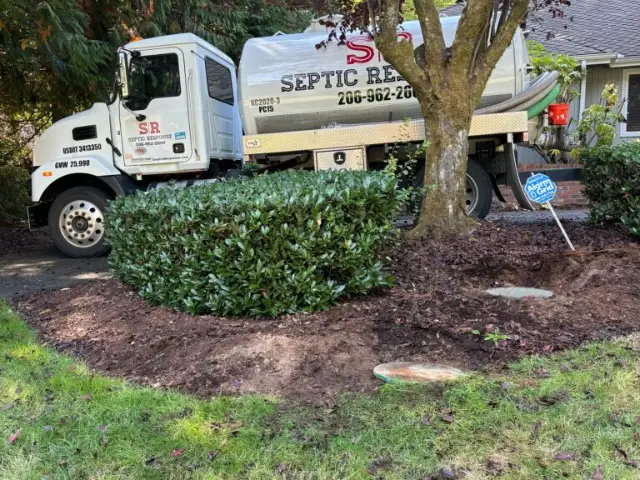
/ When something goes wrong
Septic problems rarely wait for business hours. A backup on a holiday weekend, an alarm going off at 2 a.m., sewage surfacing in the yard during a winter storm: these are stressful situations, and they need a calm, experienced response. At Septic Response, a real person answers the phone 24 hours a day, 7 days a week. We will talk you through what to do right now to limit the damage, figure out what is most likely going on, and get a crew moving.
Call our Kirkland office at (206) 962-2600 for King County or our Woodinville office at (206) 790-9392 for Snohomish County. Both crews serve both counties, so whichever number you call, we will get help to you.
How after-hours and weekend calls work
Our emergency line is answered every hour of every day, including nights, weekends and holidays. When you call, you will talk to a person who understands septic systems, not a voicemail box. If we can get a crew to you right away, we will. If we cannot, we will not leave you on your own: we will talk you through what to do over the phone to keep your home safe and your system stable, connect you with the help you need, or be there first thing in the morning.
Weekend visits carry a weekend rate, which covers overtime for the crew who come out when everyone else is home with their families. We will always tell you the cost before we dispatch, so you can decide whether the visit needs to happen now or can wait until a weekday.
/ The Septic Response Promise
1-year warranty on most repairs. And whenever you call us about work we have done, we are there the next day, if not the same day.
We stand behind our work because we plan to be your septic company for the long haul.
What counts as a septic emergency
Call us right away if you have any of these:
- Sewage backing up into the house through toilets, tubs, showers or floor drains
- A high-water alarm on a pump system that does not clear on its own within a few hours
- Sewage or effluent surfacing in the yard, over the tank or over the drainfield
- Strong sewage odors inside the house
- A pump that has stopped, a tripped breaker on the septic circuit or a control panel showing a fault
- A collapsed, cracked or missing tank lid, which is a serious safety hazard for children, pets and adults
- Every drain in the house slowing down at once, especially with gurgling
Not sure whether it can wait? Call anyway. We would much rather tell you something can wait until morning than have you guess wrong.
What to do right now
While you wait for us, these steps limit damage and keep everyone safe:
- Stop using water. No showers, laundry, dishwasher or flushing if you can avoid it. Every gallon you send down the drain has to go somewhere, and right now it may be going into your house or your yard.
- On pump systems, stop all water use for several hours. If your system has an effluent pump, a pause of four to eight hours gives the pump chamber a chance to recover and keeps the pump from dosing more water onto a drainfield that cannot take it.
- Keep people and pets away from wet areas, surfacing sewage and open or damaged lids. Sewage carries bacteria and viruses.
- Never climb into or lean over a septic tank. Tanks contain gases that can overcome a person in seconds. Leave opening tanks to professionals.
- Check the breaker for the septic pump or control panel if you have one, but do not reset it repeatedly. A breaker that keeps tripping is telling you something.
- Silence the alarm, do not ignore it. Most panels have a silence button. The alarm will stop sounding, but the problem is still there.
- Skip the chemicals. Drain cleaners, bleach and additives will not fix a septic backup and can harm the system.
- Take photos of any surfacing, water in the house or panel lights. They help us diagnose faster and may be useful for insurance.
What usually causes septic emergencies
Most emergencies come down to a handful of causes, and many of them are fixable without replacing anything major:
- A tank that is overdue for pumping. When sludge and scum fill the tank, wastewater has nowhere to go but back toward the house or out into the yard.
- A clogged effluent filter or outlet. The filter is doing its job by catching solids, but when it plugs, water backs up.
- A failed effluent pump, float or control. On pump systems, one stuck float or a burned-out pump can stop the whole system and set off the high-water alarm.
- A blocked or broken line between the house and the tank, often from roots, settling or something that should not have been flushed.
- A saturated drainfield. Heavy rain, high groundwater, a leaking fixture inside the house or too much water at once can flood a field temporarily.
- Power outages. Pump, pressure and aerobic systems stop when the power does. When the power comes back, a big surge of stored water can overwhelm the system.
- Freezing weather. Shallow lines and a slow trickle from a leaking fixture can freeze and back up.
How we handle an emergency call
When you call, we ask a few quick questions: what you are seeing, what kind of system you have if you know, whether there is a pump and an alarm, and when the tank was last pumped. That tells us what equipment and parts to bring. When we arrive, we find the cause before we recommend anything. Sometimes the fix is pumping the tank. Sometimes it is clearing a line, cleaning a filter, freeing a stuck float or replacing a pump. We explain what we found, what we did and whether anything else needs attention, and we tell you what can safely wait.
Many emergency visits start with pumping the tank to relieve the immediate pressure, followed by a diagnosis of why the problem happened in the first place. Solving the cause is what keeps you from calling us again next month.
Septic alarms: what they mean
If your system has a pump chamber, it almost certainly has a high-water alarm. The alarm sounds when the water level in the pump chamber rises above where it should be. Common reasons include a failed pump, a stuck or tangled float, a tripped breaker, a clogged pump screen or simply more water coming in than the system can handle, for example after several loads of laundry or a long period of heavy rain.
If the alarm goes off, silence it, stop using water and check the breaker. If the alarm clears within a few hours on its own, it may have been a temporary surge, but it is still worth having the system checked. If it comes back, or does not clear, call us. Our septic repair page covers pumps, floats, alarms and control panels in more detail.
Sewage in your yard
Wet ground, odors or sewage surfacing over the tank or drainfield means something has stopped working. It can be a full tank, a blocked outlet, a failed pump on a pressure system or a drainfield that is saturated or failing. Keep everyone away from the area, stop using water and call us. Surfacing sewage is also something the county health departments take seriously, so it is worth fixing promptly. Our article septic water in your yard explains the most common causes, and our drainfield repair page covers what happens when the field itself is the problem.
Storms, power outages and freezing weather
Western Washington’s weather causes a predictable wave of septic calls every year. Long wet stretches raise groundwater and saturate drainfields. Windstorms knock out power to pump and aerobic systems. Occasional hard freezes catch shallow lines. During an outage, keep water use to a minimum, and when power returns, keep it low for several hours while the pump works through what has built up. Our guides to power outages and snow and freezing weather have more detail.
Quick guide: what your symptom usually means
Every system is different, but these patterns hold true often enough to help you describe the problem when you call:
- One slow drain, everything else fine: usually a clog in that fixture’s drain line inside the house, not the septic system.
- Every drain slow, gurgling toilets: often a full tank, a clogged effluent filter or a blockage in the main line between the house and the tank.
- Water coming up in the lowest drain after laundry: the system cannot accept water as fast as it is arriving. A full tank, a clogged filter or a saturated drainfield are the usual suspects.
- Alarm sounding, drains working: commonly a pump, float or breaker issue in the pump chamber. Stop using water so the chamber does not overflow.
- Alarm sounding and drains backing up: the pump chamber is full and the system has run out of room. Stop all water use and call right away.
- Wet, smelly ground over the tank: often a full or blocked tank, a loose riser or a cracked lid letting effluent rise to the surface.
- Wet, smelly ground over the drainfield: the field is saturated or not accepting water, from heavy rain, too much water use, a pump dosing problem or a field that is failing.
- Sewage smell inside, no backup: can be a dry trap in an unused drain, a plumbing vent problem or gases escaping from the system. Run water in unused drains and call if it persists.
These are starting points, not diagnoses. The only way to know for sure is to open the system and look, which is exactly what we do.
What to expect when our crew arrives
We will need access to the tank lids, the pump chamber and control panel if you have them, and a place to park the truck within hose reach of the tank without driving over the drainfield. If you know where your tank is, mark it or tell us. If you have an as-built drawing, have it handy. If you do not know where anything is, that is fine. Locating systems is part of the job.
Once we have the system open, we will tell you what we see before we do any major work. If the fix is simple, we will usually take care of it on the spot. If it needs parts or a follow-up visit, we will make the system safe and usable in the meantime wherever that is possible, and explain the plan and the timeline. You will never be left wondering what is happening on your own property.
Rental properties, businesses and property managers
A septic problem at a rental home, a small business, a church or a shop affects more than one household. Tenants cannot use the bathroom, customers cannot come in and staff cannot work. We serve homeowners and businesses across both counties, and we work directly with landlords and property managers to get systems running again and documented properly. If you manage several properties on septic, keeping their pumping and inspections on schedule is the best way to avoid after-hours calls. Talk to us about it.
After the emergency: getting back to normal
Once the immediate problem is fixed, ease back into normal water use. Spread out laundry and dishwasher loads over the next few days instead of catching up all at once, especially on pump and pressure systems. If sewage came into the house, clean affected areas thoroughly and ventilate well. Keep an eye on drains and the alarm for the next week or two and call us if anything returns. If we recommended a follow-up repair, schedule it before the problem has a chance to come back. And if your system was overdue for an inspection, now is a good time to get back on schedule.
How to avoid the next emergency
Most emergencies are preventable. The habits that make the biggest difference are simple:
- Pump on schedule. We measure your tank every visit and tell you when the next pumping is due.
- Keep inspections current. Inspections catch failing pumps, worn floats and damaged baffles before they cause a backup. See septic inspections.
- Install risers. When lids are at the surface, emergency access is faster and every visit costs less time.
- Protect the drainfield. Keep vehicles, livestock and construction off it and direct gutters and drainage away from it.
- Watch what goes down the drain. Wipes, grease, paper towels and harsh chemicals cause a large share of the backups we see.
- Fix leaks. A running toilet can send hundreds of gallons a day into your tank.
Emergency septic service across King and Snohomish County
Our Kirkland crew covers all of King County, and our Woodinville crew covers every city in Snohomish County. Because both crews work both counties, we can often send whichever truck is closer. Call the number for your county, tell us what is happening and we will take it from there.
Why call Septic Response in an emergency
In an emergency you need two things: someone who picks up, and someone who fixes the actual problem. A real person answers our phones 24/7. Our technicians are WOSSA-certified, licensed, bonded and insured, and trained to diagnose every common system type in the region, from simple gravity systems to pressure distribution, mounds and aerobic treatment units including Oscar and Bio-Microbics. We find the cause, explain it plainly and recommend only the work your system needs. More than 280 customers have reviewed us on Google, and many of them first met us on a bad day.
/ Where
Serving both counties.
Our Kirkland office covers King County and our Woodinville office covers every city in Snohomish County.
/ FAQ
Do you charge more for weekend emergency calls?
Weekend visits carry a weekend rate that covers overtime for our crew. We always tell you the cost before we dispatch, so you can decide whether it needs to happen now.
What if you cannot get to me right away?
We will still answer and help. We will talk you through keeping your home safe and your system stable over the phone, connect you with the help you need, or be there first thing in the morning.
Do you offer 24/7 emergency septic service?
Yes. A real person answers our phones 24 hours a day, 7 days a week. Call (206) 962-2600 for King County or (206) 790-9392 for Snohomish County.
What should I do if sewage is backing up into my house?
Stop using water, keep people and pets away from the affected area, do not use drain chemicals, and call us. On pump systems, stop all water use for several hours.
My septic alarm is going off. What should I do?
Silence the alarm, stop using water and check the breaker for the pump or panel. If the alarm does not clear within a few hours, or keeps coming back, call us.
Is sewage in my yard an emergency?
Yes. Surfacing sewage means something has stopped working, and it is a health hazard. Keep everyone away, stop using water and call us.
Can I open the septic tank myself to look?
No. Septic tanks contain gases that can overcome a person very quickly, and open tanks are a fall hazard. Leave opening the tank to professionals.
Will pumping fix my backup?
Often pumping relieves the immediate problem, but we also find out why it happened, such as a clogged filter, a failed pump or a blocked line, so it does not happen again.
What should I do with my septic system during a power outage?
Pump and aerobic systems stop without power. Use as little water as possible during the outage and for several hours after power returns.
Do septic drain cleaners or additives help in an emergency?
No. Chemicals will not fix a backup and can harm the bacteria and components in your system.
How can I prevent septic emergencies?
Pump on schedule, keep inspections current, install risers, protect the drainfield, fix leaks and keep wipes, grease and chemicals out of the drains.
Do you handle emergencies in both King and Snohomish County?
Yes. Our Kirkland and Woodinville crews both serve both counties.
/ Other services