/ Service 06
Line jetting & sewer line replacement in King & Snohomish County
If drains back up but the tank is not full, the problem is often the line between your house and the tank. We scope that line with a camera, clear it with hydro jetting, and replace it when it is damaged.
/ Sewer lines, camera inspection and jetting
Every drop of wastewater from your home travels through a buried pipe before it reaches your septic tank. When that line cracks, sags, separates or fills with roots, the whole house feels it: slow drains, gurgling toilets, backups in the lowest fixtures and, eventually, sewage where it should never be. Because the line is underground, guessing at the problem is expensive. Seeing it is not.
Septic Response scopes sewer lines with a camera, clears them with high-pressure jetting and replaces damaged lines for homes across all of King County and every city in Snohomish County. We show you exactly what is going on inside your pipe, recommend the right fix, and back our repairs with the Septic Response Promise.
/ The Septic Response Promise
1-year warranty on most repairs. And whenever you call us about work we have done, we are there the next day, if not the same day.
We stand behind our work because we plan to be your septic company for the long haul.
The lines in a septic system
A septic system has two main runs of pipe, and problems in either one can cause backups:
- The sewer line from the house to the tank. Everything from your toilets, showers, sinks and laundry flows through this single line, usually a few inches in diameter and buried anywhere from a foot to several feet deep. It is the line most likely to clog, because it carries untreated waste and solids.
- The line from the tank to the drainfield. After the tank, clarified effluent flows, or is pumped, to the drainfield through a transport line and then into the laterals that spread it across the field.
Knowing which part of the system has the problem is the first step to fixing it correctly. A clogged house line, a full tank and a struggling drainfield can all cause slow drains, but each needs a very different fix.
Signs of a sewer line problem
- Several drains in the house slowing down at the same time
- Gurgling from toilets or drains when other fixtures run
- Water backing up into a tub, shower or floor drain, especially the lowest one in the house
- Toilets that bubble, fill slowly or overflow
- Sewage odors inside or along the path of the line outside
- Wet spots, sinkholes or unusually green strips of lawn between the house and the tank
- Backups that return soon after a drain has been snaked
A backup that keeps coming back is one of the clearest signs that something structural is wrong with the pipe, not just a clog.
What causes sewer line trouble
- Roots. Tree and shrub roots are drawn to the moisture and nutrients in sewer pipes. They enter through tiny cracks and joints, then grow into dense masses that catch everything flowing past.
- Bellies and sags. When the soil under a pipe settles, a low spot forms. Water and solids collect there and slowly build into a blockage.
- Offset or separated joints. Ground movement can shift pipe sections out of line, creating ledges that catch waste or gaps that let roots and soil in.
- Cracked, crushed or collapsed pipe. Older pipe materials deteriorate with age, and heavy vehicles or construction over the line can crush it.
- Grease and wipes. Cooking grease hardens inside pipes, and so-called flushable wipes do not break down. Together they form stubborn blockages.
- Poor original installation. Lines installed without enough slope never drain well and clog repeatedly.
Sewer camera inspection
A sewer camera inspection removes the guesswork. We feed a waterproof camera through the line between your house and the septic tank and watch the inside of the pipe on a screen in real time. You see exactly what we see: roots, cracks, sags, separations, buildup or a clear, healthy pipe. We can also tell where along the line a problem is, which matters when a repair means digging.
Camera inspections are useful when:
- A line clogs repeatedly or a backup keeps returning
- You want to know whether a problem is in the line, the tank or the drainfield
- You are buying an older home and want to know the condition of the line before closing
- You are planning landscaping, a driveway or an addition near the line
- You need to confirm that a repair or jetting job fully solved the problem
Line jetting
Jetting sends a stream of high-pressure water through the pipe to scour the inside walls. It cuts through grease, sludge, scale and soft root growth and flushes the debris downstream, leaving the pipe clean from wall to wall. Compared with a traditional drain snake, which punches a hole through a clog, jetting cleans the full diameter of the pipe, so the line flows properly and stays clear longer.
Jetting is the right tool when a line is structurally sound but dirty or partly blocked. It is not the right tool for a pipe that has collapsed or separated, because no amount of cleaning fixes a broken pipe. That is why we often pair jetting with a camera inspection: the camera shows whether the pipe is sound, and after jetting it confirms the line is truly clear. We also jet drainfield laterals to clear biomat and solids. See drainfield repair and jetting.
Sewer line replacement
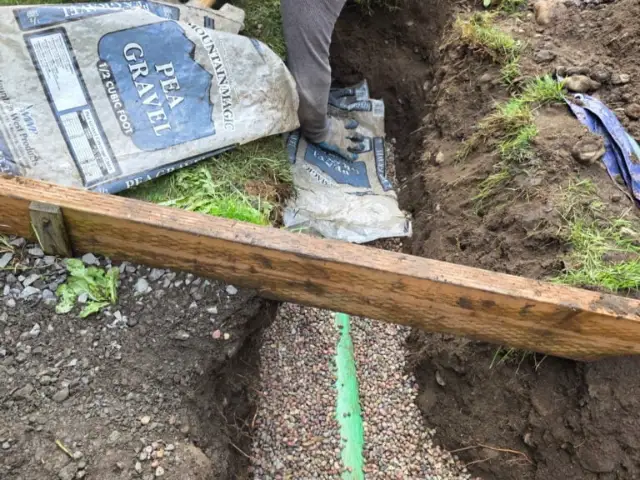
When a line is cracked, crushed, collapsed, badly offset or full of roots that will simply return, replacing the damaged section, or the whole line, is the lasting fix. We replace sewer lines between the house and the septic tank. A typical replacement includes:
- Locating the line and the problem with the camera, so we dig only where we need to.
- Excavating carefully to expose the damaged pipe while protecting the rest of your yard as much as possible.
- Installing new pipe at the correct slope, so wastewater and solids flow to the tank instead of collecting in low spots.
- Making tight, root-resistant connections at the house and the tank.
- Adding a cleanout where it helps, so future maintenance does not require digging.
- Testing the new line, often with the camera, before backfilling and restoring the area.
We will tell you before we start whether your project needs a permit and what to expect for timeline and yard restoration.
Repair, jet or replace: how we decide
The answer depends on what the camera shows. A clean pipe with a grease or sludge blockage needs jetting. A sound pipe with light root intrusion may need jetting now and periodic maintenance. A single cracked or separated section can often be repaired on its own. A line with multiple breaks, severe sags or heavy recurring roots usually needs replacement. We show you the footage, explain the options and their costs, and let you choose. We will not recommend digging up your yard if cleaning will do the job.
Preventing sewer line problems
- Keep wipes, paper towels and feminine products out of toilets, even products labeled flushable.
- Keep grease out of the sink. Let it cool, scrape it into the trash and wipe pans before washing.
- Plant trees and large shrubs well away from the line between the house and the tank.
- Keep heavy vehicles off the line and off the drainfield.
- Pump the tank on schedule so a full tank does not back up into the line. See septic tank pumping.
- Call at the first sign of trouble. A slow drain is much cheaper to fix than a backup.
If your line has had root problems before, ask us about a maintenance schedule. Periodic jetting of a sound line, timed before roots have a chance to build into a blockage, is far less disruptive than clearing an emergency backup. Keeping a record of when the line was last cleaned and what the camera showed also helps future technicians and future buyers understand the history of your system.
Older homes and pipe materials
The age of your home tells us a lot about what we might find in the line. Many homes in King and Snohomish counties were built when sewer lines were made of materials that do not hold up well over decades underground. Clay and concrete pipe come in short sections with many joints, and every joint is an opportunity for roots to get in or for the pipe to shift. Cast iron can corrode and scale on the inside, narrowing the pipe until it clogs easily. Some mid-century homes used tar-paper fiber pipe, which can soften, deform and eventually collapse. Modern plastic pipe, installed with proper bedding and slope, resists roots and corrosion and lasts far longer.
If you own an older home and have never had the line scoped, a camera inspection is a low-cost way to learn its condition before it becomes an emergency. If the line is aging but still sound, you can plan a replacement on your own schedule instead of during a backup.
What to expect during a camera inspection
A camera inspection usually needs access to the line through a cleanout outside the house or, if there is none, through the tank inlet or another access point. We run the camera through the pipe, watch the footage with you or describe it if you are not home, and note the location and depth of anything significant so we can find it from the surface. Most inspections take far less time than people expect, and you come away with a clear picture of the inside of your pipe and a recommendation based on what we actually saw.
Roots: why they keep coming back
Roots are the most common reason a line clogs again weeks or months after it was cleared. Jetting cuts them out of the pipe, but the opening that let them in is still there, and the tree is still thirsty. For light root intrusion in a sound pipe, periodic jetting can keep the line flowing for years. For heavy intrusion or roots entering through broken sections, replacing the affected pipe with modern, tightly joined pipe is the permanent fix. The camera tells us which situation you are in, so you are not paying for repeated cleanings that will never solve the problem.
Protecting your yard during a replacement
Nobody wants a trench across their lawn. Because the camera shows us exactly where the problem is, we can often repair only the damaged section instead of the whole line. When a full replacement is needed, we plan the route, protect landscaping and hardscape where possible and restore the area when we finish. We will walk you through what the work will look like before we start, so there are no surprises.
Line problems and home sales
Sewer line problems often surface during home sales, when a buyer’s inspection or a septic inspection notes slow drainage or backups. A camera inspection gives buyers and sellers a clear, objective record of the line’s condition and helps both sides decide whether a repair belongs in the deal. Sellers who address a known line problem before listing avoid surprises later in the transaction.
Line problem or septic problem?
Because the symptoms overlap, we look at the whole system when you call about a backup. If the tank is full, pumping fixes it. If the tank is fine but the line is blocked, jetting or repair fixes it. If the line and tank are fine but water is not leaving the tank, the problem is likely the effluent filter, a pump or the drainfield. Finding the real cause the first time saves you money and repeat visits. See septic repair for pumps, filters and alarms.
Sewer line service across King and Snohomish County
Our Kirkland office serves all of King County and our Woodinville office serves every city in Snohomish County. Both crews work both counties, so help is rarely far away, whether you need a camera inspection, jetting or a line repair. If you have a backup right now, call us any time through our 24/7 emergency septic service.
Why choose Septic Response for sewer line work
We show you the problem instead of asking you to take our word for it, and we recommend the least invasive fix that will actually last. Our technicians are WOSSA-certified, and we are licensed, bonded and insured. We give upfront pricing before work begins, protect your property and clean up when we finish. Our repairs come with the Septic Response Promise: a one-year warranty on most repairs, and next-day, if not same-day, response whenever you call about work we have done.
/ Where
Serving both counties.
Our Kirkland office covers King County and our Woodinville office covers every city in Snohomish County.
/ FAQ
What is a sewer camera inspection?
We feed a waterproof camera through the line between your house and septic tank and watch the inside of the pipe in real time, so we can see roots, cracks, sags and blockages and where they are.
What is line jetting?
Jetting uses a high-pressure water stream to scour the inside of the pipe, clearing grease, sludge, scale and soft roots from wall to wall so the line flows properly.
Is jetting better than snaking a drain?
For most septic lines, yes. A snake punches a hole through a clog, while jetting cleans the full diameter of the pipe, so the line stays clear longer.
Can jetting fix a broken sewer line?
No. Jetting cleans pipes but cannot repair cracks, separations or collapses. A camera inspection shows whether the pipe is sound before we jet.
Do you replace sewer lines?
Yes. We replace damaged sewer lines between the house and the septic tank, installed at the correct slope with tight connections and a cleanout where it helps.
Why does my drain keep backing up after it is snaked?
Recurring backups usually mean a structural problem such as roots, a sag or a broken section. A camera inspection shows exactly what is wrong.
How do I know if the problem is the line or the septic tank?
We check both. If the tank is full, pumping fixes it. If the tank is fine but the line is blocked, jetting or repair fixes it. If neither, we look at the filter, pump and drainfield.
Should I have the sewer line scoped before buying a home?
For older homes it is a smart idea. A camera inspection shows the condition of the line between the house and the tank before you close.
How can I prevent sewer line problems?
Keep wipes and grease out of the drains, plant trees away from the line, keep vehicles off it and pump your tank on schedule.
Do you offer sewer line service in both King and Snohomish County?
Yes. Our Kirkland and Woodinville crews both serve both counties.
/ Other services