
/ Service 03
Septic repair in King & Snohomish County
When an alarm is going off or a pump has quit, we find the real cause and fix it. We repair and replace effluent, ejector and grinder pumps, floats, alarm panels, risers, lids, baffles and filters.
/ Septic repair, done right
When a septic system stops working, it is tempting to assume the worst: a failed drainfield, a new system, a five-figure bill. In our experience, that is usually not what is going on. Most septic problems come down to one component that has worn out, clogged, shifted or been damaged, and fixing that component restores the whole system. The key is finding the real cause instead of treating the most visible symptom.
Septic Response repairs septic systems of every type across all of King County and every city in Snohomish County. We replace effluent pumps and floats, repair alarms and control panels, fix baffles, filters, lids and risers, repair broken lines, locate lost tanks, and repair and jet drainfields. We handle all sorts of septic repairs, and every one is backed by the Septic Response Promise.
/ The Septic Response Promise
1-year warranty on most repairs. And whenever you call us about work we have done, we are there the next day, if not the same day.
We stand behind our work because we plan to be your septic company for the long haul.
Repairs before replacements
We started Septic Response because homeowners deserve to understand what is happening underground before they spend money on it. Too often, people are told their drainfield has failed when a clogged lateral is to blame, or that they need a new system when a stuck float is the real problem. Our approach is simple: inspect, diagnose, explain, repair, and then help you maintain the system so the problem does not come back.
Not every problem means a new system. When a component can be repaired, we repair it. When replacement is truly the right call, we explain why, in plain English, and help you understand your options. You will always know what we found, which part is affected, why it matters, and whether it needs attention now or can safely wait.
Effluent pump replacement
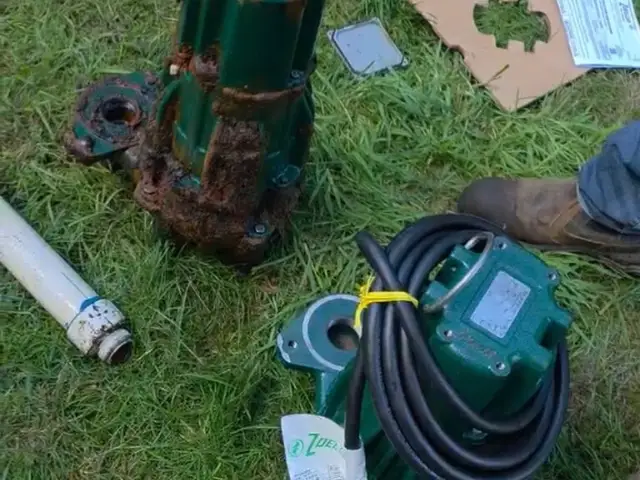
If your septic system has a pump chamber, the effluent pump is its heart. It sends wastewater from the tank to the drainfield, often in timed doses through pressure laterals. Pumps work hard and eventually wear out. Common signs of a failing pump include a high-water alarm, a pump that runs constantly or not at all, a tripped breaker, unusual noises from the pump chamber, and water backing up into the house or surfacing in the yard.
When a pump fails, we confirm it is actually the pump and not a float, breaker, control panel or wiring issue, because replacing a good pump does not fix a bad float. If the pump does need replacing, we install a correctly sized replacement suited to your system, check that the floats and alarm work with it, and make sure the drainfield is being dosed properly before we leave.
Float and alarm repair
Floats tell the pump when to turn on and off and tell the alarm when the water level is too high. They are simple parts, and they cause a surprising share of septic emergencies. A float can tangle with a cord, get stuck against the side of the chamber, fill with water or simply fail. When that happens, the pump may never turn on, never turn off, or the alarm may stay silent while the chamber overflows.
We replace failed floats, untangle and re-set floats that have shifted, and test the alarm and control panel so you can trust them again. A working alarm is your early warning system. If yours has been unplugged, disconnected or silenced for good, tell us and we will get it working again.
Control panels, timers and wiring
Pressure distribution, mound, drip and aerobic systems use control panels and timers to dose the drainfield in measured amounts throughout the day. Moisture, corrosion, power surges and age can affect switches, timers and connections. We troubleshoot panels systematically, from breaker to float to pump, to find exactly where the fault is before replacing anything.
Baffles, tees and effluent filters
Inlet and outlet baffles, or tees, keep scum and solids inside the tank where they belong. On many older concrete tanks, baffles have deteriorated or fallen off entirely. Without them, solids flow straight toward the drainfield, the most expensive part of your system to repair. Replacing a missing or broken outlet baffle is one of the best-value repairs in septic work.
Effluent filters are a second line of defense. They catch small solids before they leave the tank, so they need regular cleaning. A badly clogged filter can back water up into the house. We clean filters during service visits and install filters where they are missing and appropriate for your system.
Risers and secure lids
Buried lids make every visit slower and every repair harder to reach. Risers bring access to the surface, which saves time on every future pumping, inspection and repair. Secure lids are also a safety requirement: King County’s updated on-site sewage code, in effect since April 2025, requires tank lids to be secured, and in Snohomish County unsecured or inadequate lids can trigger enforcement during a home sale. If your lids are cracked, loose or covered with plywood or sheet metal, we will replace them with proper, secured lids.
Broken and clogged lines
The pipes that carry wastewater from your house to the tank, and from the tank to the drainfield, can crack, separate, settle or fill with roots. Symptoms include slow drains throughout the house, gurgling, backups and wet spots along the line. We locate the problem, often with a sewer camera on the line between the house and the tank, and repair or replace the damaged section. For more on camera inspections, jetting and line replacement, see jetting and sewer lines.
Drainfield repair and jetting
A struggling drainfield is not always a failed drainfield. Laterals can clog with biomat and solids, distribution can become uneven, and pressure laterals can lose their balance so some trenches get all the water while others get none. Jetting the drainfield lines, clearing clogged laterals and correcting distribution can bring a field back into service. We repair and jet drainfields and explain plainly when a field can be saved and when it cannot. Read more on our drainfield repair page.
Septic tank locating
Many homeowners do not know where their tank is, especially after buying a home or when records are incomplete. Older homes in particular may have no as-built drawing on file. We locate tanks, lids and other components on site so they can be serviced, repaired or documented. If you have one, an as-built from King County or the Snohomish County Health Department helps us get there faster.
How we diagnose a septic problem
Septic symptoms are easy to misread. A high-water alarm does not always mean the tank needs pumping. A backup does not always mean the drainfield has failed. Wet ground near the tank does not always mean the tank is leaking. That is why every repair starts the same way:
- Inspect. We look at the components involved and how the system is actually operating.
- Diagnose. We find the cause of the problem, not just the most visible symptom.
- Explain. We show you what we found, why it matters and what your options are.
- Repair. We fix what needs fixing, and we tell you what can safely wait.
- Maintain. We help you set up a maintenance schedule that prevents the next problem.
Common repairs by system type
The repairs a system needs depend a lot on how it is built. Here is what we see most often in western Washington:
- Gravity systems. The simplest design: a tank that drains by gravity to the drainfield. Repairs usually involve baffles and outlet tees, effluent filters, cracked or unsecured lids, settled or root-damaged lines, and drainfield laterals that need jetting. With no pump or electrical parts, these systems often run for decades with routine pumping and occasional component repairs.
- Pump and pressure distribution systems. A pump chamber sends effluent to the drainfield under pressure through small-diameter laterals. Effluent pumps, floats, alarms, control panels and timers are the most common repairs, along with clogged or unbalanced pressure laterals that need cleaning and adjusting.
- Mound and sand filter systems. Built where soils are shallow or groundwater is high, these add a treatment layer above or beside the native soil. They share the pump and control repairs of pressure systems, plus attention to the distribution network that keeps the filter media evenly loaded.
- Aerobic treatment units. Units such as Oscar and Bio-Microbics add air with a compressor or blower to treat wastewater more completely. Repairs often involve air pumps, diffusers, alarms and controls, alongside the usual tank and pump work. See ATU service.
Repair or replace? How we help you decide
Sometimes a component is near the end of its life and replacing it now is smarter than repairing it again. Sometimes a part looks old but has years left in it. We weigh the age and condition of the part, how critical it is to the rest of the system, the cost of repairing versus replacing, and the risk of a failure at a bad time, such as a pump failing in the middle of a winter storm. Then we lay out the options and let you decide. We will never push a replacement just because it is a bigger job.
What to expect on a repair visit
We start by asking what you have noticed and when it started. We open the system, test the components involved and find the cause. Before we fix anything, you will know what is wrong and what the repair costs. Many repairs, such as float replacements, filter cleaning and baffle repairs, are completed on the same visit when we have the parts on hand. Larger repairs may need a follow-up visit, in which case we make the system safe and usable in the meantime wherever possible. When we finish, we test the system, clean up, and explain what we did and what to watch for.
Signs your septic system needs repair
- A high-water alarm that keeps going off or will not clear
- A pump that runs constantly, short-cycles or does not run at all
- Slow drains, gurgling or backups throughout the house
- Sewage odors inside or around the tank and drainfield
- Wet, spongy ground or surfacing effluent over the drainfield or tank
- Cracked, sunken or unsecured lids
- A tank that seems to fill much faster than it used to
If sewage is backing up into your home or surfacing in your yard, do not wait. Call us any time, day or night, through our 24/7 emergency septic service.
Permits and county requirements
Some septic repairs require a permit from the county health department, while routine component repairs often do not. The rules differ between King County and Snohomish County and depend on what is being repaired. We will tell you whether your repair needs a permit and handle the required documentation. In Snohomish County, residential owners may qualify for Savvy Septic rebates on certain minor repairs and financial assistance for major repairs. See the Health Department’s Savvy Septic program.
How to make a repair last
A repair fixes today’s problem. Good habits keep the next one away. Pump the tank on the schedule we recommend, because solids are hard on pumps, filters and drainfields. Keep your inspections current so worn parts are caught early. Keep wipes, grease, paper towels and harsh chemicals out of the drains. Spread laundry across the week instead of running it all in one day, and fix running toilets and dripping faucets quickly. Keep vehicles, livestock and construction off the drainfield, and send gutter and surface water away from it. And if an alarm sounds or something seems off, call early. The sooner we look at a problem, the smaller it usually is.
Septic repair across King and Snohomish County
Our Kirkland office covers all of King County and our Woodinville office covers every city in Snohomish County. Both crews work both counties, so help is rarely far away.
Why homeowners trust Septic Response with repairs
Septic Response is a family-run company founded in 2018 by people who learned this business from the ground up. Our technicians are WOSSA-certified, certified on-site system maintainers in King County, and licensed, bonded and insured. We give upfront pricing before work begins, protect your lawn and landscaping and clean up before we leave. We back our repairs with the Septic Response Promise: a one-year warranty on most repairs, and next-day, if not same-day, response whenever you call about work we have done. More than 280 customers have reviewed us on Google, and many of them came to us after being told they needed far more work than they actually did.
/ Where
Serving both counties.
Our Kirkland office covers King County and our Woodinville office covers every city in Snohomish County.
/ FAQ
What is the Septic Response Promise?
Most repairs come with a one-year warranty. And whenever you call us about work we have done, we are there the next day, if not the same day.
Do I need a new septic system?
Usually not. Most problems come down to one component, such as a pump, float, baffle, filter or line. We find the real cause and repair it whenever repair is possible.
Do you replace effluent pumps?
Yes. We confirm the pump is actually the problem, install a correctly sized replacement, and test the floats, alarm and dosing before we leave.
My septic alarm keeps going off. What is wrong?
Common causes are a failed pump, a stuck or tangled float, a tripped breaker, a clogged pump screen or too much water entering the system. We troubleshoot from breaker to float to pump to find it.
Can you repair a drainfield instead of replacing it?
Often, yes. Jetting clogged laterals, clearing lines and correcting uneven distribution can bring a struggling field back. We will tell you plainly whether your field can be saved.
Can you find my septic tank if I do not know where it is?
Yes. We locate septic tanks, lids and other components on site, with or without an as-built drawing.
What is a septic baffle and why does it matter?
Baffles, or tees, keep scum and solids inside the tank. If the outlet baffle is missing or broken, solids flow to the drainfield and can damage it. Replacing one is a high-value repair.
Do septic repairs need a permit?
Some do and many routine component repairs do not. It depends on the county and the repair. We will tell you if yours needs one.
Do you give a price before starting work?
Yes. You will know the cost before any work begins, with no surprise fees.
Do you repair septic systems in both King and Snohomish County?
Yes. Our Kirkland and Woodinville crews both serve both counties.
/ Other services