
/ Service 05
Septic maintenance & monitoring in King & Snohomish County
Pump, pressure-distribution and advanced treatment systems need regular operation and maintenance (O&M) checks. We do the checks, handle what we find and keep your system on schedule.
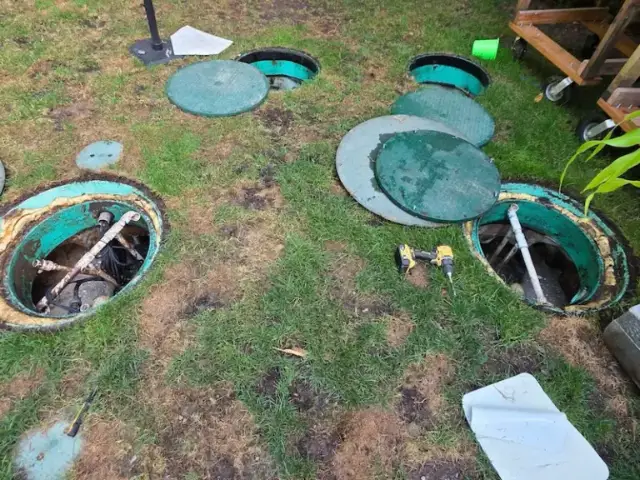
/ Septic maintenance and monitoring
A well-maintained septic system can serve a home for decades. A neglected one can fail in a fraction of that time, and the repairs that follow are almost always more expensive than the maintenance that would have prevented them. Maintenance and monitoring is the routine care that keeps your system working quietly in the background: regular checks of the tank, pumps, alarms, filters and dispersal area, timely pumping, and the reports the counties require.
Septic Response provides ongoing septic maintenance and monitoring for homeowners, landlords and businesses across all of King County and every city in Snohomish County. Our technicians are WOSSA-certified and certified on-site system maintainers in King County, and we keep both your system and your county records in good shape.
/ The Septic Response Promise
1-year warranty on most repairs. And whenever you call us about work we have done, we are there the next day, if not the same day.
We stand behind our work because we plan to be your septic company for the long haul.
What maintenance and monitoring means
In Washington, septic owners are responsible for inspecting and maintaining their systems, and the counties set schedules based on system type. “Monitoring” is the term often used for the routine operation and maintenance checks that keep a system working and on record. For a simple gravity system, that may be an inspection every three years and pumping when measurements say it is time. For a pressure distribution, mound, sand filter, drip or aerobic system, it means more frequent visits to keep pumps, controls, filters and treatment components working properly.
Maintenance is not just about compliance. It is the difference between finding a worn float during a routine visit and finding it when sewage backs up into your house on a holiday weekend.
Maintenance schedules by system type
- Conventional gravity systems: inspected every three years in both King and Snohomish counties. Pumping when the tank measurements call for it, which for many households is every few years.
- Pressure distribution and mound systems: more frequent inspections, because they depend on a pump, floats, alarms and controls. Snohomish County requires alternative systems to be inspected annually unless the manufacturer requires more, and Public Health – Seattle & King County lists shorter intervals for these systems as well.
- Sand filters, AdvanTex and aerobic treatment units: regular service following both the county schedule and the manufacturer’s requirements. See ATU, Oscar and Bio-Microbics service.
- Food service and commercial systems: in King County, systems serving food service businesses are inspected at least yearly, and grease and high-strength waste make regular service especially important.
Not sure which category you are in? Your as-built drawing lists your system type. Look it up through King County or Snohomish County records, or ask us and we will figure it out together.
What a maintenance visit includes
Each visit is tailored to your system, but a typical maintenance and monitoring visit includes:
- Measuring sludge and scum in the tank and any other chambers, so pumping happens when it is needed, not too early and not too late.
- Checking baffles, tees and the effluent filter, and cleaning the filter if it needs it.
- Testing the pump, floats and high-water alarm on pump systems, and confirming the alarm actually sounds.
- Checking the control panel and timers that dose pressure, mound and drip systems.
- Checking pressure laterals on pressure distribution systems for even distribution.
- Servicing treatment components on ATUs, sand filters and textile filters according to the manufacturer.
- Walking the drainfield or dispersal area for wet spots, surfacing, odors and damage.
- Checking lids and risers for safety and security.
- Filing the report with the county health department so your system’s record stays current.
- Telling you what is next: what we found, anything that needs attention and when your next service is due.
Why records matter
Every maintenance report filed with the county becomes part of your property’s septic history. Those records show you have met your responsibilities as an owner, help every future technician understand your system faster, and matter a great deal when you sell. In King County, a full operation and maintenance report filed within six months before a sale, or a history of regular reporting, can qualify a sale for a waiver of the separate time-of-sale inspection. In Snohomish County, sellers now need a full inspection within the past 12 months before closing. A well-documented system makes selling simpler. See septic inspections for the home sale rules in both counties.
The cost of skipping maintenance
Most of the expensive septic calls we see trace back to maintenance that slipped. A tank that went too long without pumping sends solids into the drainfield. A float that was never checked lets a pump chamber overflow. An alarm that was unplugged years ago stays silent while effluent surfaces in the yard. A blower that quietly failed turns an aerobic unit into a smelly, undersized tank. Each of these is inexpensive to catch during a routine visit and expensive to fix after it fails. Regular maintenance is the most cost-effective thing a septic owner can buy.
What homeowners can do between visits
- Know where your system is. Keep a copy of your as-built and mark the lids so they are easy to find.
- Watch the alarm. Make sure it is plugged in and working. If it sounds, silence it, cut water use and call.
- Spread out water use. Run laundry across the week, fix leaks and avoid draining hot tubs or pools into the system.
- Mind the drains. Keep wipes, grease, paper towels, paint, solvents and medications out. Our guide to habits that keep a septic system healthy has the full list.
- Protect the drainfield. No vehicles, livestock, sheds or construction over it, and keep gutters and runoff away.
- Keep records. File every pumping, inspection and repair report somewhere you can find it.
Maintenance protects more than your yard
A septic system is a treatment system, and the water it treats ends up in the ground beneath your property and, eventually, in the streams, lakes, wells and Puget Sound that make this region what it is. When a system is maintained, it removes bacteria, nutrients and solids before the water reaches the soil. When it is neglected, poorly treated wastewater can reach groundwater and surface water, affecting wells, swimming areas and shellfish beds. That is a big part of why King County and Snohomish County take septic maintenance seriously, and why homes near lakes and shorelines often have advanced treatment systems with stricter maintenance needs.
It is also why maintenance pays off for you personally. A healthy system protects your own well water if you have one, keeps your yard safe for kids and pets, and preserves the value of your property. A failing system can become a health hazard, a compliance problem and a costly obstacle when it is time to sell. Routine maintenance is a small, predictable cost that protects all of it.
Risers make maintenance easier
If your tank lids are buried, every maintenance visit starts with digging. Risers bring access up to ground level so visits are faster, cleaner and less disruptive to your yard. Secure lids are also a safety requirement in King County under the code updates that took effect in April 2025, and unsecured lids can trigger enforcement during a Snohomish County home sale. Adding risers is one of the best investments you can make in a system you plan to keep for years. They also make it far easier for anyone, including emergency crews, to reach your tank quickly when it matters most.
Seasonal checklist for western Washington
- Fall: schedule pumping or service before the rainy season and before the ground gets hard to work. Clear gutters and make sure runoff drains away from the field.
- Winter: watch for wet spots during long rainy stretches, keep water use steady after power outages, and protect shallow lines from freezing by fixing slow leaks.
- Spring: walk the drainfield as it dries out and look for areas that stay soggy. It is a good time to locate the system before landscaping projects.
- Summer: a good time for repairs and risers while the ground is dry, and to keep irrigation away from the drainfield.
Pump systems: the parts that need the most attention
If your system has a pump chamber, a handful of parts do most of the work and cause most of the problems. The effluent pump moves wastewater to the drainfield and eventually wears out. The floats tell the pump when to run and tell the alarm when the water is too high, and they can tangle, stick or fail. The high-water alarm is your early warning, but only if it is plugged in, powered and tested. The control panel and timer decide how much effluent the field receives and when, and moisture or power surges can affect them. And the pump screen or filter keeps solids away from the pump and needs periodic cleaning. A maintenance visit checks every one of these, because a failure in any of them can stop the whole system.
How pumping and maintenance fit together
Pumping and maintenance are partners, not substitutes. Pumping removes the solids that build up in the tank. Maintenance checks everything else: the filter, the baffles, the pump, the controls, the alarm and the drainfield. Because we measure sludge and scum on every maintenance visit, you pump when the tank actually needs it instead of on a guess. That saves money when your tank fills slowly and protects your drainfield when it fills quickly. When pumping is due, we can usually do it on the same visit. See septic tank pumping.
Signs your system needs attention between visits
- An alarm sounding or a warning light on the control panel
- Slow drains or gurgling throughout the house
- Sewage odors inside or outside
- Wet ground, surfacing or unusually green grass over the drainfield
- A pump that runs constantly or not at all
- A cracked, sunken or loose lid
Do not wait for your next scheduled visit if you notice any of these. Call us, and if it is urgent, use our 24/7 emergency septic service.
Questions to ask any septic maintenance provider
Whoever maintains your system, you deserve clear answers. Before you choose a provider, ask:
- Are your technicians certified to maintain systems in my county? In King County, maintenance must be done by certified on-site system maintainers.
- Will you file the required reports with the county? The reports are what keep your record current.
- Do you work on my type of system? Pressure, mound, sand filter, AdvanTex and aerobic systems need technicians who know them.
- Will you explain what you find? You should understand the condition of your system, not just receive a bill.
- Do you stand behind your repairs? Ask what happens if something goes wrong after a repair. Our answer is the Septic Response Promise.
We are happy to answer every one of these questions for you.
Landlords, property managers and businesses
If you own or manage rental homes, multi-unit properties, churches, shops or other businesses on septic, staying on schedule is even more important, because a failure affects tenants, customers and staff. We work directly with owners and property managers to keep systems serviced and documented, so you are not caught off guard by an emergency or a compliance letter.
Maintenance after a home purchase
New owners often inherit a system with an unknown history. Start by finding the as-built and the most recent reports, then schedule a maintenance visit so you know where everything is, what condition it is in and when the next pumping and inspection are due. Our new homeowner septic guide walks through the first steps.
If the previous owner kept good records, you are ahead. If not, a first visit fills in the gaps: we locate the components, record what type of system you have and its condition, and set a schedule that fits your household from day one.
Maintenance and monitoring across King and Snohomish County
Our Kirkland office serves all of King County and our Woodinville office serves every city in Snohomish County. Both crews work both counties. In Snohomish County, residential owners may qualify for rebates on inspections, pumping and risers through the Health Department’s Savvy Septic program.
Why Septic Response for ongoing maintenance
Maintenance is a relationship, not a one-time job. We want to be the company that knows your system, remembers its history and tells you honestly what it needs and what can wait. Our technicians are WOSSA-certified, certified on-site system maintainers in King County, and licensed, bonded and insured. We file county reports for you, explain what we find in plain English, give upfront pricing and stand behind our work with the Septic Response Promise. More than 280 customers have reviewed us on Google.
/ Where
Serving both counties.
Our Kirkland office covers King County and our Woodinville office covers every city in Snohomish County.
/ FAQ
What is septic maintenance and monitoring?
Routine operation and maintenance checks of your septic system, including tank levels, filters, pumps, floats, alarms, controls and the drainfield, along with the reports the counties require.
How often does my septic system need maintenance?
Gravity systems are inspected every three years in King and Snohomish counties. Pressure distribution, mound, sand filter and aerobic systems need more frequent service based on county and manufacturer requirements.
Do you file maintenance reports with the county?
Yes. We file the required reports with the county health department so your system’s record stays current.
Are you certified to maintain septic systems in King County?
Yes. Our technicians are certified on-site system maintainers in King County and WOSSA-certified.
What does a maintenance visit include?
Measuring sludge and scum, checking baffles and the effluent filter, testing pumps, floats and alarms, checking controls and laterals, walking the drainfield, checking lids and filing the report.
Can regular maintenance help when I sell my home?
Yes. In King County, a recent maintenance report or regular reporting can qualify a sale for a waiver of the separate time-of-sale inspection, and good records make any sale simpler.
What can I do between maintenance visits?
Keep the alarm working, spread out water use, keep wipes and grease out of the drains, protect the drainfield and keep your records together.
Do risers make maintenance cheaper?
They make every visit faster and less disruptive because the lids are at the surface, and secure lids are required in King County.
Do you maintain septic systems for rentals and businesses?
Yes. We work with landlords, property managers and businesses to keep systems serviced and documented.
Do you provide maintenance in both King and Snohomish County?
Yes. Our Kirkland and Woodinville crews both serve both counties.
/ Other services