
/ Snohomish County records
Snohomish County septic as-built records.
An as-built is the drawing of your septic system made when it was installed. It shows what kind of system you have and where the tank and drainfield are. Here is how to look yours up.
By Anthony Wilson, founder · Updated November 2026
An as-built is the drawing of your septic system as it was actually installed: where the tank is, where the drainfield runs, what kind of system it is and how big. You need it to find your tank lids, plan a remodel or addition, and, since November 1, 2026, to sell a home in Snohomish County. Here is how to find yours.
Step 1: Search the Health Department’s septic records online
The Snohomish County Health Department keeps as-built records on its As-Built Records page, which links to the OnlineRME database of septic records. Search by your address or parcel number and download the drawing.
A few tips that save time:
- Try the parcel number if the address fails. Addresses change, roads get renamed and older records were sometimes filed under a lot number. Your parcel number is on your property tax statement or the county assessor’s site.
- Look at every record for the property. You may find the original installation, later repairs, and past inspection or pumping reports. The most recent repair drawing may show a different drainfield than the original.
- Download and save a copy. Keep it with your house papers. You will want it again.
Step 2: Read the drawing
Look for the system type (gravity, pressure distribution, mound, sand filter or aerobic treatment unit), the tank size and the distances from the house to the tank and drainfield. Older drawings are often hand sketched, so measurements can be rough.
- Tie-in measurements are usually taken from two corners of the house to the tank. Measure out from both corners and the tank should be close to where the lines cross.
- The system type tells you how often it needs to be inspected. Snohomish County expects gravity systems to be inspected every 3 years and alternative systems every year, unless the manufacturer says otherwise.
- The tank size (often 1,000 or 1,250 gallons on older homes) helps us estimate how often it needs pumping.
- The drainfield area shows where not to park, build, plant trees or put a hot tub.
Step 3: If there is no record
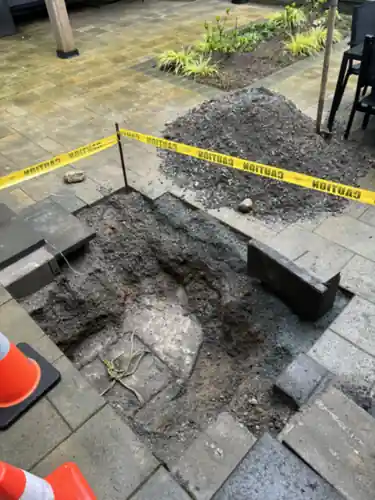
Some older homes have no as-built on file, and some drawings no longer match what is in the ground. You can contact the Health Department’s land use office (3020 Rucker Ave, Suite 104, Everett; 425-339-5250). We can also locate the tank and drainfield on site.
We usually find a buried tank with a probe. When there is no county as-built on file, or the tank location is unknown or hard to find, we flush a small transmitter down the line and follow it to the tank with an electronic locator. Once we find it, we show you exactly where it is so you can mark it for next time.
Why it matters now
Starting November 1, 2026, Snohomish County requires sellers to have an as-built on file (or a site plan completed by a certified contractor), plus a recent inspection, before a home sale closes. Details are on the Health Department’s Property Transfer page and in our guide to the new home-sale rule.
In short, before closing a seller needs:
- A full inspection by a certified septic contractor within the past 12 months, plus pumping if recommended.
- An as-built on file with the Health Department, or an On-Site Sewage System Site Plan completed by a certified contractor.
- A Report of Property Transfer submitted online with the fee.
If you are planning to sell, check for the as-built first. If it is missing, give yourself time to get a site plan done so it does not hold up closing.
Other good reasons to have your as-built
- Finding the lids for pumping and inspections. See our guide on how to find your septic tank lid.
- Planning projects. Decks, patios, additions, driveways and fences all need to stay clear of the tank and drainfield.
- Installing risers so the lids sit at ground level. The Savvy Septic program offers rebates on risers, pumping and inspections for eligible Snohomish County homeowners.
In King County instead? Our guide to King County as-built records covers that county’s map tool.
Need help? Our team handles inspections, tank locating and records across Snohomish County. Call (206) 790-9392 or (206) 962-2600.
How do I find the drainfield location on my Snohomish County property?
Start with your as-built drawing. It shows where the tank and drainfield were installed and how far they sit from the house. Look it up in the Snohomish County Health Department’s as-built records by address or parcel number. If there’s no as-built on file, a certified septic contractor can locate the system and draw a site plan.
How do I find the septic system records for my Snohomish County property?
Use the Snohomish County Health Department’s As-Built Records page, which links to OnlineRME, where contractors file pumping and inspection reports. For anything that isn’t online, contact the department’s Land Use desk at 3020 Rucker Ave, Suite 104, Everett, (425) 339-5250. Have your address and parcel number ready.
Quick answers
How do I find my septic as-built in Snohomish County?
Use the Snohomish County Health Department’s As-Built Records page, which links to the OnlineRME database. Search by address or parcel number and download the drawing.
What if there is no as-built for my house?
Contact the Health Department’s land use office in Everett, or have a septic company locate the system on site. For a home sale, a certified contractor can complete an On-Site Sewage System Site Plan.
Do I need an as-built to sell my house in Snohomish County?
Since November 1, 2026, sellers must have an as-built on file or a site plan completed by a certified contractor, along with a recent inspection and a Report of Property Transfer, before closing.
Are as-built drawings accurate?
They are a good starting point, but older drawings are often hand sketched and measurements can be rough. Patios, additions and landscaping can also change things. A septic company can confirm the location with a probe or electronic locator.