/ Service 07
ATU, Oscar & Bio-Microbics service in King & Snohomish County
Aerobic treatment units and other advanced systems need more care than a standard tank. We service and repair them, including Oscar and Bio-Microbics systems, from blowers and UV lights to alarms and controls.
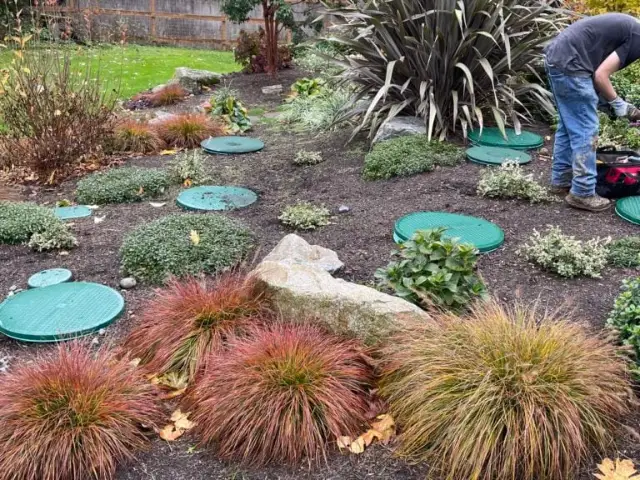
/ Aerobic and advanced treatment systems
Many homes in King and Snohomish County sit on lots where a conventional septic system will not work: small parcels, shallow or tight soils, high winter groundwater, or property close to a lake, stream or Puget Sound. These homes rely on advanced treatment systems, including aerobic treatment units (ATUs) such as Oscar and Bio-Microbics, textile filters such as Orenco AdvanTex, and sand filters. These systems treat wastewater to a much higher standard than a simple tank, but they only do that when they are maintained.
Septic Response services and repairs aerobic treatment units and other advanced systems across all of King County and every city in Snohomish County. We understand how these systems are built, what their manufacturers require and what the counties expect, and we keep them running the way they were designed to.
/ The Septic Response Promise
1-year warranty on most repairs. And whenever you call us about work we have done, we are there the next day, if not the same day.
We stand behind our work because we plan to be your septic company for the long haul.
What an aerobic treatment unit does
A conventional septic tank relies on anaerobic bacteria, which work without oxygen, to partially break down waste. An aerobic treatment unit adds air. A blower or air pump pushes oxygen into the wastewater, which supports aerobic bacteria that break down organic material much faster and more completely. The result is cleaner effluent, with far less organic matter and suspended solids, before it reaches the drainfield or dispersal area.
Most ATUs work in stages:
- Pretreatment. Wastewater enters a pretreatment tank or chamber where heavy solids settle out, just as in a regular septic tank.
- Aeration. In the aeration chamber, diffusers release air bubbles that mix the wastewater and feed aerobic bacteria.
- Clarification. The treated water moves to a quiet chamber where remaining fine solids settle and return for more treatment.
- Disinfection, on some systems. Some units add a disinfection step before dispersal, depending on the design and site.
- Dispersal. The treated effluent goes to a drainfield, pressure distribution system or drip system, often a smaller one than a conventional system would need.
Systems we service
- Oscar systems. We service and work on Oscar septic systems, a common choice in our region.
- Bio-Microbics systems. Bio-Microbics units, including their FAST-style fixed-film aerobic systems, are found on many properties around Puget Sound. We service and repair them.
- Orenco AdvanTex. AdvanTex systems use a textile filter and recirculation to treat effluent. They depend on pumps, controls and a clean filter.
- Sand filters. Sand filter systems pass effluent through a bed of filter media for additional treatment and rely on pumps, distribution piping and controls.
- Pressure distribution, mound and drip dispersal systems that often accompany advanced treatment.
If you are not sure what kind of system you have, your as-built drawing will tell you. You can look it up through King County or Snohomish County records, or we can identify it on site.
Why advanced systems need regular service
An ATU is a small treatment plant buried in your yard. It has moving parts, electrical components and living bacteria, and each needs attention. Blowers and air pumps wear out. Diffusers clog. Floats stick. Alarms get unplugged. Sludge still builds up and still needs to be pumped. When any of these slips, treatment quality drops, odors appear, and the dispersal area receives dirtier water than it was designed for, which can shorten its life.
That is why both counties require advanced systems to be inspected more often than conventional systems. Snohomish County requires alternative systems to be inspected annually unless the manufacturer requires more frequent service, and Public Health – Seattle & King County lists shorter inspection intervals for these systems as well. Many manufacturers also specify their own service schedules, and keeping to them can matter for warranty coverage.
What an ATU service visit includes
Every brand has its own checklist, and we follow the manufacturer’s guidance. A typical service visit includes:
- Checking the blower or air pump for proper operation, airflow, noise and wear, and checking its filter.
- Checking the diffusers and aeration to make sure air is reaching the wastewater evenly.
- Measuring sludge levels in the pretreatment and treatment chambers to see whether pumping is needed.
- Looking at the effluent for clarity and odor, which tells us how well the system is treating.
- Testing floats, pumps and alarms, so the system doses correctly and warns you when something is wrong.
- Checking the control panel, timers and electrical connections.
- Cleaning filters and screens where the system has them.
- Checking the dispersal area for wet spots, surfacing or damage.
- Filing the required report with the county health department.
Common ATU problems
- A failed blower or air pump. The most common problem by far. Without air, the aerobic bacteria die off, treatment stops and the unit starts to smell like an ordinary septic tank, or worse.
- Alarms. High-water and low-air alarms point to pump, float, blower or power problems. An alarm that has been silenced or disconnected is a problem waiting to happen.
- Odors. A sewage or rotten-egg smell usually means the system is not getting enough air or has too much sludge.
- Cloudy or foamy effluent. Often caused by overloading, harsh cleaning chemicals, antibacterial products or a system overdue for pumping.
- Clogged diffusers or filters. These reduce air delivery or treatment and need cleaning or replacement.
- Power outages. ATUs stop treating when the power is off. When it comes back, they need time to recover, and a surge of stored water can stress the system.
- Dispersal problems. Wet spots or surfacing over the drainfield or drip area, often from a pump, timer or distribution issue.
Why advanced systems are so common here
Western Washington’s landscape is beautiful and challenging for septic systems. Glacial soils can be dense and slow to drain. Winter groundwater rises close to the surface. Many homes sit on small lots or near lakes, streams, wetlands and shorelines where wastewater needs extra treatment before it reaches the soil. In these situations, a conventional tank and gravity drainfield either will not fit or will not protect the water nearby. Advanced treatment systems solve that by cleaning the effluent more thoroughly before it is dispersed, which often allows a smaller dispersal area and protects nearby water.
Signs your ATU needs service now
- An alarm light or buzzer on the control panel
- Sewage or rotten-egg odors near the unit or in the yard
- A blower that is silent, unusually loud, hot or tripping its breaker
- Cloudy, dark or foamy water visible in the clarifier
- Wet spots, lush green strips or surfacing over the dispersal area
- Slow drains or backups in the house
- It has been more than a year since the system was serviced or inspected
Any of these deserves a call. Catching a blower or pump problem early protects the bacteria, the treatment process and the dispersal area.
What happens when an ATU is neglected
An aerobic system that stops getting air does not just stop treating. It turns into an undersized conventional tank, which it was never designed to be. Odors develop, solids build up faster, and poorly treated effluent reaches a dispersal area that was sized for clean water. Over time that can clog drip lines or a pressure distribution field, and repairing a dispersal area is far more expensive than replacing a blower. Neglected systems can also fall out of compliance with county inspection requirements, which becomes a problem when you sell. Regular service is the inexpensive way to avoid all of this.
AdvanTex and sand filter care
Textile filter systems such as Orenco AdvanTex and sand filter systems work a little differently from blower-driven ATUs, but they share the same principle: they treat effluent in stages and depend on pumps, controls and clean filter media. Recirculation pumps, timers, floats and alarms need regular checks, filters and screens need cleaning, and the primary tank still needs to be pumped. We follow the manufacturer’s and the county’s maintenance requirements for each system, so your treatment stays effective and your records stay current.
ATU repairs
We repair the components that keep advanced systems working, including blowers and air pumps, diffusers, effluent pumps, floats, alarms, control panels and timers, along with the tank, line and dispersal repairs every system eventually needs. We find the cause before we replace anything, explain what we found and what it will cost, and back our repairs with the Septic Response Promise. Read more on our septic repair and drainfield repair pages.
Living with an aerobic treatment unit
A few habits keep an ATU healthy and help it last:
- Never turn off the blower. It needs to run continuously. If it is noisy or tripping a breaker, call us instead of unplugging it.
- Do not ignore the alarm. Silence it, cut back on water and call.
- Go easy on chemicals. Large amounts of bleach, antibacterial soaps, drain cleaners and medications can kill the bacteria that do the treatment.
- Skip additives. A healthy ATU gets the bacteria it needs from normal use.
- Spread out water use. Run laundry across the week and fix leaks quickly so the unit has time to treat each batch.
- Keep the lids accessible and the area around the blower clear and ventilated.
- Keep up with service and inspections, which keep you compliant with the county and protect your investment.
How an ATU compares with a conventional system
Homeowners often ask whether an advanced system is better or worse than a conventional one. The honest answer is that each is right for different sites. A conventional gravity system is simple, has no electrical parts and needs relatively little attention beyond pumping and inspections every few years. An advanced system can be installed where a conventional system cannot, protects nearby water better and can often use a smaller dispersal area, but it depends on electricity, moving parts and regular service.
In practical terms, owning an ATU means a slightly higher ongoing cost for power, service and the occasional part, in exchange for a system that works on a site where a conventional system would fail. The owners who are happiest with their advanced systems are the ones who keep them on a regular service schedule, respond to alarms promptly and treat the blower as the heart of the system. When those basics are covered, ATUs are dependable and long-lived. When they are ignored, they become expensive quickly.
If you are unsure whether your system is being serviced as often as it should be, call us. We will look at your system type, your county’s requirements and the manufacturer’s guidance and tell you what schedule makes sense.
Vacations, vacancies and seasonal homes
The bacteria in an ATU need a steady supply of food. If a home sits empty for weeks, the population drops, and the system may need a little time to recover when you return. Leave the blower running while you are away. For homes that sit vacant for long periods, or cabins used seasonally, talk to us about the best way to manage the system between visits.
When you return after a long absence, ease back into normal use for the first few days rather than running every load of laundry at once. That gives the bacteria time to rebuild and keeps the system treating properly from the start.
Buying a home with an ATU
If the home you are buying has an aerobic or advanced system, ask for its service history, find out when it was last inspected and pumped, and learn what brand and model it is. Advanced systems are excellent when maintained and costly when neglected, so the records matter. Both counties require a septic inspection when a home is sold. Our septic inspections page explains the requirements, and our article on ATU maintenance in Lake Stevens covers what owners can expect.
ATU service across King and Snohomish County
Our Kirkland office serves all of King County and our Woodinville office serves every city in Snohomish County, including lakeside communities like Lake Stevens where advanced systems are common. Both crews work both counties.
Why Septic Response for your advanced system
Advanced systems need technicians who understand more than pumping. Ours are trained to diagnose the full range of systems found in western Washington, from simple gravity systems to pressure distribution, mounds, sand filters, AdvanTex and aerobic treatment units including Oscar and Bio-Microbics. We are WOSSA-certified, certified on-site system maintainers in King County, and licensed, bonded and insured. We explain what we find in plain English, follow the manufacturer’s requirements, keep your county filings current and stand behind our repairs with the Septic Response Promise.
/ Where
Serving both counties.
Our Kirkland office covers King County and our Woodinville office covers every city in Snohomish County.
/ FAQ
What is an aerobic treatment unit?
An ATU adds air to wastewater with a blower or air pump so aerobic bacteria can break down waste faster and more completely than in a regular septic tank, producing cleaner effluent.
Do you service Oscar and Bio-Microbics systems?
Yes. We service and repair Oscar and Bio-Microbics aerobic treatment units, along with Orenco AdvanTex, sand filters and other advanced systems.
How often does an ATU need to be inspected?
More often than a conventional system. Snohomish County requires alternative systems to be inspected annually unless the manufacturer requires more, and King County lists shorter intervals too.
Does an aerobic system still need to be pumped?
Yes. Sludge still builds up in the pretreatment and treatment chambers. We measure it on every service visit and tell you when pumping is due.
My ATU smells bad. What is wrong?
Odors usually mean the system is not getting enough air, often from a failed blower, or that it has too much sludge. Call us and do not turn off the blower.
Can I turn off my ATU blower when I go on vacation?
No. Leave it running. The aerobic bacteria need air continuously, and turning it off can cause odors and poor treatment.
What does the alarm on my aerobic system mean?
It usually signals high water or low air, pointing to a pump, float, blower or power problem. Silence it, reduce water use and call us.
Do I need additives for my aerobic system?
No. A healthy ATU gets the bacteria it needs from normal household use. Avoid harsh chemicals and antibacterial products instead.
What happens to my ATU during a power outage?
It stops treating until the power returns. Use as little water as possible during the outage and for several hours afterward.
Do you service advanced systems in both King and Snohomish County?
Yes. Our Kirkland and Woodinville crews both serve both counties.
/ Other services