
/ Septic upgrades
Septic tank risers: are they worth it?
Short answer: for most buried tanks, yes. Risers bring the lids up to the surface so nobody has to dig on every visit. Here is what Washington code requires, the Snohomish County rebate, and how installation works.
By Anthony Wilson, founder · Updated November 2026
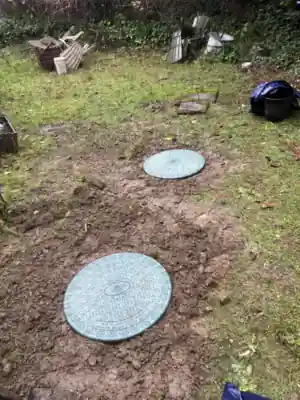
If every septic visit at your house starts with someone digging through the lawn looking for the tank lid, a riser is probably the best small upgrade you can make. A riser is a watertight shaft, usually plastic or concrete, that extends the tank’s access opening up to the surface and is capped with a secure lid. Instead of digging down a foot or more every time the tank is pumped or inspected, the service technician lifts the lid and gets to work. Here is when risers are worth it, what Washington code requires, and how King and Snohomish County fit in.
Why so many tanks around here are buried
Older septic tanks were often installed with their lids well below the lawn, sometimes a foot down, sometimes three or more. Back then, pumping was an occasional event and nobody minded digging. Since then, landscaping has been added, lawns have been regraded, patios and decks have been built, and the exact location of the lid has been forgotten. In both counties we regularly find tanks under lawns, garden beds and even paver patios.
Meanwhile, the rules have changed. Washington code now requires every system to be inspected at least every three years for a tank and gravity drainfield, and every year for other systems (WAC 246-272A-0270). King County lists every 6 months for pressure, mound, sand filter, ATU and drip systems. A buried lid that was a minor nuisance once a decade becomes a real cost when someone has to reach it on a schedule.
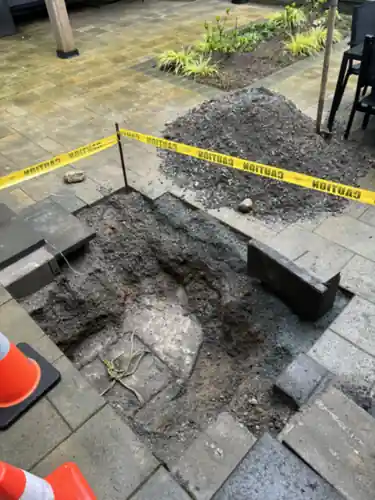
The benefits of septic tank risers
- Faster, cheaper visits. No digging means less time on site. King County’s landscaping guidance recommends considering risers because they make pumping and monitoring visits easier and less time-consuming (King County: landscaping with a septic system).
- Less damage to your yard. No more holes in the lawn or lifted pavers every few years.
- Easier inspections. The inspector needs to see the inlet, the outlet, the baffles and the effluent filter. Risers make all of that easy to reach.
- Faster help in an emergency. When an alarm goes off at night or the house is backing up, a crew that can open the tank in a minute fixes the problem sooner.
- Easy filter maintenance. If your tank has an effluent filter, it needs regular cleaning. A riser over the outlet turns that into a quick job.
- You always know where the tank is. That matters when you plan landscaping, sell the house, or tell a contractor where not to drive.
What Washington code says about risers and lids
Washington’s sewage tank standards (chapter 246-272C WAC) set the basic requirements for access openings and risers. Among them:
- Access openings must be large enough for a person with equipment to easily clean, maintain, remove and replace tank components.
- Access openings must be located above the inlet and the outlet, and directly above any pumping or dosing equipment and any effluent screen or filter.
- Risers must be at least 23 inches in diameter.
- Riser connections to the tank and between riser sections must use joint grooves or adapters that prevent sideways movement and stay watertight.
- Access and riser openings must be covered with a lockable lid or another type of secured lid to prevent unauthorized entry.
- Risers and lids must be structurally sound for the loads expected at that site.
Those last two points are about safety. An open or loose lid is a real hazard for children and pets, and septic tanks contain gases that can overcome a person quickly. King County’s revised septic code, in effect since April 1, 2025, requires all tank lids to be secured, and the county explains that the maintainer who next inspects your system needs to make sure the lids are secured during that inspection (King County code revision).
Do I have to install risers?
For an existing, working system, neither county requires you to add risers just because the code has changed. King County says that if your septic system is functioning, no upgrades are necessary, though lids do need to be secured. New and replacement tanks, however, are built to current standards, and the tank must be accessible for the inspections and pumping that state code requires. In practice, if your lids are buried, someone will be digging to reach them on every visit until a riser goes in.
Rebates in Snohomish County
Snohomish County actively encourages risers. The Health Department’s Savvy Septic Program offers rebates for septic inspection, pumping, riser installation and select minor repairs. To become eligible, you take the free online Septic Care Workshop. The county reports 223 riser rebates between 2023 and 2025, so plenty of homeowners are using it. If you are in Snohomish County and planning a riser, take the workshop first.
In King County, the county lists a septic system maintenance and side sewer repair rebate program; check its website to see whether your property is eligible.
How riser installation works
- Find the tank. We start with the county as-built if there is one (King County’s records map, or OnlineRME in Snohomish County). We usually probe for the tank. If there is no as-built, or the tank is unknown or hard to find, we use an electronic locator with a flushable transmitter. Our guide to finding your septic tank lid explains the process.
- Expose the openings. We dig down to the tank’s access openings, usually over the inlet and outlet, and over the pump chamber on pump systems.
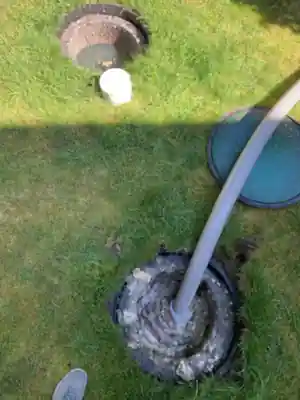
- Pump and inspect. With the tank open, it is the right moment to pump if it is due and to check the baffles and clean the filter.
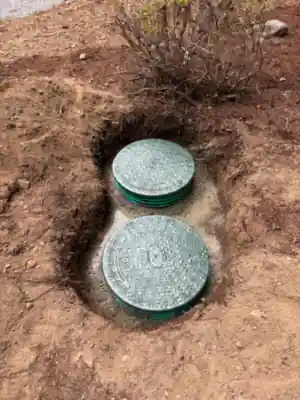
- Fit the risers. Riser sections are joined to the tank with watertight adapters and built up to grade.
- Secure the lids. Lids are bolted or locked so they cannot be lifted by a child or knocked loose by a mower.
- Backfill and tidy up. The soil goes back around the risers and the lawn is left level.
Choosing the right riser
Most residential risers are plastic. They are light, they do not rust, and they seal well against groundwater when fitted with the right adapters. Concrete risers are heavier and are sometimes used where the site needs extra strength. Whatever the material, three things matter most:
- Watertight joints. In our wet winters, a riser that leaks lets groundwater into the tank, which then flows to the drainfield and uses up its capacity. That is the opposite of what you want.
- A secure lid. Bolted or locking, as code requires.
- The right load rating. Risers in a lawn see foot traffic and mowers. Never drive or park over a riser or tank unless the system was specifically designed for it.
Risers on pump systems and ATUs
If your home has a pressure distribution system, a mound, a sand filter or an aerobic treatment unit, risers are even more valuable. These systems have a pump chamber with a pump, floats and often an alarm, and an ATU adds an aerator or blower and usually a filter. All of those parts need regular checks, which is why the counties inspect these systems far more often than simple gravity systems. Washington’s tank standards require an access opening directly above any pumping or dosing equipment and any effluent screen or filter, so the parts can be reached and replaced. On many of these systems the pump chamber already has a riser and only the septic tank lids are buried. Adding risers to the rest of the system means the whole inspection can be done from the surface. Our ATU service page explains more about how these systems are maintained.
What affects the cost of a riser
We price each riser job before we come, because a few things change the amount of work:
- How deep the tank is. A lid six inches down needs one short riser section. A lid three feet down needs more sections and more digging.
- How many openings. Most tanks have two openings, one over the inlet and one over the outlet, and pump systems add a pump chamber. Some owners start with the outlet side, where the filter is, and add the rest later.
- What is on top. Lawn is easy. Pavers, decking or landscaping take longer to remove and replace.
- Whether the tank needs pumping or repair at the same time. Combining work saves a separate trip.
In Snohomish County, remember to take the free Septic Care Workshop before the work so you can claim the Savvy Septic riser rebate.
A word on safety
Septic tanks are confined spaces filled with gases that can overwhelm a person in seconds, and a cracked or loose lid can give way under a child or a pet. This is the reason Washington code requires secured lids and King County now checks that lids are secured at inspection. If you have an old concrete lid that is cracked, a lid that has been covered with only a board or a sheet of plywood, or a riser cap that lifts off by hand, call us. Never climb into a septic tank or lean in to look, even when it has just been pumped.
Are there any downsides?
A few, and they are minor. The lids are visible, though most are green or brown and sit flush with the lawn. You will need to mow around them. And a poorly installed riser can let in groundwater, which is why the joints matter. Some homeowners worry about smell; a properly sealed lid should not let odors out, and a persistent smell near the lid is worth a call (see our guide to septic smells).
When is the best time to add risers?
- The next time the tank is pumped. We are already digging to the lid, so the extra work is small.
- During a repair that involves opening the tank, such as a baffle or pump replacement.
- Before you sell, so the inspection is easy. In Snohomish County, sellers now need a full inspection within 12 months of closing (see our home-sale guide), and in King County a certified maintainer must inspect before the title transfers.
- In late summer or early fall, when the ground is dry and digging is easiest.
Risers and regular maintenance
Once your lids are at the surface, staying on schedule gets much easier. Our pumping schedule guide explains how often a typical household needs service, and our $10/month maintenance plan covers a free annual filter cleaning and system check, no emergency fees, next-day emergency service and 10% off septic services, with reminders when you are due. Riser installation is part of our septic repair work, along with lids, baffles, filters, pumps, floats and alarms.
Want to stop digging for your tank? Call our Kirkland office at (206) 962-2600 for King County or our Woodinville office at (206) 790-9392 for Snohomish County. Phones are answered 24/7, and we give you the price before we come.
Quick answers
Are septic tank risers worth it?
For most buried tanks, yes. Risers bring the lids to the surface so pumping, inspections and filter cleaning do not require digging, which saves time on every visit and protects your lawn. King County recommends considering them for exactly that reason.
Are risers required in Washington?
Washington's tank standards require secured lids and set minimum riser sizes, and King County now requires tank lids to be secured. Neither county requires adding risers to a functioning existing system, but they make the inspections state law requires far easier.
How big does a septic riser need to be?
Washington's sewage tank standards (chapter 246-272C WAC) require risers to be at least 23 inches in diameter, with watertight joints and a lockable or secured lid.
Can I get a rebate for installing a septic riser?
In Snohomish County, yes. The Health Department's Savvy Septic Program offers rebates for riser installation once you complete its free online Septic Care Workshop. King County homeowners can check the county's septic maintenance and side sewer repair rebate program for eligibility.
Can I drive over a septic riser?
No, not unless the tank and riser were designed for vehicle loads. Standard lawn risers and lids are built for foot traffic and mowers. Keep vehicles off the tank, risers and drainfield.