
/ Buying a home
Buying a home with an aerobic treatment unit.
Short answer: an ATU is not a deal-breaker, but it needs more care than a basic septic system. Here are the inspection rules, the questions to ask and what to check on a walk-through.
By Anthony Wilson, founder · Updated November 2026
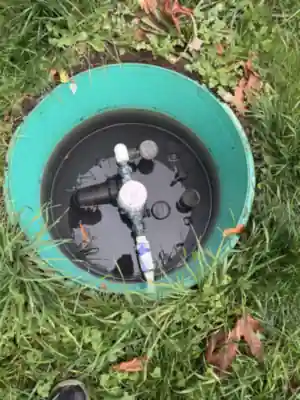
You have found the house: lake access, a big yard, the right school district. Then the disclosure lists “aerobic treatment unit” under the septic section, and nobody can quite explain what that means. ATUs are common around the lakes and on tight or sensitive lots in King and Snohomish County, and owning one is perfectly manageable. It does come with more parts, more frequent inspections and a few habits that a basic gravity system does not need. Here is what to know before you buy, based on Washington code and the two county health departments.
What an aerobic treatment unit is
A conventional septic tank is anaerobic: the bacteria in it work without oxygen, slowly. An aerobic treatment unit adds air. A blower or aerator pumps oxygen into a treatment chamber so that aerobic bacteria, which work much faster, can break down more of the waste before the effluent leaves the unit. The result is much cleaner effluent going to the drainfield.
Most ATUs share the same basic parts:
- A pretreatment or trash tank where solids settle out first, just like a septic tank.
- An aeration chamber with the blower or aerator that keeps the aerobic bacteria supplied with air.
- A clarifier where the treated water settles before it moves on.
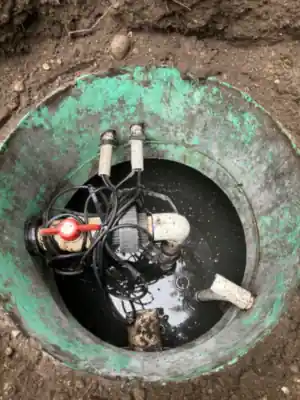
- Filters, pumps and floats on many systems, to move effluent to a pressure, mound or drip drainfield.
- An alarm panel that warns of high water or a blower or pump failure.
We service many brands, including Oscar and Bio-Microbics systems. Our ATU service page covers the details.
Why so many lake and small-lot homes have them
Septic systems are designed around the site. Where lots are small, the soil is shallow or slow-draining, the water table is high or the property is close to a lake, stream or the Sound, a standard septic tank and gravity drainfield may not treat wastewater well enough before it reaches groundwater. Cleaner effluent from an ATU lets a system work on sites that would otherwise be difficult. That is why you see so many around Lake Stevens, Lake Roesiger, Lake Goodwin and Lake Ki in Snohomish County, and around the lakes and plateaus of east and south King County. Our guide to maintaining a Lake Stevens ATU is a good local example.
The rules that come with an ATU
More frequent inspections
State code requires a septic tank with a gravity drainfield to be inspected at least every three years, and all other systems, including ATUs, every year unless the local health officer requires more often (WAC 246-272A-0270). The counties apply it this way:
- King County lists every 6 months for ATUs, along with pressure distribution, mound, sand filter and drip systems, unless the manufacturer specifies more often (King County inspections).
- Snohomish County lists alternative systems annually, unless the manufacturer specifies otherwise (Snohomish County septic FAQs).
Maintenance contracts and permits
The same state rule requires owners to secure and renew contracts for periodic maintenance, and to obtain and renew operation permits, where the local health jurisdiction requires them. Many ATU manufacturers also expect regular service by a qualified provider. Before you buy, ask whether the system has a current service agreement and whether the county has any operating conditions on file for it.
Selling and buying
In King County, a certified on-site system maintainer must inspect the system before the title transfers, unless a waiver applies (King County sales and transfers). In Snohomish County, since November 1, 2026, the seller must have a full inspection by a certified septic contractor within the past 12 months, confirm an as-built is on file or provide an On-Site Sewage System Site Plan, and file a Report of Property Transfer before closing (Snohomish County property transfer). The Health Department notes that certified monitoring and maintenance specialists can create site plans for all system types, while certified pumpers can do so only for gravity or pump-to-gravity systems, so an ATU home needs the right kind of contractor.
Statewide, beginning February 1, 2027, Washington code requires a property-transfer inspection that includes proprietary treatment products such as ATUs, inspected according to the manufacturer’s recommendations, by a third-party inspector authorized by the local health officer.
Questions to ask before you buy
- What make and model is it, and how old? This tells you which manufacturer requirements apply and whether parts are easy to get.
- Can I see the service and inspection records? Washington code requires sellers to give buyers all available maintenance and repair records with the seller disclosure statement. Look for regular visits on the county schedule. Long gaps are a red flag.
- Is there a current service contract? Who holds it, what does it cover, and does it transfer?
- Has the alarm gone off, and why? Occasional alarms after power outages are normal. Repeated alarms suggest a problem.
- When was the blower or aerator last replaced? These run around the clock and eventually wear out.
- What kind of drainfield does it feed, and where is the reserve area? Many ATUs discharge to a pressure, mound or drip field, each with its own parts.
- How many bedrooms was it designed for? If bedrooms have been added since, the system may be overloaded.
What to look for on a walk-through
- Find the alarm panel and ask the seller to test it. Most have a test button.
- Listen for the blower. On most ATUs it should be running. Silence can mean it has failed or been switched off.
- Smell. A working aerobic unit should not smell strongly of sewage. A rotten-egg odor can mean the unit has gone anaerobic.
- Look at the lids and the drainfield. Are the lids secured and accessible? Is the ground over the field firm, or soggy and unusually green?
- Check what is built nearby. Sheds, parking and paving should be off the tanks, drainfield and reserve area.
Living with an ATU
An ATU rewards good habits. The key ones:
- Never turn off the blower or the power to the system. Without air, the aerobic bacteria die off and treatment drops. If the breaker trips, reset it and call if it trips again.
- Expect it to stop in a power outage. Pumps and blowers need power. Keep water use low until it is restored. If the alarm does not clear within a few hours after power returns, call us. Our power outage guide explains more.
- Go easy on chemicals. King County warns that household chemicals and long-term medications such as antibiotics can destroy the bacteria a septic system depends on. That matters even more in an aerobic unit.
- No additives. Washington code prohibits additives that have not been specifically approved by the Department of Health. See do septic additives work?
- Keep grease and food out. A garbage disposal adds solids and grease that ATUs handle poorly. See what not to flush.
- Spread out water use. Laundry over the week, no draining hot tubs into the system, and leaks fixed promptly.
- Keep the filter clean. A clogged effluent filter is one of the most common causes of ATU alarms.
What an ATU inspection covers
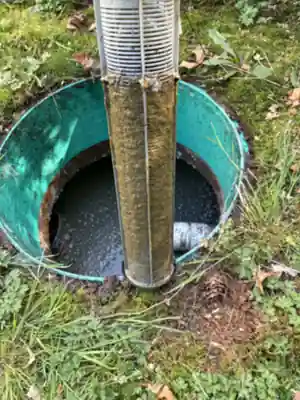
King County describes a maintenance inspection as a check of the septic and pump tanks, the treatment component, the distribution system, and the drainfield and reserve areas, followed by a report to Public Health on the status of the system. On an ATU, the treatment component is the heart of it. A typical visit includes:
- Checking that the blower or aerator is running and moving air, and that air lines and diffusers are not blocked.
- Looking at the condition of the treatment chamber and clarifier, and whether the effluent looks and smells properly treated.
- Measuring sludge and scum in the pretreatment tank to decide whether it needs pumping.
- Cleaning or checking filters.
- Testing floats, pumps and the alarm.
- Walking the drainfield and reserve area for wet spots or damage.
- Following any extra checks in the manufacturer’s service instructions for that model.
Smaller problems can often be fixed during the visit. If a bigger repair is needed, you get a clear explanation and a price before any work is done.
Common ATU problems
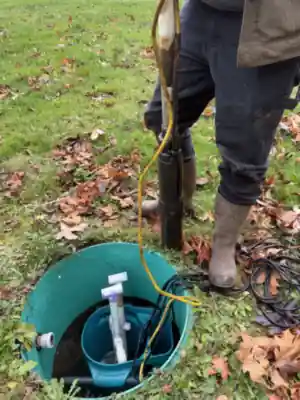
- A failed or worn blower. These run constantly and eventually wear out. A silent blower or one that sounds rough needs attention.
- Clogged filters. Grease, lint and food solids plug filters and trigger high-water alarms.
- Stuck or failed floats. A float that does not move can leave a pump running dry or stop it from running at all.
- Tripped breakers or disconnected power. Sometimes the fix is as simple as a breaker, but it should always be checked.
- An alarm that has been silenced or unplugged. More common than you would think in homes that have changed hands. An alarm is your early warning, so it should always be connected.
- A pretreatment tank that is overdue for pumping, letting solids reach the aeration chamber.
Nearly all of these show up on a routine inspection before they cause a backup. That is the case for keeping an ATU on its inspection schedule.
What ownership costs
An ATU costs more to own than a basic gravity system. Budget for more frequent inspections, the electricity to run the blower and pumps, periodic pumping of the pretreatment tank, and replacement of wear parts such as blowers, pumps and floats over time. The upside is a system that works well on a site where a simpler design might not. Ask the seller for recent service invoices so you can see real numbers for that house.
Financial help exists for larger repairs. King County lists Craft3 Clean Water Loans and several repair programs on its financial assistance page, and Snohomish County’s Savvy Septic Program offers rebates for inspections, pumping, riser installation and minor repairs, plus help with major repairs.
Is an ATU a deal-breaker?
Usually not. A well-maintained ATU with a clean service history is a reliable system, and on many lake and small-lot properties it is the only practical option. The houses to be careful with are the ones where nobody can say when the unit was last serviced, the alarm has been disconnected, or the blower has been switched off to save power. Those systems can often be brought back, but you want to know what you are taking on before you close. Our septic vs. sewer buying guide covers the broader questions.
How we can help
We inspect, service and repair aerobic treatment units across King and Snohomish County, including Oscar and Bio-Microbics systems, and we file inspection reports within 24 hours so a sale stays on schedule. After you move in, our $10/month maintenance plan keeps your ATU on schedule, with a free annual filter cleaning and system check, no emergency fees, next-day emergency service and 10% off septic services.
Call our Kirkland office at (206) 962-2600 for King County or our Woodinville office at (206) 790-9392 for Snohomish County. Phones are answered 24/7.
Quick answers
Is it bad to buy a house with an aerobic treatment unit?
No. A well-maintained ATU with a clean service history is a reliable system, and on many lake and small-lot properties it is the best option. Check the records, the alarm and the blower, and get an inspection before you close.
How often does an ATU need to be inspected in Washington?
State code requires annual inspections for all systems other than a tank and gravity drainfield. King County lists every 6 months for ATUs, and Snohomish County lists annually, unless the manufacturer specifies more often.
Can I turn off my ATU blower to save electricity?
No. The blower supplies the oxygen the aerobic bacteria need. Without it, treatment drops and the unit can start to smell and send poorly treated effluent to the drainfield.
Do I need a maintenance contract for an ATU?
Washington code requires owners to keep maintenance contracts and operation permits where the local health jurisdiction requires them, and many manufacturers expect regular service. Ask the seller whether a contract is in place.
What happens to an ATU during a power outage?
It stops. The blower and pumps need power, so keep water use low until the power returns. The alarm may sound for a while as the pump catches up; if it does not clear within a few hours, call for service.