
/ Buying a home
Septic vs. sewer: what to know before you buy.
Short answer: neither is better by default, but they are very different to own. Here is what Washington law and the King and Snohomish County health departments require, and what to check before you make an offer.
By Anthony Wilson, founder · Updated November 2026

Two houses on the same street can look identical in the listing photos and still be very different to own. One sends its wastewater down a pipe to a public sewer main. The other treats it in the back yard, in a septic tank and drainfield that the owner is legally responsible for. Across King and Snohomish County, plenty of buyers find out which one they are getting only when the inspection report arrives. This guide explains the real differences, what Washington law and the two county health departments require, and the questions to ask before you write an offer.
How to tell whether a house is on septic or sewer
Do not rely on the listing alone. Listings are often wrong, and “public sewer available” does not always mean the house is connected. A few quick checks:
- Look for the lids. Septic tanks have access lids or risers in the yard, usually 10 to 25 feet from the house on the side where the main drain leaves. Pump systems often have an alarm panel on an outside wall or in the garage.
- Search the county records. King County keeps as-built drawings and inspection reports on its septic records map. In Snohomish County, search OnlineRME through the Health Department’s As-Built Records page. If a record exists, the house almost certainly has (or had) a septic system.
- Check the utility bill. Ask the seller for a recent water and sewer bill. A house on septic pays for water, if it is on public water, but not for sewer.
- Ask the sewer district. If you are in or near a city, the local sewer utility can tell you whether the property is connected and whether a main runs past it.
What owning a septic system actually means in Washington
A septic system is a small private treatment plant. Wastewater flows into the tank, where solids settle to the bottom as sludge and grease floats to the top as scum. The liquid in the middle flows on to the drainfield, where the soil does the final treatment. Many homes on the Eastside plateaus and around the lakes add a pump, a pressure-distribution drainfield, a mound, a sand filter or an aerobic treatment unit.
Under state law, the owner is responsible for keeping it working. WAC 246-272A-0270 requires owners to have the system inspected at least every three years for a tank and gravity drainfield, and every year for all other systems unless the local health officer requires more often. It also requires owners to pump the tank when the solids and scum say it is time, to repair problems promptly, and to protect the drainfield and the reserve area from buildings, paving, compaction and roof or footing drains.
The counties apply that rule a little differently:
- King County: Public Health – Seattle & King County says conventional gravity systems need inspection every 3 years, and pressure distribution, mound, sand filter, ATU and drip systems every 6 months unless the manufacturer says more often (King County inspections).
- Snohomish County: the Health Department says gravity systems every 3 years and alternative systems every year unless the manufacturer specifies otherwise (Snohomish County septic FAQs).
None of that is a reason to avoid a septic home. A well-designed system that is pumped and inspected on schedule can serve a house for a very long time. It just means the maintenance is yours, not the city’s.
What owning a home on sewer means
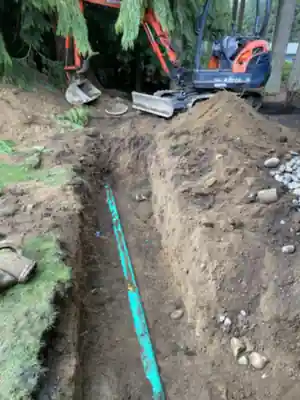
On sewer, the city or district treats your wastewater and you pay a monthly sewer charge. There is no tank to pump and no drainfield to protect. But “no maintenance” is not quite true. In most of the region, the property owner owns the side sewer: the pipe that runs from the house to the public main. Old clay and concrete side sewers crack, separate at the joints and fill with roots, and fixing one can mean digging up a lawn, driveway or sidewalk. King County even runs a septic maintenance and side sewer repair rebate program because both are real costs for homeowners.
If you are buying an older house on sewer, a camera inspection of the side sewer is worth the small cost. We scope sewer lines and can show you exactly where any roots, breaks or sags are before you close.
Septic vs. sewer: the trade-offs side by side
| Septic | Sewer | |
|---|---|---|
| Monthly bill | None for wastewater | Monthly sewer charge from the utility |
| Routine upkeep | Inspections on the county schedule; pumping when measurements say so | Little, apart from the side sewer |
| Biggest risk | Drainfield failure | A broken or root-filled side sewer |
| Yard use | Drainfield and reserve area must stay clear of buildings, paving and parking | Few limits |
| Home sale | Inspection and county paperwork before closing | No septic paperwork |
| Remodels | Adding bedrooms can require a bigger system | Usually no wastewater limit |
The rules when you buy or sell a septic home
This is where the two counties have changed the most, and where buyers and sellers most often get caught out.
King County
A certified on-site system maintainer must inspect the system before the title transfers. The county waives the inspection in a few cases, for example when an operation and maintenance report was filed within the last six months, when reports have been filed regularly, or for never-occupied new construction. Public Health reviews the reports, and they are viewable in the county’s online records (King County sales and transfers).
Snohomish County
Since November 1, 2026, sellers must have a full inspection by a certified septic contractor within the past 12 months (plus pumping if the report recommends it), confirm an as-built is on file or have a certified contractor complete an On-Site Sewage System Site Plan, and submit a Report of Property Transfer application and fee to the Health Department before closing. The buyer receives the reviewed report, the maintenance records and the seller disclosure statement (Snohomish County property transfer). Our Snohomish County home-sale guide walks through each step.
Statewide
Washington’s updated code makes property-transfer inspections a statewide requirement beginning February 1, 2027, and already requires sellers to give buyers all available maintenance and repair records along with the seller disclosure statement (WAC 246-272A-0270).
Questions to ask before you buy a house on septic
- What type of system is it? Gravity, pressure, mound, sand filter or ATU. Alternative systems need more frequent inspections and have pumps, floats and alarms to maintain.
- How old is it, and is there an as-built? The as-built shows where the tank, drainfield and reserve area are. Older homes may not have one.
- When was it last inspected and pumped? Ask for the reports. Gaps of many years are a warning sign.
- How many bedrooms was it designed for? State code sizes tanks by bedroom count: at least 1,000 gallons for up to four bedrooms, plus 250 gallons for each additional bedroom (WAC 246-272A-0232). A house that has gained bedrooms without a system upgrade can be overloaded.
- Where is the reserve area? That is the space set aside for a future drainfield. If it is under a new shop or driveway, a future repair gets harder.
- Any history of alarms, backups or soggy ground? These all show up in our list of drainfield failure signs.
Schedule the inspection early in your feasibility period, not the last week. If something needs repair, you want time to get a quote. We file inspection reports within 24 hours so the paperwork does not hold up closing.
When a septic home is near a sewer line
As sewer service has spread outward, many homes that were built on septic now have a sewer main nearby. In urban King County alone, Public Health estimates there are nearly 40,000 septic systems, many of them past their intended life span (King County septic-to-sewer resources).
State rules matter here. Under WAC 246-272A-0025, when a septic system fails inside a sewer utility’s service area, the health officer can approve a repair only if a conforming system can be designed and installed. Otherwise, if the utility allows it and an adequate sewer is available within 200 feet, the owner can be required to connect. So if you are buying an older septic home in a sewered neighborhood, ask the utility what connecting would involve before you need to.
If you do connect, the old tank has to be abandoned properly. WAC 246-272A-0300 requires the septage to be removed by an approved pumper, then the tank either removed or left in place with the lid removed or destroyed and the void filled with soil or gravel, and the site graded. We pump and decommission old tanks and file the county report for you.
Money: what each option really costs
With septic, your wastewater costs come in occasional larger bills rather than a monthly charge: an inspection on the county schedule, pumping when it is needed (routine pumping with us starts at $590, plus the county pumping report fee and tax), and repairs when parts wear out. With sewer, you pay every month, and the one-off cost to watch is the side sewer.
The costs that can surprise people:
- Drainfield replacement on a septic home. This is the expensive one, and it is why a good inspection before you buy matters.
- Connecting to sewer from a septic home: utility connection charges, the new side sewer and decommissioning the tank. Ask the local utility for current charges, because they vary widely by district.
- Side sewer replacement on an older sewer home.
Help is available. King County lists rebates for septic maintenance and side sewer repair, Craft3 Clean Water Loans for septic repairs, and several low-income repair programs on its financial assistance page. In Snohomish County, the Savvy Septic Program offers rebates for inspections, pumping, riser installation and select minor repairs, plus financial help for major repairs.
Living well with septic after you move in
If you buy a septic home, a few habits keep it healthy for decades:
- Flush only toilet paper and human waste. See what not to flush.
- Spread laundry over the week and fix leaky fixtures. King County notes that a slow drip can add 15 to 20 gallons of wastewater a day.
- Skip additives. State code bans any additive that has not been specifically approved by the Department of Health. See do septic additives work?
- Keep cars, sheds and new paving off the drainfield and reserve area, and point roof drains away from it.
- Know when you are due. Our pumping schedule guide explains the timing, and our $10/month maintenance plan tracks it for you, with no emergency fees, next-day emergency service, a free annual filter cleaning and system check, and 10% off septic services.
The bottom line
Neither septic nor sewer is automatically better. A well-kept septic system on good soil is a reliable, low-cost way to live, and plenty of buyers prefer the rural lots and lake homes that come with one. The risk is buying a system you know nothing about. Get the records, get the inspection done early, and ask what the reserve area and the nearest sewer main mean for the future.
Buying or selling in King or Snohomish County? Call our Kirkland office at (206) 962-2600 or our Woodinville office at (206) 790-9392. Phones are answered 24/7, and you can read more about our septic inspections or find your area on the King County and Snohomish County pages.
Quick answers
Is a house on septic harder to sell?
Not if the system is in good shape and the records are in order. In King and Snohomish County, sellers need a septic inspection before closing (with some King County waivers), so a recent clean report and maintenance records make the sale smoother.
Do I have to connect to sewer if it is available?
Not automatically. Under Washington code (WAC 246-272A-0025), if your septic system fails inside a sewer utility's service area and sewer is available within 200 feet, the health officer can require you to connect instead of repairing, unless a conforming septic repair can be designed. Local codes and utilities can add their own rules.
How often does a septic system need to be inspected?
State code requires a tank and gravity drainfield to be inspected at least every three years and other systems every year. King County lists every 6 months for pressure, mound, sand filter, ATU and drip systems. Snohomish County lists alternative systems annually, unless the manufacturer requires more often.
Who owns the sewer pipe from my house to the street?
In most of the region the property owner owns the side sewer, the pipe from the house to the public main. Repairs to it are the owner's cost, which is why a camera inspection is worth doing on older homes.
What happens to the septic tank when a house connects to sewer?
It must be abandoned under WAC 246-272A-0300: an approved pumper removes the septage, then the tank is either removed or left in place with the lid removed or destroyed and the tank filled with soil or gravel, and the site is graded.