
/ Kirkland, King County
Septic service in Kirkland, WA.
Septic pumping, inspections and repairs for homes and businesses in Kirkland, from our Kirkland office. We file every pumping report with Public Health – Seattle & King County for you, and our phones are answered 24/7.
Your nearest office
Kirkland
672 7th Ave
Kirkland, WA 98033
(206) 962-2600
Phones answered 24/7
Kirkland ZIP codes we serve: 98033, 98034
/ Services in Kirkland
What we do in Kirkland.
Septic Tank Pumping
About an hour on site, with the pumping report filed with the county every time.
Learn more →Septic Inspections
Routine and real-estate inspections, with reports filed within 24 hours.
Learn more →Septic Repair
Effluent pumps, alarms, floats, risers, lids, baffles and filters.
Learn more →Drainfield Repair
Distribution boxes, laterals, drainfield treatment and replacement.
Learn more →Maintenance & Monitoring
Routine O&M checks for pump, pressure and advanced systems.
Learn more →Jetting & Sewer Lines
Camera scoping and replacement of the line from your house to the tank.
Learn more →ATU, Oscar & Bio-Microbics
Aerobic treatment units, including Oscar and Bio-Microbics systems.
Learn more →Septic emergency in Kirkland? 24/7 emergency septic service →
/ Septic in Kirkland
Kirkland is our home office. Yes, it still has septic.
Most people do not think of Kirkland as septic country, and most of it is on sewer. But Kirkland annexed Finn Hill, Juanita and Kingsgate in 2011, and pockets of those neighborhoods, along with the large equestrian lots around Bridle Trails and a scattering of older homes elsewhere, still run on septic. These systems are often 40 to 60 years old, and many owners do not realize they have one until a buyer’s inspector or a slow drain tells them.
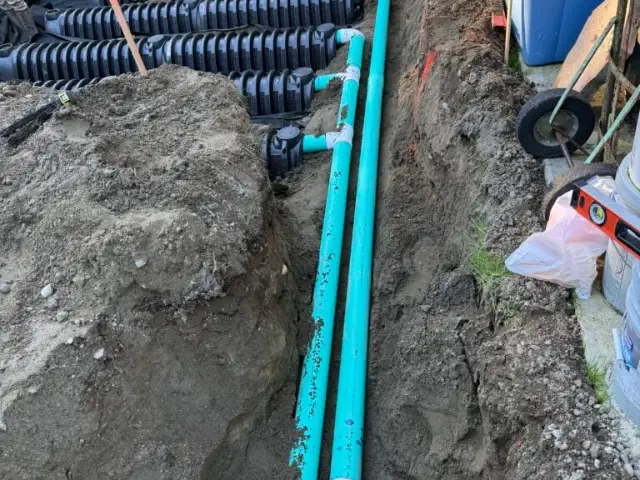
Kirkland’s older septic systems
Many Kirkland septic homes date from the 1950s through the 1970s. Typical systems from that era are gravity designs: a concrete tank and a drainfield of perforated pipe in gravel trenches. They were built before risers were common, so the lid is often a foot or more underground, and the as-built drawing, if there is one, may be a hand sketch.
The soils on Finn Hill and around Bridle Trails are largely glacial till, which drains slowly and holds water near the surface in winter. Older drainfields on till can keep working for decades, but they do not forgive neglect. A tank that goes unpumped for years sends solids into the drainfield, and that is the most common way an old Kirkland system fails.
New to a Kirkland septic home?
If you just bought in Finn Hill, Juanita, Kingsgate or Bridle Trails and the house has a septic system, start with three things: find your as-built in King County’s records, get the tank pumped and inspected so you have a baseline, and learn where the tank and drainfield are so nobody parks or builds on top of them. Our Kirkland new-homeowner septic guide walks through it, and our as-built guide shows where to find your records.
What we do in Kirkland
- Tank locating and risers on older homes where the lid is buried.
- Pumping with sludge and scum measurements.
- Inspections every three years for gravity systems, more often for alternative systems, and before every sale.
- Sewer-line jetting and camera work on old clay or cast-iron lines between the house and the tank.
- Drainfield evaluation and repair on aging systems.
King County rules in Kirkland
Kirkland follows Public Health – Seattle & King County rules. Gravity systems are inspected every three years; pressure, mound and other alternative systems more often under the county schedule. A certified maintainer has to inspect a septic system before a home is sold, and we file every report with the county.
Kirkland neighborhoods at a glance
- Finn Hill: wooded lots on glacial till, including older homes that were never connected to sewer.
- Juanita: older homes off the main streets where septic is still in use, often with buried lids and hand-drawn as-builts.
- Kingsgate: mid-century homes on the north end of the city, where some systems are 50 years old or more.
- Bridle Trails: large equestrian lots where septic is common and the drainfield has to be kept clear of horses and equipment.
Signs your Kirkland system needs attention
Older Kirkland systems tend to fail quietly. Watch for slow drains throughout the house, gurgling, sewage odor outdoors, or a patch of lawn over the drainfield that stays green and wet. If you do not know when the tank was last pumped, it is almost certainly due, and a pumping with an inspection is the cheapest way to find out where you stand.
Buying or selling in Kirkland
King County requires an inspection by a certified on-site system maintainer before the title transfers, unless a waiver applies, and we file the report for you. With many Kirkland septic systems now 50 or more years old, buyers should ask for the as-built, the pumping history and the age of the system, and should not skip the inspection. Sellers on Finn Hill, in Kingsgate or around Bridle Trails often need the lid located before the inspection can start, so book a little earlier than you think you need to.
What septic service costs in Kirkland
Routine pumping starts at $590, plus the county pumping report fee and tax. Kirkland is the closest area to our office, so there is no extra drive time. Buried lids that need digging or very large tanks can change the price, and we tell you before we start. See our pumping cost page for what goes into a quote.
Right around the corner
Our Kirkland office is at 672 7th Ave, so Kirkland homes are the closest we serve. Routine pumping starts at $590 plus the county pumping report fee and tax. Phones are answered 24/7. Every repair carries the Septic Response Promise: a one-year warranty on most repairs, and if you call about work we have done, we are there the next day if not the same day.
/ King County
Kirkland is in King County.
King County requires owners to keep septic systems maintained and inspected on a schedule that depends on the system type. We file pumping reports with Public Health – Seattle & King County and inspection reports within 24 hours, so your records stay current.
/ Nearby communities
Do you serve all of Kirkland?
Yes. We serve homes and businesses throughout Kirkland (98033, 98034) and the surrounding area. Not sure? Call (206) 962-2600.
How often should a Kirkland septic tank be pumped?
Most households need pumping every 3 to 5 years, depending on tank size, household size and garbage-disposal use. We measure sludge and scum on every visit and tell you when the next pumping is due.
Do you file the pumping report?
Yes. We file it with Public Health – Seattle & King County after every pumping.
Are there still septic systems in Kirkland?
Yes. Most of Kirkland is on sewer, but parts of Finn Hill, Juanita, Kingsgate and the Bridle Trails area, plus some older homes elsewhere, still use septic. King County’s online as-built map shows what is on record for your parcel.
I just bought a Kirkland home with septic. What should I do first?
Find your as-built in King County’s records, book a pumping and inspection to get a baseline, and learn where the tank and drainfield are so nothing gets parked or built on them. Our new-homeowner guide covers the details.
My Kirkland septic tank lid is buried. Can you find it?
Yes. Older Kirkland systems were often built without risers, so lids are buried. We locate the tank, uncover it and can add a riser so future pumping is quicker.
Do you serve Finn Hill, Kingsgate and Bridle Trails?
Yes. We serve all of Kirkland (98033 and 98034), including Finn Hill, Juanita, Kingsgate and Bridle Trails. Call (206) 962-2600.
How much does septic pumping cost in Kirkland?
Routine pumping starts at $590, plus the county pumping report fee and tax. Buried lids and tank size can change the price, and we confirm it before we come.
How often should an older Kirkland septic system be inspected?
King County inspects gravity systems every three years and alternative systems such as pressure and mound systems more often. Older Kirkland systems benefit from staying on that schedule, because a small problem caught early is far cheaper than a drainfield replacement.