
/ SeaTac, King County
Septic service in SeaTac, WA.
Septic pumping, side sewer repair and old-tank abandonment for SeaTac, from Angle Lake to McMicken Heights and Riverton Heights. Our Kirkland crews file every pumping report with Public Health – Seattle & King County, and someone answers the phone 24/7.
Your nearest office
Kirkland
672 7th Ave
Kirkland, WA 98033
(206) 962-2600
Phones answered 24/7
SeaTac ZIP codes we serve: 98188, 98198
/ Services in SeaTac
What we do in SeaTac.
Septic Tank Pumping
About an hour on site, with the pumping report filed with the county every time.
Learn more →Septic Inspections
Routine and real-estate inspections, with reports filed within 24 hours.
Learn more →Septic Repair
Effluent pumps, alarms, floats, risers, lids, baffles and filters.
Learn more →Drainfield Repair
Distribution boxes, laterals, drainfield treatment and replacement.
Learn more →Maintenance & Monitoring
Routine O&M checks for pump, pressure and advanced systems.
Learn more →Jetting & Sewer Lines
Camera scoping and replacement of the line from your house to the tank.
Learn more →ATU, Oscar & Bio-Microbics
Aerobic treatment units, including Oscar and Bio-Microbics systems.
Learn more →Septic emergency in SeaTac? 24/7 emergency septic service →
/ Septic in SeaTac
Older neighborhoods near the airport, we know SeaTac septic.
SeaTac surrounds Seattle-Tacoma International Airport, with residential neighborhoods like McMicken Heights, Riverton Heights and Angle Lake around it. Most homes are on public sewer, but some older properties, especially on larger lots and near Angle Lake, were built on septic, and a few still use it. We service SeaTac septic systems, side sewers and old tanks from our Kirkland office.
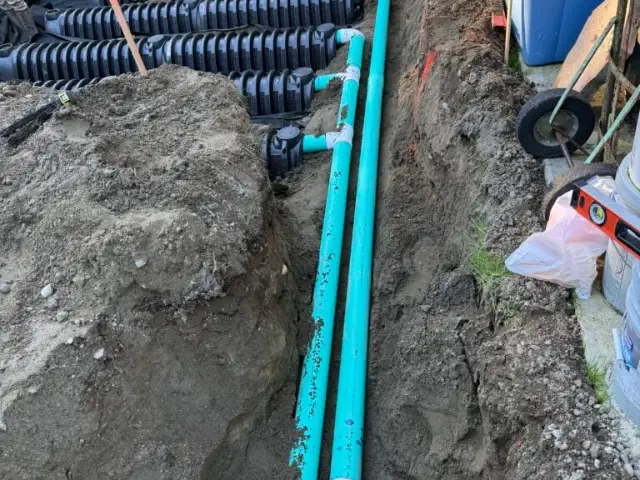
SeaTac soil and systems
Much of SeaTac sits on glacial outwash and till on the plateau above the Green River valley. Older gravity systems are common on the remaining septic properties, and many are 50 years old or more. Around Angle Lake, shoreline setbacks and groundwater limit what a drainfield can handle, so regular maintenance is especially important.
Side sewers: the hidden problem
SeaTac’s mid-century houses tend to share one weak point: the line from the house. Many were laid with short lengths of clay or concrete pipe, and after half a century the joints are where roots get in, the low spots are where waste settles, and the cracks are where the soil seeps through. A camera tells us which of those you have. Some lines just need jetting; others need a section replaced.
Old tanks and decommissioning
When sewer came through SeaTac’s neighborhoods, a lot of homes connected and simply left the old tank in the ground. An empty, unfilled tank can cave in under a lawn, a play area or a parked car. If yours was never properly abandoned, we can pump it, remove it or fill it in place with the lid destroyed, as state code requires.
King County requirements in SeaTac
SeaTac’s remaining septic systems are overseen by Public Health – Seattle & King County. Gravity systems, the most common type on the city’s older lots, need an inspection at least every three years; systems with pumps, mounds or treatment units need one every year under state code. After each pumping or inspection we file the report so it shows up in the county’s records.
For a SeaTac sale on septic, King County requires a certified inspection before the title transfers unless a recent report covers it, and Washington’s statewide third-party inspection rule begins February 1, 2027. On homes that moved to sewer, ask the seller for proof the old tank was decommissioned. Our King County as-built guide shows how to look up your drawing.
SeaTac areas we serve
- Angle Lake: lake-adjacent homes with mixed systems.
- McMicken Heights: mid-century neighborhood, mostly sewered.
- Riverton Heights: older homes, some with original side sewers.
- Bow Lake and the International Boulevard corridor: commercial and residential sewer work.
Angle Lake’s shoreline
Angle Lake is SeaTac’s best-known lake, with the city’s main lakeside park on its shore, and the homes around it include some of the area’s remaining septic properties. Shoreline lots have less room for a drainfield and a higher water table, so a system that is overloaded or behind on pumping can push nutrients toward the water. For lakeside owners, regular pumping, an inspection on schedule and keeping roof and patio runoff off the drainfield are the simplest ways to protect the lake.
Outwash and till on the plateau
SeaTac sits on a glacial plateau above the Green River valley, and the soil changes from lot to lot. Sandy outwash drains quickly, which helps a drainfield in winter but gives effluent less time in the soil before it reaches groundwater. Dense till drains slowly and can hold water near the surface in the wet months. Which one you have shapes how your system was designed, and your as-built will usually say.
Airport-area redevelopment and old systems
SeaTac has seen a lot of redevelopment near International Boulevard and the light rail line, and demolition or new construction on an old lot can turn up a forgotten tank. If you are building, adding on or regrading, find out where the tank and drainfield are first. State code protects the drainfield and reserve area from structures, paving and grade changes, and an old tank needs to be abandoned properly before anything is built over it.
Rentals and septic
Many SeaTac houses are rentals, and septic systems under rentals tend to see more wear: more occupants, cooking grease, wipes, and nobody watching the schedule. If you own a rental on septic, put pumping on a calendar, post a short list of what not to flush, and ask tenants to call you the moment drains slow down. Catching a problem early is far cheaper than a drainfield replacement.
Signs your SeaTac system needs attention
Watch for slow drains throughout the house, gurgling after a toilet flush, a sewage smell outdoors, or a patch of extra-green or soggy grass over the drainfield. Any of those means it’s time for a pumping and an inspection. If water starts backing up into a tub or floor drain, stop using water and call us; we answer 24/7.
What septic service costs in SeaTac
Routine pumping starts at $590, including a tank and baffle inspection and effluent filter cleaning (when the filter is reachable through a lid or riser), plus the county pumping report fee and tax. Most SeaTac jobs are straightforward; what adds cost is usually an old lid buried under turf, a tank under a carport, or a side sewer problem found during the visit. We quote first. See our pumping cost page for what goes into a quote.
Our crew in SeaTac
SeaTac is covered by our Kirkland office at (206) 962-2600, a regular run down I-405 and SR 518. The phones are answered 24/7. Maintenance-plan members ($10/month) get emergency fees waived, next-day emergency service, a yearly filter cleaning and system check, 10% off septic work, and pumping reminders. SeaTac homeowners on our $10/month maintenance plan get emergency fees waived, next-day emergency service, a yearly filter cleaning and system check, 10% off septic work, and reminders when pumping is due.
Repairs come with the Septic Response Promise: a one-year warranty on most repairs, and if you call about work we have done, we are there the next day if not the same day.
/ King County
SeaTac is in King County.
In SeaTac, Public Health – Seattle & King County holds the septic permits, as-builts and inspection reports. The county records map is the quickest way to see whether a property was ever on septic.
/ Nearby communities
Do you serve all of SeaTac?
Yes. We serve homes and businesses throughout SeaTac (98188, 98198) and the surrounding area. Not sure? Call (206) 962-2600.
How often should a SeaTac septic tank be pumped?
Most SeaTac septic homes are older, smaller houses on gravity systems, and for a typical household that means pumping every 3 to 5 years. Tanks installed decades ago are sometimes smaller than today’s 1,000-gallon minimum, so they fill sooner. We measure sludge and scum on each visit and tell you when the next pumping is due.
Do you file the pumping report?
Yes. We file it with Public Health – Seattle & King County after every pumping.
Is SeaTac on septic or sewer?
Most of SeaTac is on public sewer. Some older homes on larger lots or near Angle Lake still use septic.
Do you do septic inspections for SeaTac home sales?
Yes. King County requires a certified inspection before title transfer in most cases, and we file the report.
My SeaTac home has an old tank. What should I do?
If it is no longer in use, King County rules require it to be properly abandoned. We locate it, decommission it and file the report with the county.
Is all of SeaTac on sewer?
Most of SeaTac is on public sewer, but some older homes and larger lots, including properties near Angle Lake, still use septic. The King County septic records map shows whether a parcel has a septic permit.
We are redeveloping a SeaTac lot. What do we do about the old septic tank?
The tank must be pumped by an approved pumper and then removed, or filled in place with the lid destroyed, under WAC 246-272A-0300. We can locate the tank and handle the abandonment.
How do I protect Angle Lake if my home is on septic?
Keep the tank pumped on schedule, have the system inspected when due, spread out laundry, and keep roof and patio runoff off the drainfield. A system that is not overloaded treats wastewater before it reaches groundwater.