
/ Service
Side sewer installation in King & Snohomish County
Connecting to sewer, or replacing a failing side sewer? We are licensed to install side sewers, we help with the permit, and we pump and decommission your old septic tank, all in one job.
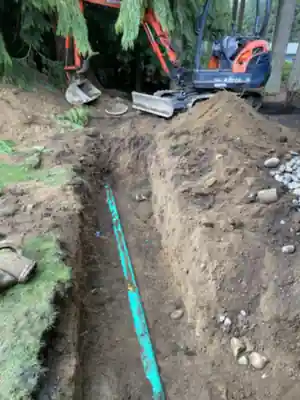
/ Side sewers and septic-to-sewer connections
A side sewer is the private pipe that carries everything from your house to the public sewer main in the street. When sewer reaches a neighborhood that has always been on septic, it is the piece of work that actually connects the home, and the septic tank then has to be properly closed. If the side sewer is old, cracked or full of roots, it is also the line that backs up into the lowest drains in the house.
Septic Response is licensed to install side sewers. We do the installation ourselves, we help you through the permit with your city or sewer district, and because we are a septic company we also handle the other half of the job: pumping and decommissioning the old tank and filing the record with the county. Our Kirkland office serves King County and our Woodinville office serves Snohomish County.
/ The Septic Response Promise
1-year warranty on most repairs. And whenever you call us about work we have done, we are there the next day, if not the same day.
We stand behind our work because we plan to be your septic company for the long haul.
Side sewer, sewer main, septic line: what’s what
- Sewer main: the public pipe, usually under the street, owned and maintained by your city or sewer district.
- Side sewer: the private pipe from your house to that main. On most properties the homeowner is responsible for it, but where your responsibility ends (at the property line, the cleanout or the main) is set by your sewer provider, so check theirs before you budget.
- Septic building sewer: on a septic home, the line runs from the house to the septic tank instead. When you convert, the house end is redirected to the new side sewer and the tank is taken out of service.
When you need a side sewer
- Sewer has reached your street and you want to connect, or your city or district has asked you to.
- Your septic system has failed inside a sewer service area. Under Washington’s septic rule, WAC 246-272A-0025, a failing system there can only be repaired if a conforming system can be designed. Otherwise the owner must connect when the sewer utility allows it and a sewer is within 200 feet.
- Your existing side sewer is failing: repeat backups, roots, a sag that holds water, broken or separated joints, or old pipe that a camera shows is falling apart.
- You are remodeling, adding an ADU or redeveloping a lot and the provider requires a new or upgraded connection.
How a septic-to-sewer connection works with us
- Check availability and requirements. We confirm that a main is available to your lot, where the connection point is, and what your provider requires. Connection charges, fees and inspection rules are set by each city or district, not by us.
- Find the septic system. We pull the county as-built (King County’s septic records map or Snohomish County’s as-built records) and locate the tank and line on site, so the new route and the old system are both accounted for.
- Permit. We help you prepare and file the side sewer permit with your city or sewer district.
- Install the side sewer. We excavate the route, lay the new pipe at the required slope with cleanouts where the provider calls for them, and make the connection the way the permit specifies.
- Inspection. The provider inspects the work before it is covered and approved.
- Close the septic system. Once the house is flowing to sewer, we pump the tank and decommission it (see below).
- Restore the yard and walk you through the paperwork you will want to keep for a future sale.
Closing the old septic tank
Washington’s abandonment rule, WAC 246-272A-0300, sets out how a tank is taken out of service: an approved pumper removes the septage, then the tank is either removed, or left in place with the lid removed or destroyed and the void filled with soil or gravel, and the site is graded. A tank that is simply disconnected and left empty is a collapse and fall hazard, and it leaves the county’s records showing a septic system that no longer exists.
We pump the tank, decommission it to that standard and file the report with the county. In King County, a septic system that has been abandoned because the home is connected to sewer is one of the listed waivers for the septic inspection otherwise required when a home sells, so getting the record right matters later.
Side sewer repair and replacement
Not every side sewer job is a new connection. Many homes in older sewered neighborhoods have side sewers with failing joints, root intrusion or sags. We start with a camera inspection so you can see the problem and where it is, jet the line when cleaning will solve it, and replace the failed section or the whole run when it won’t. Replacements are permitted and inspected the same way as a new side sewer.
Who issues side sewer permits around here
Side sewer permits come from whoever owns the sewer main your house will connect to. Across King and Snohomish County that is either a city public works department or a sewer district, such as Northshore Utility District, Woodinville Water District or Alderwood Water & Wastewater District. Each one sets its own permit fees, connection charges, inspection steps and material standards. Our side sewer registration is with Washington State, so the same Septic Response crew can do the work whichever city or district serves your street. If you are not sure who serves your address, your property tax statement or the city’s utility page usually says, or call us and we will find out.
Paying for it
Public Health – Seattle & King County lists financial help on its septic program pages, including the King County Septic System Maintenance and Side Sewer Repair Rebate Program and Craft3 Clean Water Loans. Program rules and funding change, so check eligibility before you start. In Snohomish County, see the Savvy Septic Program for septic-side help. We give you upfront pricing before any work begins.
Why homeowners call Septic Response for side sewers
- One company for both halves of the job: the side sewer and the septic tank closure, with no handoff between a sewer contractor and a septic pumper.
- Licensed to complete side sewers, and licensed, bonded and insured (#SEPTIRL810RB).
- Family-run since 2017, with our own fleet of 5 pump trucks and 2 service-tech trucks.
- Phones answered 24/7 by people who know septic and sewer lines.
- Upfront pricing and the Septic Response Promise on our work.
Side sewer service across King and Snohomish County
Our Kirkland office covers King County and our Woodinville office covers every city in Snohomish County. Still on septic and waiting for sewer? Keep the system maintained until the day it is decommissioned: see septic tank pumping and septic inspections. Buying a home and weighing septic against sewer? Read septic vs. sewer before you buy. If sewage is backing up right now, call our 24/7 emergency line.
/ Where
Serving both counties.
Our Kirkland office covers King County and our Woodinville office covers every city in Snohomish County.
/ FAQ
What is a side sewer?
The private pipe that carries wastewater from your house to the public sewer main. On a septic home the house line runs to the septic tank instead; connecting to sewer means installing a side sewer to the main and closing the tank.
Who is responsible for my side sewer?
On most properties the homeowner owns and maintains the side sewer. Exactly where your responsibility ends, at the property line, a cleanout or the main, is set by your city or sewer district.
Do I need a permit for a side sewer?
Yes. New side sewers and replacements are permitted and inspected by the city or sewer district that owns the main. We help you prepare and file the permit.
Do I have to connect when sewer reaches my street?
Your city or district sets its own connection rules. Under WAC 246-272A-0025, if a septic system fails inside a sewer service area and a conforming repair can’t be designed, the owner must connect when the utility allows it and a sewer is within 200 feet.
What happens to my septic tank after I connect to sewer?
It has to be abandoned to WAC 246-272A-0300: the septage is pumped out, then the tank is removed or left in place with the lid removed or destroyed and filled with soil or gravel. We do this and file the report with the county.
Can you do the side sewer and the septic decommissioning together?
Yes. We install the side sewer, help with the permit, then pump and decommission the old tank, so you deal with one company from start to finish.
Do you install side sewers in both King and Snohomish County?
Yes. Our Kirkland office serves King County and our Woodinville office serves every city in Snohomish County.