
/ Bothell, King County
Septic service in Bothell, WA.
Septic pumping, inspections and repairs on both sides of the Bothell county line, from Canyon Park and the North Creek valley to the unincorporated Snohomish County neighborhoods north of town and the older lots along the Sammamish River. Our crews file every pumping report with the right county health department, and our phones are answered 24/7.
Your nearest office
Woodinville
23321 57th Ave SE
Woodinville, WA 98072
(206) 790-9392
Phones answered 24/7
Bothell ZIP codes we serve: 98011, 98021
/ Services in Bothell
What we do in Bothell.
Septic Tank Pumping
About an hour on site, with the pumping report filed with the county every time.
Learn more →Septic Inspections
Routine and real-estate inspections, with reports filed within 24 hours.
Learn more →Septic Repair
Effluent pumps, alarms, floats, risers, lids, baffles and filters.
Learn more →Drainfield Repair
Distribution boxes, laterals, drainfield treatment and replacement.
Learn more →Maintenance & Monitoring
Routine O&M checks for pump, pressure and advanced systems.
Learn more →Jetting & Sewer Lines
Camera scoping and replacement of the line from your house to the tank.
Learn more →ATU, Oscar & Bio-Microbics
Aerobic treatment units, including Oscar and Bio-Microbics systems.
Learn more →Septic emergency in Bothell? 24/7 emergency septic service →
/ Septic in Bothell
One city, two counties, plenty of septic.
Bothell is one of the few cities in the state that sits in two counties. The southern part, around downtown and the Sammamish River, is in King County. The northern part, from Canyon Park up through North Creek and toward Mill Creek, is in Snohomish County. Most of the city is on sewer, but the unincorporated areas around it, especially north and east toward Maltby, Clearview and the Snohomish County side of 98012 and 98021, still have a lot of septic systems, along with older lots inside the city that were never connected.
Why the county line matters for your septic system
Which county you live in decides which health department sets your inspection schedule and your home-sale rules.
- King County side: gravity systems inspected every three years, pressure, mound and other alternative systems more often under the county schedule, and a certified inspection before any sale.
- Snohomish County side: gravity systems every three years and alternative systems every year. Since November 1, 2026, sellers also need an inspection within the past 12 months, an as-built or site plan on file, and a Report of Property Transfer before closing.
We work on both sides and file reports with the right county, so you do not have to sort it out yourself. Not sure which side you are on? Your property tax statement tells you, or just ask us.
Bothell ground conditions
The hills on both sides of the Sammamish River and North Creek valleys are mostly glacial till, dense and slow-draining. Many septic homes on those hills use pressure distribution systems with an effluent pump that spreads wastewater evenly across the drainfield. In the valleys, high winter groundwater is the limit, and North Creek and the Sammamish River are both salmon streams that depend on nearby systems working properly.
What we do most in Bothell
- Pumping with measurements, on the schedule your system actually needs.
- Effluent pump, float and alarm repair on hillside pressure systems.
- Real-estate inspections under either county’s rules.
- Tank locating and risers on older lots where the lid is buried.
- Sewer-line jetting and camera work on the line from the house to the tank.
Bothell neighborhoods at a glance
- Canyon Park and North Creek: Snohomish County side of Bothell, mostly sewered, with older lots and nearby unincorporated pockets still on septic.
- Thrashers Corner: older homes on the north end, some on septic, under Snohomish County rules.
- Toward Maltby and Clearview: unincorporated acreage east and north of the city on glacial till, many on pressure systems.
- The King County side: older lots around downtown and the Sammamish River valley that were never connected, under King County rules.
Signs your Bothell system needs attention
On the hills, a pump alarm after heavy rain usually means water is getting into the pump chamber or a float has failed. Slow drains, gurgling and odors near the tank point to a system that is overdue for pumping. Wet, smelly spots over the drainfield are a sign to call before the problem spreads.
Buying or selling in Bothell
The rules depend on which side of the county line the home sits. On the King County side, a certified on-site system maintainer has to inspect the system before the title transfers, unless a waiver applies, and we file the report for you. On the Snohomish County side, since November 1, 2026, sellers need a full inspection within the past 12 months, pumping if recommended, an as-built or site plan on file, and a Report of Property Transfer before closing. We know both sets of rules and can tell you which one applies before you list or make an offer.
North Creek and Canyon Park
North Creek runs from Mill Creek down through Canyon Park to the Sammamish River, and the valley floor along it is wet ground with high winter groundwater. Remaining septic systems near the creek have little drainfield capacity in the rainy season. Spread out laundry, fix leaks, and keep roof runoff away from the drainfield.
Unincorporated neighborhoods north of town
North of Bothell’s city limits, unincorporated Snohomish County neighborhoods mix sewer and septic, often on larger lots with pressure systems on slow-draining till. Under Snohomish County’s November 1, 2026 property-transfer rule, sellers there need a recent full inspection, an as-built or site plan, and a Report of Property Transfer before closing.
Old tanks along the Sammamish River
Some older Bothell homes near the river and downtown moved to sewer decades ago. If an old tank was left in place, it can collapse under a lawn or a new addition. We locate and abandon old tanks to state standards.
Sewer or septic? How to tell on a Bothell lot
Bothell’s sewer network was built out in stages, so two homes on the same street can be on different systems. Depending on where you live, sewer service may come from the City of Bothell, Northshore Utility District or Alderwood Water & Wastewater District. If your utility bill has no sewer charge, your home almost certainly has a septic tank. Other clues are tank lids or a riser in the yard and a septic as-built on file with the county. King County as-builts are searchable through the county’s online records map, and Snohomish County reports are viewable through OnlineRME. If you still aren’t sure, we can locate the tank and trace the line from the house in one visit.
When a failing system meets an available sewer
Many septic homes in and around Bothell sit inside a sewer utility’s service area, and that changes what happens when a system fails. Under Washington’s on-site sewage rules, a failing system inside a sewer service area can be repaired only if a conforming repair can be designed. Otherwise the owner must connect, as long as the utility allows it and a sewer line is within 200 feet. Connecting usually means a new side sewer from the house to the main, the utility’s connection charges, and decommissioning the old tank. Before you price a drainfield replacement on an older Bothell lot, ask your utility whether sewer is available at your property and what connecting would involve. We’ll give you an honest read on whether a repair is realistic. If you connect, we pump and abandon the old tank to state standards: the septage is removed, then the tank is either taken out or its lid is removed and the void is filled with soil or gravel.
Remodels, additions and ADUs
With housing as tight as it is, a lot of Bothell owners are adding space: a primary suite over the garage, a basement bedroom, or a detached accessory dwelling unit. On a septic lot, bedrooms are what the system is sized around. Washington sets the minimum tank at 1,000 gallons for up to four bedrooms, plus 250 gallons for each bedroom beyond that, and the drainfield is sized for the same design flow. Adding a bedroom or a second kitchen can push a home past what its system was approved for, and altering or expanding a system needs health officer approval. On either side of the county line, expect septic capacity to come up when a building permit adds bedrooms or plumbing. New buildings, patios and driveways also can’t go over the tank, the drainfield or the reserve area, so pull your as-built before you sketch the project. We can find every component and mark it in the yard so your designer can work around it.
Help paying for septic work on either side of the line
Both counties offer help, but the programs are different. On the King County side, the Septic System Maintenance and Side Sewer Repair Rebate Program helps with routine maintenance, and Craft3 Clean Water Loans and local housing repair programs can help finance bigger repairs for qualifying homeowners. On the Snohomish County side, the Savvy Septic program offers rebates on inspections, pumping, riser installation and select minor repairs, plus help with major repairs, once you complete the county’s free online Septic Care Workshop. Because Bothell straddles the line, confirm which county your parcel is in before you apply; your property tax statement shows it. Program terms and funding change, so check the current details with the county before you schedule work.
A year of septic care in Bothell
- Fall: before the rains, make sure downspouts and driveway runoff drain away from the drainfield, and test the alarm on a pressure system so you know it will sound.
- Winter: the valley floors and till hillsides hold water through the wet months. Spread out laundry, fix running toilets and dripping faucets (a single drip can add 15 to 20 gallons a day), and call at the first sign of a soggy drainfield.
- Spring: walk the drainfield and look for wet spots or unusually green strips, and raise buried lids before mowing season hides them again.
- Summer: dry ground makes pumping, locating and riser work easier on the lawn, so it’s a good time for routine service and for pre-listing inspections ahead of a fall sale.
Recent Bothell job: backups from an overdue tank
A Bothell homeowner called about backups. When we opened the tank, the scum layer measured 28 inches, which is heavy. The tank had not been pumped in six years, and eight people live in the home. We pumped the tank, cleared the clog at the inlet and restored the system. With that many people in the house, we recommended pumping every two years from now on.
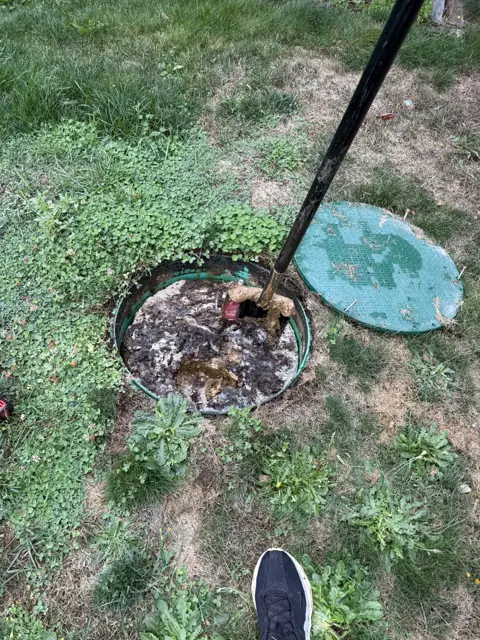
Household size is one of the biggest factors in how fast a tank fills. Our guide to how often to pump a septic tank explains how to work out your own schedule.
What septic service costs in Bothell
Routine pumping starts at $590, including a tank and baffle inspection and effluent filter cleaning (when the filter is reachable through a lid or riser), plus the county pumping report fee and tax. Bothell sits between our Woodinville and Kirkland offices, so there’s no extra drive charge. A pump chamber or a buried lid can add time, and we’ll tell you before we come. See our pumping cost page for what goes into a quote.
Close to both our offices
Bothell sits between our Woodinville and Kirkland offices, so it is one of the easiest places for us to reach, and our phones are answered 24/7. Every repair carries the Septic Response Promise: a one-year warranty on most repairs, and if you call about work we have done, we are there the next day if not the same day. For records, see our King County as-built guide or our Snohomish County home-sale guide.
/ King County
Bothell spans two counties.
Bothell’s King County side falls under Public Health – Seattle & King County; its Snohomish County side falls under the Snohomish County Health Department. We file each report with the right one.
/ Nearby communities
Do you serve all of Bothell?
Yes. We serve homes and businesses throughout Bothell (98011, 98021) and the surrounding area. Not sure? Call (206) 790-9392.
How often should a Bothell septic tank be pumped?
Most Bothell households pump every 3 to 5 years, depending on tank size and household size. Homes on the Snohomish County side with pressure systems need an inspection every year. We measure each visit and tell you when the next pumping is due.
Do you file the pumping report?
Yes, after every pumping. Homes on the King County side are filed with Public Health – Seattle & King County, and homes on the Snohomish County side with the Snohomish County Health Department.
Is Bothell in King County or Snohomish County?
Both. Southern Bothell, around downtown, is in King County; northern Bothell, including Canyon Park and North Creek, is in Snohomish County. Your septic inspection schedule and home-sale rules depend on which side you are on. We file with the right county.
Do I need a septic inspection to sell my Bothell home?
Yes, on either side of the county line. King County requires a certified inspection before the title transfers. Snohomish County, since November 1, 2026, requires an inspection within 12 months, an as-built or site plan, and a Report of Property Transfer before closing.
Which of your offices serves Bothell?
Both are close. Call our Woodinville office at (206) 790-9392 or our Kirkland office at (206) 962-2600; phones are answered 24/7.
Do you serve Canyon Park and Thrashers Corner?
Yes. We serve all of Bothell (98011, 98012 and 98021), including Canyon Park, North Creek, Thrashers Corner and the unincorporated areas toward Maltby and Clearview.
How much does septic pumping cost in Bothell?
Routine pumping starts at $590, including a tank and baffle inspection and effluent filter cleaning (when the filter is reachable through a lid or riser), plus the county pumping report fee and tax. Tank size and access can change the price, and we confirm it before we come.
Can you tell me which county my Bothell home is in?
Yes. Give us your address when you call and we will tell you whether King County or Snohomish County rules apply, what inspection schedule your system is on and what you need for a sale. Your property tax statement also shows it.
Which county regulates my Bothell septic system?
It depends which side of the county line you’re on: Public Health – Seattle & King County for the King County side, or the Snohomish County Health Department for the Snohomish side.
Do Snohomish County rules apply to Bothell home sales?
On the Snohomish County side, yes. Sellers need a recent full inspection, an as-built or site plan, and a Report of Property Transfer before closing.
Is Bothell close to your offices?
Yes. Bothell sits between our Woodinville and Kirkland offices.
Can I connect to sewer instead of repairing my Bothell septic system?
Sometimes. If your home is inside a sewer utility’s service area, Washington rules allow a repair only when a conforming repair can be designed; otherwise you must connect if the utility allows it and sewer is within 200 feet. Ask your utility, whether that’s the City of Bothell, Northshore Utility District or Alderwood Water & Wastewater District, whether sewer is available at your property. We can tell you whether a repair is realistic and abandon the old tank if you connect.
Which septic rebate program applies to my Bothell home?
It depends on your county. King County parcels can use King County’s Septic System Maintenance and Side Sewer Repair Rebate Program, and Snohomish County parcels can use the Savvy Septic program after the free online Septic Care Workshop. Your property tax statement shows which county you’re in.
Does adding a bedroom affect my septic system?
Yes. Septic tanks and drainfields are sized by bedroom count, at least 1,000 gallons for up to four bedrooms plus 250 gallons for each additional bedroom. Adding bedrooms or plumbing can exceed what your system was approved for, and changes to a system need health officer approval. Check your as-built before you plan the project.