
/ Kirkland, King County
Septic service in Kirkland, WA.
Septic pumping, inspections, repairs and side sewer work for Kirkland, from Finn Hill, Juanita and Kingsgate to the lots near Bridle Trails and Totem Lake. Our home office is right here on 7th Ave, we file every pumping report with Public Health – Seattle & King County, and our phones are answered 24/7.
Your nearest office
Kirkland
672 7th Ave
Kirkland, WA 98033
(206) 962-2600
Phones answered 24/7
Kirkland ZIP codes we serve: 98033, 98034
/ Services in Kirkland
What we do in Kirkland.
Septic Tank Pumping
About an hour on site, with the pumping report filed with the county every time.
Learn more →Septic Inspections
Routine and real-estate inspections, with reports filed within 24 hours.
Learn more →Septic Repair
Effluent pumps, alarms, floats, risers, lids, baffles and filters.
Learn more →Drainfield Repair
Distribution boxes, laterals, line jetting and drainfield repairs.
Learn more →Maintenance & Monitoring
Routine O&M checks for pump, pressure and advanced systems.
Learn more →Jetting & Sewer Lines
Camera scoping and replacement of the line from your house to the tank.
Learn more →ATU, Oscar & Bio-Microbics
Aerobic treatment units, including Oscar and Bio-Microbics systems.
Learn more →Septic emergency in Kirkland? 24/7 emergency septic service →
/ Septic in Kirkland
Kirkland is our home office. Yes, it still has septic.
Most people do not think of Kirkland as septic country, and most of it is on sewer. But Kirkland annexed Finn Hill, Juanita and Kingsgate in 2011, and pockets of those neighborhoods, along with the large equestrian lots around Bridle Trails and a scattering of older homes elsewhere, still run on septic. These systems are often 40 to 60 years old, and many owners do not realize they have one until a buyer’s inspector or a slow drain tells them.
Kirkland’s older septic systems
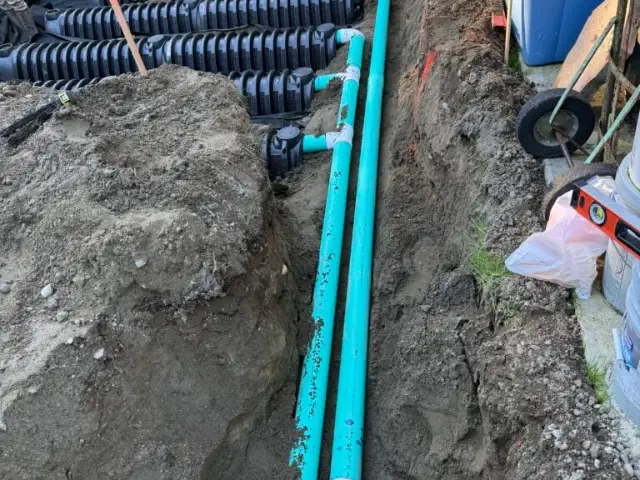
Many Kirkland septic homes date from the 1950s through the 1970s. Typical systems from that era are gravity designs: a concrete tank and a drainfield of perforated pipe in gravel trenches. They were built before risers were common, so the lid is often a foot or more underground, and the as-built drawing, if there is one, may be a hand sketch.
The soils on Finn Hill and around Bridle Trails are largely glacial till, which drains slowly and holds water near the surface in winter. Older drainfields on till can keep working for decades, but they do not forgive neglect. A tank that goes unpumped for years sends solids into the drainfield, and that is the most common way an old Kirkland system fails.
New to a Kirkland septic home?
If you just bought in Finn Hill, Juanita, Kingsgate or Bridle Trails and the house has a septic system, start with three things: find your as-built in King County’s records, get the tank pumped and inspected so you have a baseline, and learn where the tank and drainfield are so nobody parks or builds on top of them. Our Kirkland new-homeowner septic guide walks through it, and our as-built guide shows where to find your records.
What we do in Kirkland
- Tank locating and risers on older homes where the lid is buried.
- Pumping with sludge and scum measurements.
- Inspections every three years for gravity systems, more often for alternative systems, and before every sale.
- Sewer-line jetting and camera work on old clay or cast-iron lines between the house and the tank.
- Drainfield evaluation and repair on aging systems.
King County rules in Kirkland
Kirkland’s septic systems are regulated by Public Health – Seattle & King County under King County Title 13. A gravity system needs an inspection at least every three years; pressure, mound, sand filter and ATU systems need one every 6 months under King County rules, or more often if the manufacturer requires it. Septic additives are prohibited unless specifically approved by the state. We file every report with the county.
Kirkland neighborhoods at a glance
- Finn Hill: wooded lots on glacial till, including older homes that were never connected to sewer.
- Juanita: older homes off the main streets where septic is still in use, often with buried lids and hand-drawn as-builts.
- Kingsgate: mid-century homes on the north end of the city, where some systems are 50 years old or more.
- Bridle Trails: large equestrian lots where septic is common and the drainfield has to be kept clear of horses and equipment.
Signs your Kirkland system needs attention
Older Kirkland systems tend to fail quietly. Watch for slow drains throughout the house, gurgling, sewage odor outdoors, or a patch of lawn over the drainfield that stays green and wet. If you do not know when the tank was last pumped, it is almost certainly due, and a pumping with an inspection is the cheapest way to find out where you stand.
Buying or selling in Kirkland
Selling a Kirkland home on septic? A certified on-site system maintainer has to inspect it before the title transfers, unless a waiver applies, and from February 1, 2027 Washington adds a statewide third-party inspection at sale. We file the report for you and can help you find the as-built.
Finn Hill, Juanita and Kingsgate
Kirkland annexed Finn Hill, Juanita and Kingsgate in 2011, and those neighborhoods were built over decades under King County, some before sewer reached every street. Most homes there are on sewer today, but some older and larger lots still have septic systems, and others have old tanks that were never properly abandoned. If you live in one of these areas and aren’t sure, check your sewer bill and the county records map.
Juanita and Forbes creeks
Juanita Creek and Forbes Creek run through Kirkland to Lake Washington, and the ground along them stays wet in winter. Septic systems near the creeks have less drainfield capacity in the rainy months, and homes on sewer can see groundwater seep into cracked side sewers during storms. Hillside homes with a basement bathroom below the side sewer usually depend on an ejector pump, and we repair and replace those too.
Hillside lots above the lake
Many Kirkland homes sit on slopes above Lake Washington, with tanks below the house or behind retaining walls. We carry long hose runs and plan access before we arrive. On sloped lots, keep downspouts and footing drains away from any drainfield.
Recent Kirkland job: ATU headworks filter cleaning
At a Kirkland home with an aerobic treatment unit, we pulled and cleaned the headworks filter. The headworks is where effluent is filtered before it’s sent out to the drainfield, and the filter catches solids that would otherwise clog the lines. Over time it gets coated, as you can see in the photo, so cleaning it is a routine part of keeping an advanced system flowing.
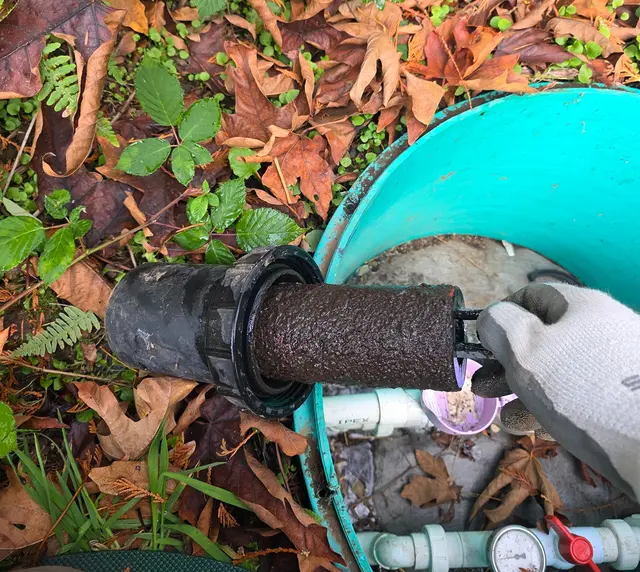
Advanced systems need more than pumping. Our ATU and advanced system service page covers filters, blowers, alarms and the regular maintenance these systems need.
Looking for the best septic company in Kirkland? Here’s what to check.
Every company says it’s the best. These are the things that actually decide how your septic visit goes, and here’s how we measure up on each one.
- Is the office really local? Ours is at 672 7th Ave in Kirkland. Finn Hill, Juanita, Kingsgate and Bridle Trails are minutes away, and there’s no drive charge.
- Who picks up the phone? The owners answer every call, day or night. No call center and no waiting until Monday. Call or text (206) 962-2600.
- How soon can they come? For pumping we can usually get to you the same day or the next day. Emergencies are answered 24/7.
- Are they licensed for your kind of system? We’re WOSSA-certified and licensed, bonded and insured, so we work on pressure, mound and ATU systems as well as gravity tanks.
- Do you know the price before the truck rolls? Our pumping price is posted right on this page, and it includes the tank and baffle inspection. For repairs, you get a written price before any work starts.
- Do they file the county report? We file every pumping report with Public Health – Seattle & King County, so you don’t have to chase paperwork.
- What do your neighbors say? Our Kirkland office holds a 5.0-star Google rating from more than 240 reviews.
“What I appreciate most is that they’re careful not to recommend unnecessary treatments or services. I feel like I’m getting honest, practical advice rather than a sales pitch.”
— Dan G. · 5-star Google review
What septic service costs in Kirkland
Routine pumping starts at $590, including a tank and baffle inspection and effluent filter cleaning (when the filter is reachable through a lid or riser), plus the county pumping report fee and tax. Kirkland is home base, so there’s no drive charge. The base price covers tanks up to 1,000 gallons; larger tanks are $0.60 per gallon over 1,000. A lid under a deck, a tank behind a retaining wall or a long hose run on a hillside lot can add time, and we’ll tell you before we come. See our pumping cost page for what goes into a quote.
Right around the corner
Our Kirkland office is at 672 7th Ave, so Kirkland homes are the closest we serve. For pumping we can usually be there the same day or the next day, and the phones are answered 24/7. Every repair carries the Septic Response Promise: a one-year warranty on most repairs, and if you call about work we have done, we are there the next day if not the same day.
/ King County
Kirkland is in King County.
Kirkland septic records, as-builts and inspection reports are held by Public Health – Seattle & King County and viewable through the county’s records map and OnlineRME.
/ Nearby communities
Do you serve all of Kirkland?
Yes. We serve homes and businesses throughout Kirkland (98033, 98034) and the surrounding area. Not sure? Call (206) 962-2600.
How often should a Kirkland septic tank be pumped?
A typical Kirkland household on a standard 1,000-gallon tank pumps every 3 to 5 years; a garbage disposal or a bigger household shortens that. New to septic? Our Kirkland new homeowner guide walks through the first year. We measure every visit and tell you when the next pumping is due.
Do you file the pumping report?
Yes. We file it with Public Health – Seattle & King County after every pumping.
Are there still septic systems in Kirkland?
Yes. Most of Kirkland is on sewer, but parts of Finn Hill, Juanita, Kingsgate and the Bridle Trails area, plus some older homes elsewhere, still use septic. King County’s online as-built map shows what is on record for your parcel.
I just bought a Kirkland home with septic. What should I do first?
Find your as-built in King County’s records, book a pumping and inspection to get a baseline, and learn where the tank and drainfield are so nothing gets parked or built on them. Our new-homeowner guide covers the details.
My Kirkland septic tank lid is buried. Can you find it?
Yes. Older Kirkland systems were often built without risers, so lids are buried. We locate the tank, uncover it and can add a riser so future pumping is quicker.
Do you serve Finn Hill, Kingsgate and Bridle Trails?
Yes. We serve all of Kirkland (98033 and 98034), including Finn Hill, Juanita, Kingsgate and Bridle Trails. Call (206) 962-2600.
How much does septic pumping cost in Kirkland?
Routine pumping starts at $590, including a tank and baffle inspection and effluent filter cleaning (when the filter is reachable through a lid or riser), plus the county pumping report fee and tax. Buried lids and tank size can change the price, and we confirm it before we come.
How often should an older Kirkland septic system be inspected?
King County inspects gravity systems every three years and alternative systems such as pressure and mound systems more often. Older Kirkland systems benefit from staying on that schedule, because a small problem caught early is far cheaper than a drainfield replacement.
Is Finn Hill on septic?
Most of Finn Hill is on sewer, but some older and larger lots still use septic systems, and some converted homes still have old tanks in the yard.
Where is your Kirkland office?
Our Kirkland office is at 672 7th Ave, Kirkland, WA 98033, (206) 962-2600, and our phones are answered 24/7.
I’m new to septic in Kirkland. Where should I start?
Look up your as-built, read the last inspection report and book a pumping or new-owner visit. Our Kirkland new homeowner guide covers the first year.
How soon can you come out in Kirkland?
For pumping we can usually get to you the same day or the next day, and Kirkland is home base, so it is often sooner. If sewage is backing up or your alarm is going off, call (206) 962-2600 any time, day or night.
Do you pump septic tanks larger than 1,000 gallons?
Yes. The standard pumping price covers tanks up to 1,000 gallons; larger tanks are $0.60 per gallon over 1,000, plus the county pumping report fee and tax. We confirm the size and price before we come.
How do I choose a septic company in Kirkland?
Check that the office is local, that a real person answers after hours, that they are WOSSA-certified for your system type, that they give a price before the work, and that they file the King County pumping report for you. We do all five from our office at 672 7th Ave.
Can you add risers to my Kirkland septic tank?
Yes. Many older Kirkland tanks have lids a foot or more underground, especially on Finn Hill and in Juanita. We install risers and secure lids so future pumping and inspections are faster and you are not paying to dig every time.
My Kirkland septic alarm is going off. What should I do?
Stop using water, check the breaker for the pump or control panel once, and call us at (206) 962-2600, day or night. On hillside lots above the lake, most alarms come from a pump, float or control problem in the pump chamber, and we carry common pumps and floats on the truck. See 24/7 emergency septic service.
Do you offer a septic maintenance plan in Kirkland?
Yes. Our maintenance plan is $10 a month and keeps your system on schedule, so pumping and inspections happen before problems start.