
/ King County records
King County septic as-built records.
An as-built is the official drawing of how your septic system was installed and approved. You need it for home sales, building permits and any work near the system. Here is how to find yours and what to do if it is missing.
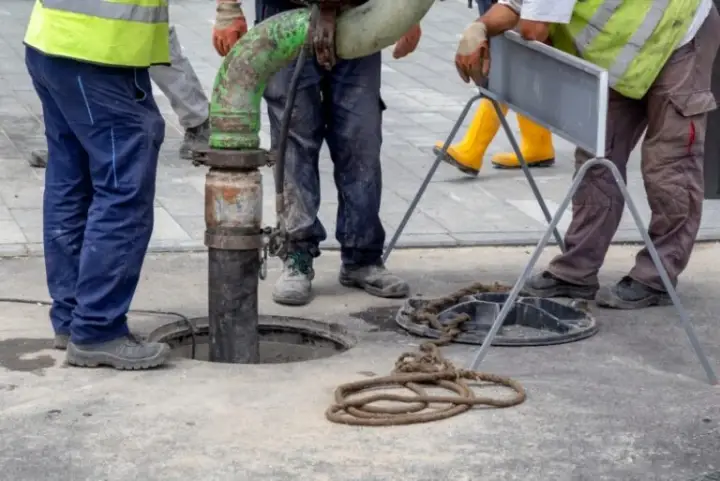
How to look up your as-built and septic records online
- Open King County’s septic records map (also at kingcounty.gov/SepticRecords).
- Search your address or parcel number and open the record for your property.
- Download the drawing and any inspection or pumping reports on file.
If your record is not online
Many homes built before the early 1970s have no record in the online map. Public Health – Seattle & King County can search its files: email as-built.help@kingcounty.gov with the parcel number and address. Expect a reply within about five business days.
What an as-built shows
An as-built is the drawing submitted when the system was installed and approved. A typical King County as-built shows the house footprint, the location of the septic tank and any pump chamber, the size of the tank, the type of system, the drainfield layout and the reserve area set aside for a future replacement. It also shows distances to the house, property lines, wells and surface water. Older drawings are often hand-sketched and not to scale, so treat measurements on a pre-1980 as-built as a starting point rather than a promise.
Reading your system type
The as-built tells you what kind of system you own, and that decides your inspection schedule. A conventional gravity system, where effluent flows from the tank to the drainfield by gravity, needs an inspection at least every three years. Pressure distribution, mound, sand filter, aerobic treatment unit and drip systems use pumps or treatment equipment and need an inspection every year under state rules, or more often if the county or the manufacturer requires it. If your drawing shows a pump chamber or a control panel, you are in the second group.
Pumping and inspection reports in OnlineRME
Besides the drawing, King County keeps the maintenance history for each system. Reports filed by pumpers and inspectors are viewable through OnlineRME, and they show when the tank was last pumped, what was found and whether any repairs were recommended. Buyers should read those reports along with the as-built. We file a report with the county after every pumping and inspection we do, so your history stays complete.
When the drawing does not match the ground
It is common to find that a tank sits a few feet from where the as-built shows it, that a drainfield was extended, or that a lid has been buried under a later patio. When that happens, we probe first and use an electronic locator only when needed, then mark what we find. If you are selling or planning work, an accurate picture of where everything really is saves time and money later.
Building, remodeling and landscaping near the system
Washington’s septic rules require owners to protect the system and its reserve area from structures, paving, compaction and grade changes, and to get health officer approval before altering or expanding a system. Before you add a deck, a shop, an ADU, a patio or new plantings, pull the as-built and find the tank, the drainfield and the reserve area. King County’s landscaping guidance also says to keep sprinklers, vegetable gardens, fill, bark and gravel off the drainfield.
As-builts and King County home sales
Before the title transfers on a King County home with septic, a certified on-site system maintainer has to inspect the system, unless a waiver applies, such as a recent report already on file. The as-built is what the inspector checks the system against. From February 1, 2027, Washington also requires a third-party inspection at sale statewide. Sellers who look up the as-built early avoid last-minute surprises.
How we help
- Read the drawing with you and explain what system you have
- Compare the record with what is actually in the ground
- Locate the tank and drainfield when there is no record or the drawing is wrong
- Handle the inspection a King County home sale requires (see septic inspections)
Frequently asked questions
What is a septic as-built?
It is the official drawing of how a septic system was installed, permitted and approved by the health department. It shows the system type, tank size and the location of the tank and drainfield.
When do I need my as-built?
For a home sale, a building permit near the system, an addition or new landscaping, and on every service visit. It saves time locating the tank.
What if there is no as-built on file?
Older systems often have none. We can locate and document the system on site, and the county can search its paper files if you email as-built.help@kingcounty.gov.
Do you work in Snohomish County too?
Yes. See our Snohomish County as-built guide.
How long does it take King County to find an as-built that is not online?
Public Health – Seattle & King County asks for up to about five business days when you email as-built.help@kingcounty.gov with your parcel number and address.
Does my as-built tell me how often my system needs inspection?
Yes, indirectly. It shows the system type. Gravity systems need an inspection at least every three years; pressure, mound, sand filter, ATU and drip systems need one every year.
Can I build a deck or shed near my septic system?
Not on the tank, drainfield or reserve area, which state rules protect from structures and compaction. Use the as-built to find those areas before you plan the project.