
/ Clearview, Snohomish County
Septic service in Clearview, WA.
Septic pumping, pump and alarm repair, annual inspections and home-sale inspections for Clearview, the rural stretch of Snohomish County along SR 9 between Woodinville and Snohomish, from five-acre horse properties to newer homes on large lots. Our Woodinville crews file every pumping report with the Snohomish County Health Department, and the phones are answered 24/7.
Your nearest office
Woodinville
23321 57th Ave SE
Woodinville, WA 98072
(206) 790-9392
Phones answered 24/7
/ Services in Clearview
What we do in Clearview.
Septic Tank Pumping
About an hour on site, with the pumping report filed with the county every time.
Learn more →Septic Inspections
Routine and real-estate inspections, with reports filed within 24 hours.
Learn more →Septic Repair
Effluent pumps, alarms, floats, risers, lids, baffles and filters.
Learn more →Drainfield Repair
Distribution boxes, laterals, drainfield treatment and replacement.
Learn more →Maintenance & Monitoring
Routine O&M checks for pump, pressure and advanced systems.
Learn more →Jetting & Sewer Lines
Camera scoping and replacement of the line from your house to the tank.
Learn more →ATU, Oscar & Bio-Microbics
Aerobic treatment units, including Oscar and Bio-Microbics systems.
Learn more →Septic emergency in Clearview? 24/7 emergency septic service →
/ Septic in Clearview
Big lots along SR 9, we know Clearview septic.
Clearview isn’t a city. It’s a stretch of unincorporated Snohomish County along State Route 9, running north from the King County line toward the town of Snohomish, and most homes in it treat their own wastewater. Clearview grew from farms and woodlots into a community of one- to five-acre properties, with horse barns, shops, nurseries and newer homes mixed together. Our Woodinville office is just south of it, so Clearview is part of our home turf. For the King County side of the 98072 ZIP code, where the inspection rules differ, see our Woodinville septic tank pumping page.
Why so many Clearview homes have pumps
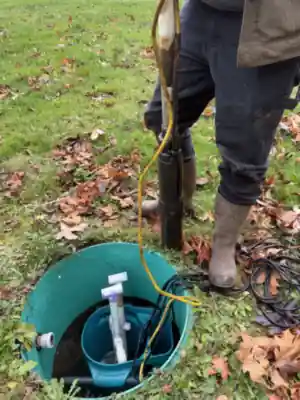
Most of Clearview sits on glacial till: dense, compacted soil laid down by the ice sheets, with a hard layer not far below the surface. Water moves through it slowly, and in winter it perches on top of that hard layer. A conventional gravity drainfield struggles in ground like that, so many Clearview homes have pressure distribution or mound systems instead. Effluent flows from the septic tank to a pump chamber, and a pump sends it out in measured doses, either through small pressurized pipes in shallow trenches or up into a raised sand mound.
Those systems work well in Clearview’s soil, but they add parts that wear out: the pump, the floats that turn it on and off, the high-water alarm and the control panel. Snohomish County requires pressure, mound and ATU systems to be inspected every year for exactly that reason. Gravity systems need an inspection every three years.
When the alarm goes off
If your high-water alarm sounds, the first move is the same every time: stop using water. Skip the laundry and dishwasher, hold off on showers, and give the pump a chance to catch up. On a timer-dosed system, which sends small doses on a schedule to protect the drainfield, a heavy water day can trigger the alarm even when everything is working, and it will clear as the timer works through the backlog. If it doesn’t clear within a few hours, or keeps coming back, the pump, a float or the controls may have failed. Call us; our phones are answered 24/7.
Horses, hay and heavy trucks
Clearview has a lot of horse properties and small farms, and that brings heavy loads onto lawns and pastures: hay deliveries, horse trailers, tractors and the animals themselves. Compaction and crushed pipes are among the most expensive septic problems to fix, so keep paddocks, arenas, parking and delivery routes off the tank, drainfield and reserve area. Keep manure piles away from the system and any well, and never plumb barn drains or wash racks into the septic tank. A mound in particular should never be driven on or grazed.
Wells and septic on the same land
Many Clearview properties get their water from a private well, with the septic system on the same lot. A working drainfield treats effluent before it reaches groundwater, and that’s part of protecting your drinking water. Keep fuel, oil, solvents and pesticides out of the drains and stored away from both the well and the drainfield, and test the well if the water changes in taste, smell or clarity.
Shops, RV pads and guest units
On a big lot, it’s natural to add a shop, an RV pad or a guest unit. Before you pour concrete or set a building, find the tank, the drainfield and the reserve area on your as-built; state rules protect all three from structures, paving and compaction. Plumbing a guest unit or a shop bathroom into the house’s system adds flow the system may not have been designed for, and any expansion needs health officer approval. In Washington, tank size is tied to bedroom count: at least 1,000 gallons for up to four bedrooms, plus 250 gallons for each additional bedroom.
Selling a Clearview home under the new county rule
Since November 1, 2026, Snohomish County requires sellers of homes on septic to complete three steps before closing: a full inspection by a certified septic contractor within the past 12 months, with pumping if recommended; an as-built on file, or a site plan prepared by a certified contractor if no as-built exists; and an online Report of Property Transfer submitted with its fee. The RPT is valid for 12 months. Monitoring and maintenance specialists can draw site plans for any system type, while pumpers can do them only for gravity or pump-to-gravity systems. On older Clearview acreage the as-built is sometimes missing, so start early. Washington adds a statewide third-party inspection at sale from February 1, 2027.
Help paying for septic work
Snohomish County’s Savvy Septic program offers rebates on inspections, pumping, riser installation and select minor repairs, plus financial help for major repairs. To qualify, complete the county’s free online Septic Care Workshop. For a Clearview pressure system that needs an inspection every year, the rebate makes staying on schedule easier. Our $10/month maintenance plan adds a yearly filter cleaning and system check, 10% off septic work and waived emergency fees.
Finding buried lids on acreage
On a big lot, tank lids disappear fast under lawn, pasture and years of landscaping, and older Clearview properties don’t always have an accurate as-built. We probe first and use an electronic locator only when needed. Once the tank is found, a riser brings the access up to grade so the next pumping takes minutes instead of a dig. State standards call for risers at least 23 inches across with secured lids, and the Savvy Septic program offers rebates on riser installation.
Clearview areas we serve
- SR 9 corridor: homes and businesses along the highway between the King County line and Snohomish.
- Horse and hobby-farm acreage: one- to five-acre properties with barns, paddocks and wells.
- Newer large-lot homes: recent builds, often with pressure or mound systems.
- Toward Cathcart and Snohomish: rural roads with older systems and buried lids.
- Toward Maltby and Woodinville: close to our office, where we can often bundle work in one visit.
Little Bear Creek and the streams downhill
Clearview sits high in its watershed. Little Bear Creek begins in this area and runs south toward Woodinville, where it joins the Sammamish River, and it still supports salmon. Other drainages head north and west toward the Snohomish River. With so much of Clearview on septic, the streams below it depend on drainfields that actually treat what they receive. A system that is pumped on time, inspected on schedule and kept free of harsh chemicals is part of what keeps those creeks clean, and a surfacing drainfield is something to fix promptly, not live with.
What a pressure or mound system visit looks like
Servicing a pump system is more than pumping the tank. On a typical Clearview visit we:
- measure the sludge and scum in the septic tank and pump it when the levels call for it;
- check the pump chamber, including the floats, the pump’s on and off levels and the high-water alarm;
- clean the effluent filter, which keeps solids out of the pump and the laterals;
- look over the control panel and, on timer-dosed systems, confirm the dose settings match the design;
- on pressure drainfields, check the pressure at the far ends of the laterals and flush them when needed, because a slowly clogging orifice starves part of the drainfield;
- walk the mound or drainfield for wet spots, seepage at the base of a mound, or settling.
The results go into the report we file with the Snohomish County Health Department, which is how the county tracks the yearly inspection these systems need.
Windstorms and power outages
Tall trees and long rural power lines mean outages are part of a Clearview winter. A gravity system keeps working without power, but a pressure, mound or ATU system can’t move effluent until the power comes back. During an outage, keep water use to a minimum. The pump chamber holds some reserve above the pump-on level, but laundry, dishes and long showers can fill it and push water back toward the house. When the power returns, the pump may run for a long stretch to catch up, and the alarm may sound briefly; that’s normal if it clears. If you use a generator, have an electrician connect the septic pump properly rather than running it off an extension cord. Our guide to septic systems and power outages has more.
Buying acreage in Clearview
If you’re shopping for land in Clearview, the septic system matters as much as the barn. Before you make an offer, ask for:
- the system type (gravity, pressure, mound or ATU) and the year it was installed;
- the most recent inspection and pumping reports, which for most properties are viewable on OnlineRME;
- the as-built, showing the tank, the drainfield and the reserve area;
- the well log and the well’s distance from the drainfield (Washington generally requires at least 100 feet between a private well and a drainfield);
- a list of any shops, guest units or barn plumbing tied into the system.
Under Snohomish County’s November 2026 property-transfer rule, the seller arranges the inspection and the Report of Property Transfer, but a buyer can still order an independent inspection. We do both.
Nurseries, shops and other businesses
The SR 9 corridor mixes nurseries, shops, churches and small businesses in with the homes, and many of them are on septic too. A commercial system works like a residential one but sees different loads: break-room sinks, restrooms used by staff and customers, and seasonal swings in traffic. Wash water from vehicles or equipment and anything from a shop floor drain should never go to a septic system. Very large systems, those designed for more than 3,500 gallons a day, are permitted by the Washington State Department of Health rather than the county. We service commercial systems in Clearview and can set up a pumping and inspection schedule that fits how your business actually uses water.
Keeping records on a rural property
On acreage that changes hands every decade or two, records go missing. Keep one folder, paper or digital, with your as-built, the well log, every pumping and inspection report, and receipts for pumps, floats and alarms. Note where the lids are, measured from fixed points like the house corner or a fence post, since pasture and landscaping move. Snohomish County keeps filed reports on OnlineRME, but the parts list for your pump and panel usually lives only with you. A good file makes every service visit faster and makes your property easier to sell.
Recent Clearview job: routine pumping on a pressure system
Not every call is an emergency. At a Clearview home with a pressure distribution system, we did routine septic tank pumping and an inspection. On a pressure system, a pump in a separate chamber sends measured doses of effluent out to the drainfield, so keeping solids out of that chamber and the lines protects the most expensive part of the system. Regular pumping and inspections catch small problems before they turn into an alarm or a backup.
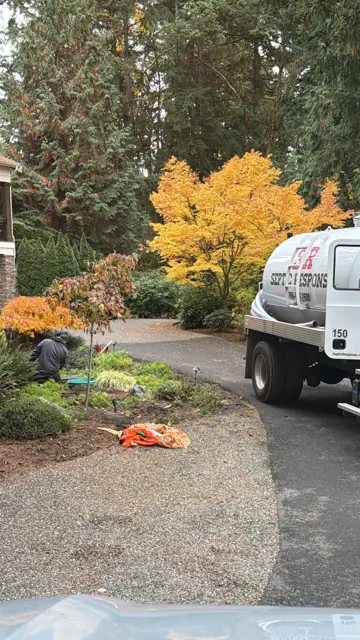
In Snohomish County, alternative systems like pressure distribution need a yearly inspection. Our septic tank pumping page explains what a pumping visit includes.
What septic service costs in Clearview
Routine pumping starts at $590, including a tank and baffle inspection and effluent filter cleaning (when the filter is reachable through a lid or riser), plus the county pumping report fee and tax. Clearview is close to our Woodinville office, so there’s no long-distance charge. A pump chamber that also needs pumping, a mound with a long hose run, or a lid buried in pasture can add time, and we’ll tell you before we come. See our pumping cost page for what goes into a quote.
Our crew in Clearview
Clearview is served from our Woodinville office, (206) 790-9392, just down SR 9 and SR 522. Our phones are answered 24/7, and if an alarm or backup can’t wait we’ll walk you through what to do until a crew arrives. Maintenance-plan members get next-day emergency service and reminders when pumping is due.
Repairs come with the Septic Response Promise: a one-year warranty on most repairs, and if you call about work we have done, we are there the next day if not the same day.
/ Snohomish County
Clearview is in Snohomish County.
Clearview is unincorporated Snohomish County, so the Snohomish County Health Department keeps its septic permits, as-builts and inspection reports. Past reports for most properties are viewable through OnlineRME.
/ Nearby communities
Do you serve Clearview?
Yes. Clearview is close to our Woodinville office, and we serve the whole SR 9 corridor between the King County line and Snohomish. Call (206) 790-9392.
Is Clearview on sewer?
Most of Clearview is not on public sewer. It’s unincorporated Snohomish County, and most homes use septic systems.
Why does my Clearview septic system have a pump and an alarm?
Clearview’s dense glacial till drains slowly, so many homes use pressure or mound systems that pump effluent to the drainfield. The alarm warns when the pump chamber fills too high.
How often does a Clearview septic system need inspection?
Snohomish County requires pressure, mound and ATU systems to be inspected every year and gravity systems every three years.
How often should a Clearview septic tank be pumped?
Most households pump every 3 to 5 years, depending on tank size and household size. We measure sludge and scum on every visit and tell you when the next pumping is due.
Do you file the pumping report?
Yes. We file it with the Snohomish County Health Department after every pumping.
What do I need to sell a Clearview home on septic?
A full inspection within 12 months (plus pumping if recommended), an as-built or site plan on file, and an online Report of Property Transfer before closing.
Are there septic rebates for Clearview homeowners?
Yes. Snohomish County’s Savvy Septic program offers rebates after you complete the free online Septic Care Workshop.
How often does a Clearview pressure or mound system need service?
Snohomish County requires pressure, mound and ATU systems to be inspected every year, and gravity systems every three years. Pumping depends on what the measurements show, typically every two to five years or more. We measure at every visit and file the report with the county.
Will my septic system work during a power outage?
A gravity system will. A pressure, mound or ATU system can’t pump effluent until power returns, so use as little water as possible during an outage. If the alarm sounds after power comes back and doesn’t clear within a few hours, call us.
How far does my drainfield need to be from my well?
Washington generally requires at least 100 feet between a private well and a drainfield, with smaller setbacks for the tank. Your as-built and well log show both locations. If you’re planning a new well, shop or addition, check the setbacks before you build.