
/ Snoqualmie, King County
Septic service in Snoqualmie, WA.
Septic pumping, pump and alarm repair, flood recovery and inspections for the Snoqualmie area, from the historic town on the river to the Lake Alice plateau, the Tokul and Snoqualmie Falls neighborhoods and the rural roads between Fall City and North Bend. Our Kirkland crews file every pumping report with Public Health – Seattle & King County, and our phones are answered 24/7.
Your nearest office
Kirkland
672 7th Ave
Kirkland, WA 98033
(206) 962-2600
Phones answered 24/7
Snoqualmie ZIP codes we serve: 98065
/ Services in Snoqualmie
What we do in Snoqualmie.
Septic Tank Pumping
About an hour on site, with the pumping report filed with the county every time.
Learn more →Septic Inspections
Routine and real-estate inspections, with reports filed within 24 hours.
Learn more →Septic Repair
Effluent pumps, alarms, floats, risers, lids, baffles and filters.
Learn more →Drainfield Repair
Distribution boxes, laterals, drainfield treatment and replacement.
Learn more →Maintenance & Monitoring
Routine O&M checks for pump, pressure and advanced systems.
Learn more →Jetting & Sewer Lines
Camera scoping and replacement of the line from your house to the tank.
Learn more →ATU, Oscar & Bio-Microbics
Aerobic treatment units, including Oscar and Bio-Microbics systems.
Learn more →Septic emergency in Snoqualmie? 24/7 emergency septic service →
/ Septic in Snoqualmie
Falls, floodplain and plateau, we know Snoqualmie septic.
Snoqualmie is two places in one. The historic town sits on the Snoqualmie River’s floodplain just above the falls, and Snoqualmie Ridge climbs the hill to the west as a newer, planned community. Both are largely served by city sewer. Around them, though, a lot of the Snoqualmie area is still on septic: the Lake Alice plateau, the homes near Tokul Creek and Snoqualmie Falls, the farms and houses along the river between Fall City and North Bend, and older properties on the edges of town. We serve the whole area, ZIP 98065, from our Kirkland office out I-90.
Living with the Snoqualmie River
The Snoqualmie River gathers three forks above North Bend and drops over the falls just below town, and the valley floor around Snoqualmie floods in big winter storms. When the river is high, the ground under a drainfield fills with water, and a drainfield can only treat effluent when there is unsaturated soil beneath it. That’s why valley-floor systems slow down, gurgle or back up during flood season even when nothing is broken.
During high water, use as little water as you can: short showers, no laundry, no dishwasher. Don’t have the tank pumped while the ground is saturated, because an empty tank in waterlogged soil can be pushed upward by groundwater. Once the water goes down, have the system checked before going back to normal use. Floodwater can carry silt into the tank through lids and cleanouts, move floats out of position, and soak the electrical parts of a pump chamber.
Pump chambers, floats and alarms
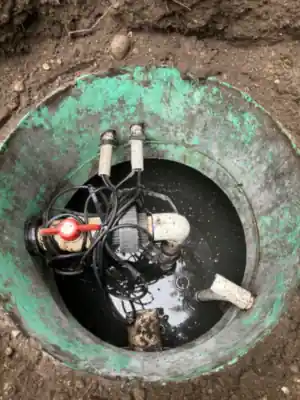
Much of the ground around Snoqualmie is either too wet or too shallow for a simple gravity drainfield, so many homes use pressure distribution or mound systems. In those designs, effluent leaves the septic tank, collects in a pump chamber, and is pumped to the drainfield in measured doses. A float switch turns the pump on and off, and a second float triggers a high-water alarm if the level gets too high.
When the alarm sounds, cut water use right away so the pump has time to catch up. On timer-dosed systems, a heavy laundry day can set off the alarm even when everything works, and the level drops once the timer works through the backlog. If the alarm doesn’t clear within a few hours, or comes back again and again, a pump, float or control problem is likely, and it’s time to call. Never silence the alarm and keep using water.
The Lake Alice plateau
Above the valley, the Lake Alice area is a neighborhood of wooded acreage and homes on private septic systems, many with pressure distribution on dense glacial soil. Water moves slowly through that soil in winter, so drainfields there have less room for extra water. Keep downspouts, footing drains and driveway runoff away from the drainfield, spread laundry across the week, and keep vehicles and outbuildings off the drainfield and reserve area.
Near the falls and Tokul Creek
Homes near Snoqualmie Falls and along Tokul Creek sit on slopes and stream corridors with setbacks that limit where a drainfield can go. Access can also be tight, with tanks below the house or behind retaining walls. We carry long hose runs for those jobs; when you book, tell us about steep drives, gates and where you think the lids are.
Windstorms and power outages
The upper Snoqualmie Valley is known for strong winter winds, and outages can last for hours or days. A pressure or mound system can’t move effluent without power, so incoming water collects in the pump chamber’s reserve space until the power returns. During an outage, keep water use to a minimum. When power comes back, give the pump time to work through the backlog before running laundry or the dishwasher. If the alarm stays on after power is restored, call us.
Inside the city, or just outside it
Because much of Snoqualmie is sewered and the land around it isn’t, it’s common for homeowners near the city edge to be unsure what they have. Your sewer bill is the quickest clue, and the King County septic records map will confirm it. If you’re near the edge and your system fails, state rules (WAC 246-272A-0025) say that a failing system inside a sewer utility’s service area, within 200 feet of an available sewer, may have to connect instead of being repaired. If you do connect, the old tank has to be pumped and then removed or filled in place with the lid destroyed, which we handle.
King County rules around Snoqualmie
Snoqualmie-area septic systems are regulated by Public Health – Seattle & King County under King County Title 13 and state rule WAC 246-272A. A conventional gravity system needs an inspection at least every three years. Pressure distribution, mound, sand filter and aerobic treatment systems need one every year, or more often if the county or the manufacturer requires it. Septic additives are prohibited unless specifically approved by the state, and they can do more harm than good. We file every pumping and inspection report with the county, so your record in OnlineRME stays current.
Selling a home on septic near Snoqualmie? King County requires a certified inspection before the title transfers unless a recent report already covers it, and from February 1, 2027 Washington adds a statewide third-party inspection at sale. Our King County as-built guide shows how to find your system drawing.
Snoqualmie areas we serve
- Historic downtown and the river: mostly sewered, with older properties and flood-season backups on the valley floor.
- Lake Alice plateau: wooded acreage on private septic, many pressure systems.
- Snoqualmie Falls and Tokul Creek: slope and stream-corridor homes with tight access.
- Between Fall City and North Bend: farms and rural homes along SR 202 and the valley roads.
- Snoqualmie Ridge: on sewer; we help with side sewer and line work.
What septic service costs in Snoqualmie
Routine pumping starts at $590, including a tank and baffle inspection and effluent filter cleaning (when the filter is reachable through a lid or riser), plus the county pumping report fee and tax. In the Snoqualmie area, the usual extras are a pump chamber that also needs pumping, a lid buried in forest duff, or a long gravel driveway. We’ll tell you before we come. See our pumping cost page for what goes into a quote.
Our crew in Snoqualmie
The Snoqualmie area is served from our Kirkland office, (206) 962-2600, out I-90. Our phones are answered 24/7, and during a flood or a windstorm outage we’ll tell you how to protect the system until a crew can get through. Homeowners on our $10/month maintenance plan get emergency fees waived, next-day emergency service, a yearly filter cleaning and system check, 10% off septic work, and reminders when pumping is due.
Repairs come with the Septic Response Promise: a one-year warranty on most repairs, and if you call about work we have done, we are there the next day if not the same day.
/ King County
Snoqualmie is in King County.
Snoqualmie-area septic permits, as-builts and inspection reports are held by Public Health – Seattle & King County. The county’s records map shows most drawings, and older properties can be searched by email using the parcel number and address.
/ Nearby communities
Do you serve Snoqualmie?
Yes. We serve the Snoqualmie area (98065), including the Lake Alice plateau, the falls and Tokul Creek neighborhoods, and the valley between Fall City and North Bend. Call (206) 962-2600.
Is Snoqualmie on sewer or septic?
Much of the city of Snoqualmie, including Snoqualmie Ridge, is on sewer. Many homes around it, such as on the Lake Alice plateau and in the river valley, use septic systems.
What should I do with my septic system when the Snoqualmie River floods?
Use as little water as possible while the ground is saturated, don’t pump the tank until the water drains, and have the system checked before returning to normal use.
Why does my septic alarm go off during storms?
Saturated soil and heavy water use can fill the pump chamber faster than the pump can empty it, and power outages stop the pump entirely. Cut water use and call if the alarm doesn’t clear.
How often should a Snoqualmie septic tank be pumped?
Most households pump every 3 to 5 years, depending on tank size and household size. Pressure and mound systems should be inspected every year. We measure sludge and scum on every visit and tell you when the next pumping is due.
Do you file the pumping report?
Yes. We file it with Public Health – Seattle & King County after every pumping.
What happens to my septic system during a windstorm power outage?
The pump can’t run, so the pump chamber fills its reserve space. Keep water use to a minimum, then let the pump catch up when power returns.
Do you do septic inspections for Snoqualmie home sales?
Yes. We perform the certified inspection King County requires before title transfer and file the report with the county.