
/ Drainfield problems
7 signs your drainfield is failing.
The drainfield is the most expensive part of a septic system to replace. Catching problems early often means a repair instead of a full replacement.
By Anthony Wilson, founder · Updated November 2026
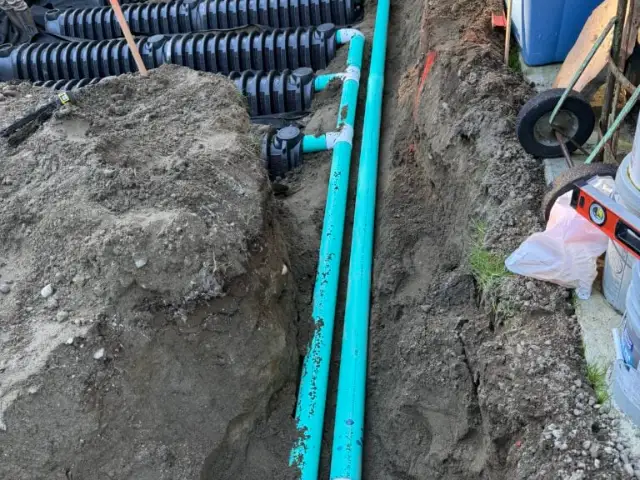
Your septic tank separates solids, but the drainfield (also called a leach field or soil absorption system) is where the real treatment happens. Liquid from the tank flows into perforated pipes or chambers buried in gravel and soil, and the soil filters and treats it before it reaches groundwater. When the soil can no longer accept water, the system starts to fail. Here are the signs we look for on service calls.
1. Wet, soggy ground over the drainfield
If the area over the drainfield stays wet or spongy when the rest of the yard is dry, wastewater is likely surfacing. This is the clearest sign of a drainfield problem.
2. Grass that is greener than the rest of the yard
A strip of bright green, fast-growing grass in the shape of the drain lines can mean the field is getting more liquid and nutrients than it should, especially during dry summer months.
3. Sewage smell in the yard
A sewage odor over the drainfield, not just near the roof vent, points to wastewater near the surface. See what a septic smell means.
4. Slow drains and gurgling throughout the house
When the drainfield cannot accept water, the tank stays full and the whole house drains slowly. If pumping the tank only helps for a few weeks, the drainfield is often the real issue.
5. Sewage backing up into the house
Backups in the lowest drains, especially after laundry or showers, can mean the tank is full or that the drainfield has stopped taking water. Either way, stop using water and call.
6. Standing water or a high liquid level in the tank
When we open the tank, liquid sitting above the outlet pipe tells us water is not leaving fast enough. That is one of the clearest indicators during an inspection.
7. Your pump alarm keeps going off
On pressure and mound systems, a pump pushes effluent to the field. Repeated high-water alarms can mean a pump problem or a field that cannot take any more water. See septic alarm going off.
What causes drainfields to fail
- Skipped pumping. Solids that wash out of an overfull tank clog the soil. This is the most common cause we see. See how often to pump.
- Too much water. Leaky toilets, running fixtures, big laundry days and roof drains pointed at the field.
- Grease, wipes and chemicals. See what not to flush.
- Driving or parking on the field, which crushes pipes and compacts the soil.
- Tree and shrub roots growing into lines.
- Age. Many systems in our area were installed decades ago, and the soil around them eventually reaches the end of its life.
- Our wet climate. High winter groundwater in parts of King and Snohomish County can leave fields saturated for months.
Can a failing drainfield be repaired?
Sometimes. Depending on what we find, options can include pumping and resting the field, clearing and jetting the lines, fixing a broken pipe or distribution box, replacing a pump, or redirecting surface water. When the soil itself is worn out, the field may need to be replaced or a new system designed. In both King and Snohomish County, drainfield repairs and replacements generally need a design and a permit, and we help coordinate that process. See our drainfield repair page.
What to do right now
- Cut water use: spread out laundry, fix leaks, take shorter showers.
- Keep people, pets and vehicles off wet areas.
- Do not add chemicals or additives (why additives do not help).
- Call for an inspection so we can see the tank level and check the field.
Quick answers
How do I know if my drainfield is failing?
Common signs are wet or soggy ground over the drainfield, unusually green grass, a sewage smell in the yard, slow drains throughout the house, and backups after heavy water use.
Can a drainfield fix itself?
A field that is overloaded may recover somewhat if water use is reduced and the tank is pumped. A field clogged with solids or worn-out soil usually needs repair or replacement.
How long does a drainfield last?
Many last 20 to 30 years or longer with regular pumping and sensible water use. Skipped maintenance can shorten that significantly.
Does pumping fix a failing drainfield?
Pumping relieves pressure for a while but does not fix clogged soil or broken lines. If problems return within weeks of pumping, the drainfield needs attention.