
/ Drainfield care
How long does a drainfield last, and how do you make it last longer?
Short answer: there is no expiration date. A drainfield that is protected and fed clear effluent can last for decades. Here is what shortens its life, the warning signs, and ten habits that protect it.
By Anthony Wilson, founder · Updated November 2026
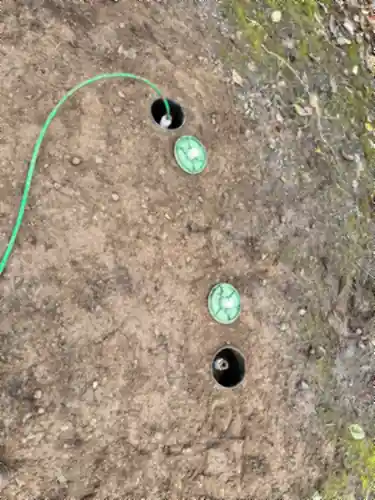
The drainfield is the most expensive part of a septic system and the part people think about least. It sits quietly under the lawn for years, and most owners only learn how it works when it stops. The good news: there is no fixed expiration date on a drainfield. How long yours lasts depends mostly on how it was built, the soil it sits in and, above all, how the system is used and maintained. As the Snohomish County Health Department puts it, how long your septic system lasts greatly depends on how well you take care of it.
What a drainfield actually does
Your septic tank separates solids from liquid. The liquid, called effluent, still carries bacteria, viruses and nutrients. The drainfield spreads it through perforated pipes in gravel or chambers, and the soil underneath does the real treatment, filtering and breaking it down before it reaches groundwater.
That only works if there is enough unsaturated soil below the pipes. Public Health – Seattle & King County explains that a drainfield is compromised when it is saturated and the effluent does not have 2 to 3 feet to trickle down through (King County: about septic systems). Current rules do not allow drainfields to be built where the soil is likely to become saturated, so a properly designed field should work year-round unless something changes.
Why drainfields fail
King County lists three main reasons a drainfield that once worked stops working: it is very old, the site has changed (through landscaping or building around it), or the household uses more water than the system was designed for. In our work across King and Snohomish County, almost every failure we see traces back to one of these causes, or to solids getting out of the tank.
1. Solids escaping the tank
This is the big one. When a tank goes too long without pumping, the sludge layer rises and the scum layer thickens until solids flow out with the effluent. Those solids plug the gravel and seal the soil. Once that happens, pumping the tank will not unplug the field. King County’s guidance is to pump when the bottom of the scum layer is within 3 inches of the bottom of the outlet baffle, or the top of the sludge is within 12 inches of the bottom of the outlet fitting. Our pumping schedule guide explains how that translates to years for a typical household.
2. Too much water
Every drainfield is sized for a design flow, which in Washington is based on the number of bedrooms. State code requires owners to keep the flow at or below the approved capacity (WAC 246-272A-0270). A running toilet, a dripping faucet (King County estimates 15 to 20 gallons a day), back-to-back laundry loads, a drained hot tub or a house that has quietly gained two bedrooms can all push a field past what it was built to take.
3. Changes on top of the field
The soil needs air. Driveways, sheds, patios, parked cars, livestock and even heavy equipment from a landscaping project compact the ground and cut off oxygen. State code requires owners to protect the drainfield and reserve area from structures, impervious surfaces, compaction, grade changes, and roof or footing drains.
4. Roots and broken parts
Tree roots grow toward the moisture in drain lines. Distribution boxes settle and tip, sending all the effluent down one line. Pumps and floats fail on pressure systems. These problems can look like a failed drainfield but are often repairable without replacing the whole field.
5. Age
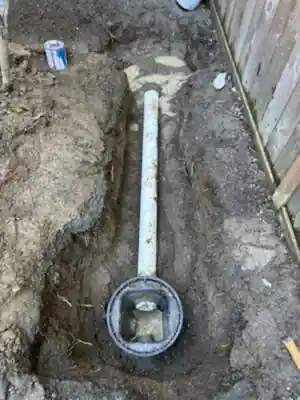
Older systems were built to older standards, sometimes without effluent filters, with smaller tanks and shallower fields. Public Health – Seattle & King County estimates there are nearly 40,000 septic systems in urban King County alone, many of them past their intended life span. An old system can still work, but it has less margin for error.
How long should a drainfield last?
There is no single number, and anyone who quotes you an exact figure is guessing. A well-designed field on good soil, protected from traffic and fed only clear effluent from a regularly pumped tank, can last for decades. The same field can fail in a few years if the tank is neglected or the household doubles in size. What we can tell you from inspections is which factors matter most:
- Soil. Much of the uplands in both counties is dense glacial till that drains slowly, which is why so many plateau homes have pressure distribution or mound systems. Sandy outwash soils drain fast but give effluent less time in the soil.
- System type. Pressure distribution spreads effluent evenly across the whole field instead of overloading the first few feet, which helps a field age evenly. It also adds a pump, floats and an alarm that need regular attention.
- Maintenance history. Regular inspections and timely pumping are the biggest factors you control.
- Water use. Steady, moderate flow is easier on a field than big surges.
Puget Sound weather and your drainfield
Our climate is hard on drainfields in a particular way. From late fall through early spring, steady rain soaks the ground for weeks at a time, and on glacial till that water perches near the surface instead of draining away. In the river valleys, the water table rises close to the surface every winter. A drainfield that copes easily in August can be running near its limit in January.
That is why so many of the calls we get about slow drains, pump alarms and soggy yards come in the wettest months, and why a system that struggles only in winter deserves a proper look rather than a shrug. Common culprits are roof or footing drains discharging too close to the field, a low spot that collects runoff, or groundwater getting into a cracked tank or riser. Each of these can be fixed, and fixing them takes pressure off the drainfield all year.
What an inspection looks at
A drainfield cannot be seen, so an inspection reads the clues. King County describes a maintenance inspection as checking the septic and pump tanks, any treatment component, the distribution system, and the drainfield and reserve areas, then reporting the results to Public Health. In practice we measure the sludge and scum in the tank, check the baffles, clean the effluent filter, look for water running back into the tank from the field, check pumps, floats and alarms where there are any, and walk the drainfield and reserve area for wet spots, odors and anything built or parked on them. Small problems found on an inspection are usually cheap. The same problems found after a backup usually are not.
Early warning signs
The Snohomish County Health Department lists these signs that a system may be failing: fixtures draining slowly, soggy ground with unusually lush vegetation over the drainfield, sewage backing up into the house, sewage surfacing over the drainfield or tank, and a strong sewage odor (Snohomish County septic FAQs). We would add gurgling drains and a pump alarm that keeps going off. Our guide to drainfield failure signs goes through each one, and our guides on gurgling drains and septic smells explain what else can cause them.
Catching a problem early matters. A plugged effluent filter, a tipped distribution box or a failed pump can all cause backups that look like a dead drainfield, and all are far cheaper to fix.
Ten ways to make your drainfield last longer
- Get inspected on schedule. State code requires at least every three years for a tank and gravity drainfield and every year for other systems. King County lists every 6 months for pressure, mound, sand filter, ATU and drip systems; Snohomish County lists annually unless the manufacturer specifies otherwise.
- Pump when the measurements say so, not when it backs up.
- Keep the effluent filter clean. Washington’s tank standards require septic tanks to be built to accept effluent screens or filters, and a clean one is cheap insurance for the drainfield.
- Spread out laundry over the week. King County notes that the system works best when wastewater has time to separate.
- Fix leaks as soon as you hear a toilet running.
- Never drain a hot tub into the system. King County warns that the volume can drown the drainfield and the chlorine kills helpful bacteria.
- Keep it clear. No parking, driveways, sheds, sports courts, patios or swing sets over the field or the reserve area.
- Plant grass. King County recommends grass or existing native vegetation as the best cover, and shallow-rooted plants only. Keep trees and water-loving shrubs well away. Our guide to tree roots and septic lines covers why.
- Send roof and footing drains elsewhere. State code requires surface drainage to be directed away from the system.
- Skip the additives. It is unlawful in Washington to use an additive that has not been approved by the Department of Health, and King County warns they can add solids that clog the drainfield. More in do septic additives work?
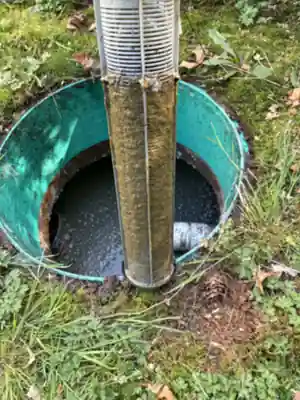
What can be done when a drainfield struggles
A struggling drainfield is not always a dead one. Depending on what the inspection shows, options include:
- Fixing the cause upstream: pumping, replacing baffles, cleaning or adding an effluent filter, and stopping the extra water.
- Distribution box repair or replacement so every line gets its share.
- Jetting the laterals through their cleanouts to clear roots and buildup.
- Pump, float and alarm repairs on pressure systems.
- Replacement when the soil itself is sealed or the field is beyond repair.
Before you repair, alter or expand a septic system, state code requires approval from the local health officer, so major drainfield work involves a permit. There is some good news on cost: King County notes that when a drainfield stops working but the tanks still hold water, the same tanks can be used in the replacement system.
Financial help exists in both counties. King County lists Craft3 Clean Water Loans and several repair programs on its financial assistance page, and Snohomish County’s Savvy Septic Program offers rebates for routine care and financial assistance for major repairs and replacements.

Buying a home? Ask about the drainfield first
If you are buying, the drainfield is the question that matters most. Ask for the as-built, the inspection and pumping history, the number of bedrooms the system was designed for, and where the reserve area is. A home that has added bedrooms or a rental unit without upgrading the system may be pushing its drainfield too hard. Our guide to septic vs. sewer when buying a home covers what else to ask.
Let us keep an eye on it
The cheapest drainfield is the one you never have to replace. Our $10/month maintenance plan includes a free annual filter cleaning and system check, no emergency fees, next-day emergency service and 10% off septic services, and we track your history so you are never overdue. If you are seeing warning signs now, our drainfield repair team can find the cause.
Call our Kirkland office at (206) 962-2600 for King County or our Woodinville office at (206) 790-9392 for Snohomish County. Phones are answered 24/7.
Quick answers
How long does a septic drainfield last?
There is no fixed lifespan. A well-designed drainfield on good soil, fed by a regularly pumped tank and protected from traffic and extra water, can last for decades. Neglect, overuse and compaction can shorten that to a few years.
Can a failing drainfield be fixed without replacing it?
Often, yes. Problems like a tipped distribution box, a clogged effluent filter, root intrusion or a failed pump can look like drainfield failure and are repairable. If the soil itself is sealed by solids, replacement is usually needed.
Does pumping the tank fix a failed drainfield?
No. Pumping removes solids from the tank so they stop reaching the drainfield, but it cannot unplug soil that is already sealed. It is still the first step, because it stops further damage.
What should I plant over my drainfield?
King County recommends grass or the existing native vegetation as the best cover, and only shallow-rooted plants. Avoid trees, water-loving plants, vegetable gardens, plastic sheeting, bark and gravel over the drainfield and reserve area.
Do I need a permit to repair a drainfield?
Yes. Washington code requires approval from the local health officer before repairing, altering or expanding a septic system, so drainfield repairs and replacements go through the county health department.