
/ Roots and septic
Tree roots and septic lines.
Short answer: roots follow moisture into joints and cracks, then fill the pipe. Here are the warning signs, how roots are found and removed, and how to landscape so they stay out.
By Anthony Wilson, founder · Updated November 2026
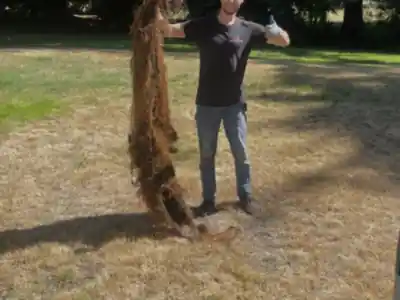
The Pacific Northwest grows trees like few places on earth, and every one of them is looking for water. Underground, the warm, steady moisture and nutrients in a septic line are about the most attractive thing a root can find. Once a fine root slips through a joint or crack, it thickens, branches and eventually fills the pipe. Root intrusion is a common cause of slow drains and backups in King and Snohomish County, and it can damage a drainfield if it is ignored. Here is how roots get in, the warning signs, how they are removed, and how to landscape so they do not come back.
How roots get into septic lines
Roots do not break solid pipe on purpose. They follow moisture and find the weak points:
- Pipe joints. Older homes often have clay or concrete sewer pipe with many joints. Over decades the joints shift and open slightly, and that is all a hair-thin root needs.
- Cracks and settling. Pipes that have sagged, cracked or been crushed by vehicles or ground movement leak moisture that draws roots in.
- Tank openings and risers. Cracked lids, unsealed riser joints and gaps at the inlet or outlet can let roots into the tank itself.
- Distribution boxes and drainfield laterals. Drainfield pipes are perforated by design, so they release moisture into the gravel. Roots that grow into the field can wrap around and into the laterals.
Once inside, roots feed on the nutrients in the wastewater and grow quickly. They catch toilet paper and solids, which build up into a blockage. Larger roots can also crack or lift pipe, making the opening bigger for the next round.
Warning signs of root intrusion
- Slow drains throughout the house, especially the lowest fixtures.
- Gurgling from toilets or drains when other fixtures run. See why drains gurgle.
- Recurring clogs in the main line that come back months after being cleared.
- Backups after heavy water use, such as laundry day or a houseful of guests.
- Sewage odors in the yard or near the tank. See septic smells.
- Soggy or unusually green patches over the drainfield, which the Snohomish County Health Department lists among the signs a system may be failing (Snohomish County septic FAQs). See drainfield failure signs.
- A pump alarm on a pressure system, if roots have restricted the line to the drainfield. See septic alarm going off.
Root problems often get worse in late summer and fall, when the soil dries out and trees go looking for water, and then show up as backups once the rain starts and flows increase.
Finding the problem: camera inspection
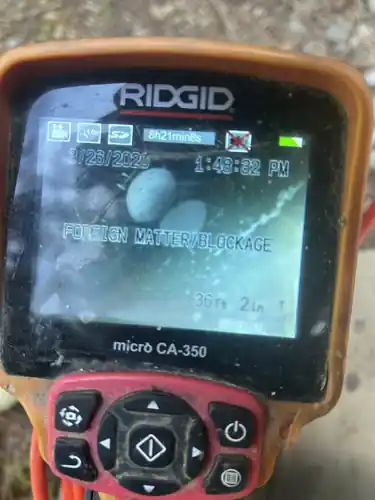
Guessing where roots are is expensive. A sewer camera inspection shows exactly what is in the line and where. We feed a camera down the pipe from a cleanout or the tank, watch the picture live, and the monitor shows the distance to any roots, cracks, offsets or blockages. That tells us whether jetting will clear it or whether a section of pipe needs to be dug up and replaced, and it tells you exactly where the problem is before anyone picks up a shovel.
How roots are removed
Jetting and root cutting
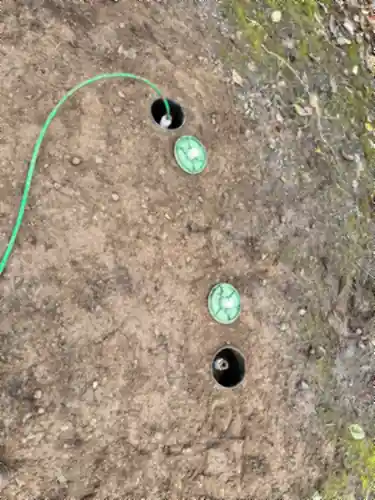
For roots inside the pipe, high-pressure water jetting scours the line and cuts roots back, flushing the debris out. On drainfield laterals, we jet through the cleanouts at the end of each line to clear roots and buildup. This restores flow quickly, but roots that have found a way in will usually come back over time, because the opening is still there.
Repairing or replacing the pipe
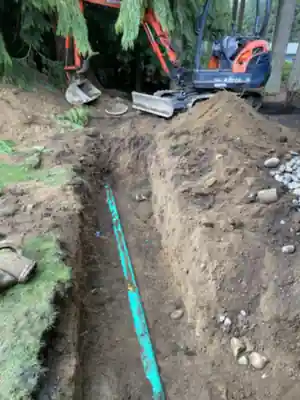
The lasting fix is to close the entry point. When the camera shows a cracked, offset or root-packed section, replacing it with new, properly bedded pipe removes the joint or crack that let the roots in. On old clay lines with roots at many joints, replacing the whole run from the house to the tank is often the better long-term value. Repairs to a septic system require approval from the local health officer under state code (WAC 246-272A-0270), so larger repairs go through the county.
Sealing the tank
If roots are getting into the tank through a cracked lid or riser, sealing or replacing those parts stops them. Washington’s tank standards require riser connections to be watertight, which keeps out both roots and groundwater.
Dealing with the tree
Sometimes the tree has to go, especially a fast-growing, water-loving tree planted right over a line or drainfield. Talk to a certified arborist before removing or cutting major roots on a large tree, because cutting too much can make it unstable.
When roots reach the drainfield
Roots in the line between the house and the tank are a nuisance. Roots in the drainfield are a bigger problem, because the drainfield is the most expensive part of the system to replace. Drainfield pipes are perforated so that effluent can trickle out into the gravel and soil, and those same holes let roots in. A root mass inside a lateral blocks that line, so the remaining lines take more than their share of the flow. Over time the overloaded part of the field can saturate and start to fail.
The signs are often subtle at first: one area of the field that stays wet, a pump alarm on a pressure system, or water standing in the distribution box when the inspector opens it. Jetting the laterals can clear the roots, and an inspection can show whether the field has been damaged. If a tree is growing right over the drainfield or reserve area, it is usually best to remove it before the roots do more harm. Our guide to how long a drainfield lasts explains how to protect the rest of the field.
After the roots are cleared: keeping them out
Clearing a line restores flow, but it does not change the reason the roots got in. To keep them from coming back:
- Fix the entry point. Replace or repair the cracked or open-jointed section the camera found.
- Schedule a follow-up check. If replacement is not practical right away, plan regular jetting before the roots rebuild into a full blockage, rather than waiting for the next backup.
- Watch the season. Late summer and fall are when thirsty trees push hardest toward moisture, so that is a good time to have a root-prone line checked.
- Plan new planting carefully. Before adding trees or large shrubs, mark the line, tank and drainfield so you know where to keep them away from.
- Keep up regular inspections. An inspector who opens the tank and distribution box on schedule will often spot early root growth before it causes a backup.
A warning about chemical root killers
Hardware stores sell products that promise to kill roots in sewer lines. Be very careful using them on a septic system. Washington code prohibits putting strong acids, strong bases or chlorinated solvents into a septic system for cleaning, and prohibits any additive that has not been specifically approved by the Department of Health. King County also warns that chemicals destroy the bacteria a septic system needs to break down solids (King County: about septic systems). Mechanical removal and repair are the safer route. See our post on septic additives for more.
Landscaping to keep roots out
Prevention is far cheaper than repair. Public Health – Seattle & King County’s landscaping guidance is a good starting point (King County: landscaping with a septic system):
- Find the system first. Locate the tank, drainfield and reserve area on your as-built before planting anything. King County’s records map and Snohomish County’s OnlineRME hold many as-builts. Our guide to finding your septic tank can help.
- Use grass or native groundcover over the drainfield and reserve area. King County calls these the best covers.
- Choose shallow-rooted plants and avoid water-loving plants and trees.
- Keep the surface as it is. King County advises against plastic sheeting, bark, gravel or fill over the drainfield, and against reshaping the ground. Adding topsoil is generally fine if it is no more than 2 inches.
- No vegetable gardens on or near the drainfield or reserve area.
- Keep irrigation lines clear of the tank, drainfield and reserve area.
King County’s suggested plants, from a Washington State University Extension list, include groundcovers such as kinnikinnick, carpet heathers, sweet woodruff, wild ginger, ferns and mosses, plus fescue lawn, ornamental grasses and wildflower meadow mixes.
Which trees cause the most trouble?
Any tree can send roots into a leaking pipe, but fast-growing, water-loving species are known for it. Willows, poplars and cottonwoods are the classic offenders, and large maples and birches are also known to root aggressively. A common rule of thumb is to keep trees at least as far from the septic system as they will grow tall, and farther for the most aggressive species. Roots can travel well beyond a tree’s canopy, so a tree that looks far away may still reach your lines.
Roots in sewer lines, not just septic
Homes on public sewer have the same problem. The side sewer from the house to the main is usually the owner’s responsibility, and older clay side sewers are some of the most root-prone pipes in the region. If you are buying an older home on sewer, a camera inspection of the side sewer is a smart move. Our guide to septic vs. sewer when buying a home covers this.
What it costs
Costs depend on what the camera finds. Clearing roots by jetting is usually a single visit. Replacing a section of pipe depends on the length, depth and what sits on top of it, such as lawn, driveway or patio. We give you the price before we start. In King County, the county lists a septic maintenance and side sewer repair rebate program and other assistance; in Snohomish County, the Savvy Septic Program offers rebates for select minor repairs and help with major ones.
How we can help
We camera-scope lines, jet roots out of sewer lines and drainfield laterals, and repair or replace damaged pipe across King and Snohomish County. See our jetting and sewer line and drainfield repair pages for more. Every repair carries the Septic Response Promise: a one-year warranty on most repairs, and if you call about work we have done, we are there the next day if not the same day. Our $10/month maintenance plan adds a free annual filter cleaning and system check, no emergency fees, next-day emergency service and 10% off septic services.
Slow drains or a backup? Call our Kirkland office at (206) 962-2600 for King County or our Woodinville office at (206) 790-9392 for Snohomish County. Phones are answered 24/7.
Quick answers
How do I know if tree roots are in my septic line?
Common signs are slow drains throughout the house, gurgling, clogs that keep coming back, backups after heavy water use and soggy patches over the drainfield. A sewer camera inspection confirms it and shows exactly where the roots are.
How are tree roots removed from a septic line?
Roots inside the pipe are cut and flushed out with high-pressure jetting, and drainfield laterals can be jetted through their cleanouts. For a lasting fix, the cracked or root-damaged section of pipe is repaired or replaced so roots cannot get back in.
Can I use a chemical root killer in my septic system?
Be very careful. Washington code prohibits strong acids, bases and chlorinated solvents for cleaning a septic system and bans additives not specifically approved by the Department of Health. Chemicals can also kill the bacteria your system needs.
How far should trees be from a septic drainfield?
There is no single legal distance. A common rule of thumb is to keep trees at least as far away as they will grow tall, and farther for water-loving species like willows, poplars and cottonwoods. King County recommends grass or shallow-rooted plants over the drainfield.
What can I plant over my drainfield?
King County recommends grass or the existing native vegetation as the best cover, plus shallow-rooted groundcovers such as kinnikinnick, carpet heathers, sweet woodruff, wild ginger, ferns and mosses. Avoid trees, water-loving plants and vegetable gardens.