
/ Selling in Snohomish County
Snohomish County septic time of sale rules: timeline, edge cases and failed inspections.
Short answer: Since November 1, 2026, every property in Snohomish County with a septic system needs a Report of Property Transfer from the Snohomish County Health Department before it changes hands. To get one, the seller needs a full inspection by a certified septic contractor within the past 12 months, pumping if the inspector recommends it, an as-built on file (or a contractor-drawn site plan), and an online application with the fee. The report is valid for 12 months, and the buyer gets a copy at closing. Start four to eight weeks before you list.
By Anthony Wilson, founder · Updated November 2026

Snohomish County has roughly 84,000 private septic systems, and about 2,800 of those properties change owners every year, according to the Health Department’s figures reported by The Everett Herald. Until this fall, a septic inspection at sale was something buyers negotiated for. Now it’s a county requirement, written into Chapter 5.60 of the Snohomish County Board of Health Code, and it applies whether you’re selling a farmhouse in the Tualco Valley, a lake cabin near Lake Roesiger or a rental in Clearview.
If you only want the three steps in a nutshell, our quick guide to the home-sale rule covers them. This post goes further: how long the process really takes, the situations the short version doesn’t cover, and what happens when the inspection turns something up.
What changed on November 1, 2026
Washington passed a law making septic inspections at property transfer mandatory in every county, with a deadline of February 1, 2027. Snohomish County’s Board of Health adopted its own program early, effective November 1, 2026. The requirements are set by the Health Department and listed on its Property Transfer page:
- Inspection. A full inspection by a certified septic contractor, done within the 12 months before the sale.
- Pumping, if recommended. If the inspection report recommends pumping, a certified contractor pumps the tanks before closing.
- Records. An as-built (the county’s record drawing of your system) on file with the Health Department. If there isn’t one, a certified contractor completes an On-Site Sewage System Site Plan.
- Report of Property Transfer (RPT). The seller applies online and pays the application fee. The Health Department reviews the inspection, pumping record and drawing, then issues the RPT.
- Paperwork to the buyer. At transfer, the buyer gets the reviewed RPT, the system’s maintenance records and the seller disclosure statement required by chapter 64.06 RCW.
Real estate agents don’t submit anything, but the Health Department expects them to know the process and walk their clients through it.
Who the rule covers, and who it doesn’t
The rule is broad. According to the Health Department, it covers:
- Single-family homes, including rural acreage and waterfront cabins.
- Duplexes, commercial and other non-residential properties on septic.
- Properties with more than one septic system. Each system has to meet the requirements on its own: its own inspection, its own records.
The exceptions are narrow:
- Systems installed within the past 12 months. A brand-new system doesn’t need a time-of-sale inspection yet.
- Tribal Trust land is excluded.
Notice what’s not on the exemption list: a recent pumping, a system that’s “never had a problem,” a sale between family members. If the property is on septic in Snohomish County and the system is older than a year, plan on the full process.
A realistic timeline for sellers
The rule itself sets two clocks: the inspection must be within 12 months of the sale, and the RPT is valid for 12 months from the date the Health Department accepts it. Everything else depends on what your system needs. Here’s the order we recommend.
Six to eight weeks before listing
- Look up your as-built. Use the Health Department’s As-Built Records search, or follow our guide to finding your Snohomish County as-built. If nothing comes up, you’ll need a site plan, so tell the contractor when you book.
- Gather your records. Past pumping and inspection reports go to the buyer anyway, and they help the inspector understand the system’s history.
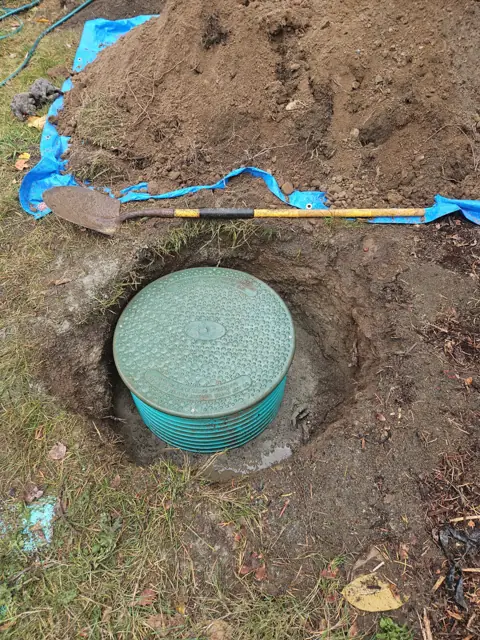
- Check your lids. Cracked, loose or makeshift lids are a safety hazard the Health Department can act on. They’re cheap to fix now and stressful to fix in escrow. See our post on septic risers and secure lids.
Four to six weeks before listing
- Book the inspection. Booking early leaves room to pump, repair or redraw without holding up an offer. Because the inspection stays valid for 12 months, there’s no advantage in waiting until you have a buyer.
- Pump if it’s recommended. Doing it the same day as the inspection saves a second trip.
Two to four weeks before listing
- Submit the RPT application through the Health Department’s online portal (log in, choose the On Site-Sewage tab, then Report of Property Transfer Application) and pay the fee shown there.
- Fix anything the report lists, then ask the Health Department to re-issue the RPT showing the deficiencies corrected.
Septic contractors have 30 days to submit inspection and pumping reports to the Health Department through OnlineRME. We file ours within 24 hours, so your application isn’t waiting on paperwork.
What a time-of-sale inspection looks at
A full inspection is more than lifting a lid. Expect the inspector to locate and open the tank and any pump chamber, measure the sludge and scum layers to decide whether pumping is needed, and check the inlet and outlet baffles, the effluent filter, the pump, floats and alarm if you have them, and the condition of the lids. The drainfield area gets a look too: soggy ground, unusually green grass or odor over the field are signs of trouble.
The Health Department points contractors to an EPA-based method for deciding when a tank needs pumping, so “recommended” means the measurements call for it, not that every sale requires a pump-out. On every pumping and inspection we do, we check the baffles and clean the effluent filter, because those two parts tell you a lot about how the system has been treated.
Alternative systems (pressure distribution, mound, sand filter or aerobic treatment unit) already need an inspection every year under Snohomish County’s maintenance schedule, versus every three years for gravity systems. If you’re selling a home with one of these, the inspection will cover the pump, controls and treatment components as well. Buyers in that situation should read our guide to buying a home with an aerobic treatment unit.
No as-built? How the site plan works
Older homes, especially rural ones, often have no usable as-built on file. The rule doesn’t make you redraw the system from scratch. Instead, a certified septic contractor completes an On-Site Sewage System Site Plan at the time of the inspection and gives it to you to include with your application.
Two details matter:
- Don’t call a septic designer. The Health Department specifically says not to hire a licensed designer for this. It’s a contractor’s job.
- The right certificate depends on your system. Certified monitoring and maintenance specialists can make site plans for every system type. Certified pumpers can only make them for gravity or pump-to-gravity systems.
If an as-built is on file but wrong (the tank isn’t where the drawing says, or a pump chamber is missing), the inspector notes the discrepancies on the inspection report. A new site plan is optional in that case.
When the inspection finds a problem
This is the part sellers worry about most, so here’s exactly how it works.
Ordinary deficiencies
If the review finds problems, the Health Department returns the RPT with those deficiencies listed. They have to be corrected under the state’s owner-responsibility rule, WAC 246-272A-0270, and Chapter 5.55 of the county Board of Health Code. Once the repairs are done, you can email the Health Department’s Land Use team at SHD-EHQ@snoco.org and ask for the RPT to be re-issued showing the deficiencies corrected. A clean, re-issued report is a much easier conversation with a buyer than a list of open items.
Surfacing sewage and immediate hazards
Surfacing sewage, or an immediate health or safety hazard such as an unsecured or inadequate lid, is treated differently. The Health Department may visit the site, open enforcement and set a compliance schedule.
Can the county stop the sale?
The process doesn’t block a sale. But if a seller doesn’t fix a hazard that’s under enforcement, the Health Department resets enforcement with the buyer, who becomes responsible for resolving it. That’s why buyers will usually want a hazard fixed before closing, or a clear written agreement on who pays.
Paying for repairs
- Savvy Septic rebates of up to $200 cover inspections, pumping, riser installation and minor repairs on residential properties, whether or not they’re tied to a sale. You need to complete the free online Septic Care Workshop first. Details are on the Savvy Septic Program page.
- Craft3 Clean Water Loans are an option for bigger permitted repairs, such as a tank replacement or drainfield work.
For drainfield trouble specifically, see our drainfield repair page.
Edge cases the short version doesn’t cover
Your listing runs long
Both clocks are 12 months. If your home sits on the market and the inspection or the RPT ages past a year, plan on a new inspection and a new application. Keep the dates in your listing file.
Homes near the King County line
Bothell, Mill Creek-area addresses and parts of 98012 and 98021 sit close to the county line. Which county the property is in decides which rule applies. King County has its own time-of-sale requirement: a certified on-site system maintainer must inspect before the title transfers, with some waivers (for example, a maintenance report filed in the last six months). Check the parcel’s county before you book. Our Bothell septic page explains how the line splits the area.
Two systems on one property
A main house and a guest cottage, or a shop with its own tank, each need to meet the requirements. Budget for two inspections, and make sure both systems have an as-built or a site plan.
A system that’s been sitting empty
Estate sales and vacant rentals are common sources of surprises: a pump that hasn’t run in months, an alarm that was switched off, roots in a line. Have the system run under normal use for a few days before the inspection if you can, and tell the inspector how long it sat.
The house is going on sewer
If you’re connecting to sewer before you sell, the septic tank still has to be properly pumped and decommissioned. Our septic to sewer conversion guide walks through it.
For buyers and agents
Buyers: before closing, you should receive the Health Department-reviewed RPT, the maintenance records and the seller’s disclosure. Read the deficiencies section closely, and ask whether any listed items were corrected and the report re-issued. If you’re comparing homes on septic and sewer, our guide on septic vs. sewer before you buy covers the long-term costs.
Agents: the fastest way to keep a Snohomish County closing on schedule is to get the inspection booked before the listing goes live. A missing as-built and an unsecured lid are the two easiest problems to catch early.
How Septic Response helps
We do time-of-sale inspections and pumping across Snohomish County from our Woodinville office, from Bothell and Clearview up to Lake Stevens, Monroe and Arlington. We file inspection reports within 24 hours, check the baffles and clean the filter on every visit, and tell you plainly what we found and what it means for your sale. Routine pumping starts at $590, plus the county pumping report fee and tax. If your home has no as-built, ask about the site plan when you book. More on our septic inspections and Snohomish County septic service.
The owners answer the phones, 24/7. Call our Woodinville office at (206) 790-9392 for Snohomish County, or our Kirkland office at (206) 962-2600.
Quick answers
When did Snohomish County’s septic time of sale rule start?
November 1, 2026. Sellers of any Snohomish County property with a septic system now need a Report of Property Transfer from the Snohomish County Health Department before the sale.
How long is a time-of-sale septic inspection good for in Snohomish County?
The inspection must be done within the 12 months before the sale, and the Report of Property Transfer is valid for 12 months from the date the Health Department accepts it.
Does a duplex or commercial property need a septic inspection to sell?
Yes. The rule covers duplexes, commercial and other non-residential properties on septic. If there’s more than one system, each one must meet the requirements. Only systems installed within the past 12 months are exempt, and Tribal Trust land is excluded.
What happens if my septic inspection fails?
The Health Department lists the deficiencies on the Report of Property Transfer. Once they’re repaired, you can ask for the report to be re-issued. Surfacing sewage or an immediate hazard can lead to enforcement, and if it isn’t fixed before closing, enforcement moves to the buyer.
Who can draw a site plan if there’s no as-built?
A certified septic contractor, not a septic designer. Monitoring and maintenance specialists can do site plans for any system; certified pumpers only for gravity or pump-to-gravity systems.
Sources: Snohomish County Health Department, Property Transfer; Savvy Septic Program; WAC 246-272A-0270; chapter 64.06 RCW; The Everett Herald on the Board of Health’s adoption.