
/ Selling in King County
Selling a home on septic in King County: the time of sale inspection, step by step.
Short answer: In King County, a home with a septic system has to be inspected by a certified on-site system maintainer before the title transfers. The maintainer files the report with Public Health – Seattle & King County, the seller records a Notice of On-site Sewage System Operation and Maintenance Requirements with the county Recorder, and the buyer pays the county’s O&M program fee at transfer. A few situations waive the inspection. Book it as soon as you decide to list, not after you have an offer.
By Anthony Wilson, founder · Updated November 2026
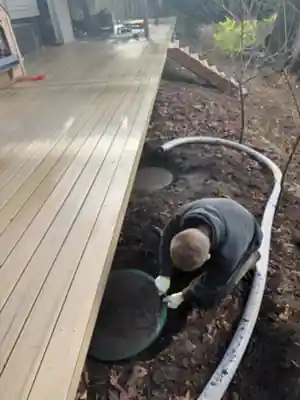
King County has about 85,000 septic systems, and nearly 40,000 of them sit in urban King County, many past their intended life span. Every one of those homes eventually sells. When yours does, the septic system has its own paperwork trail that runs alongside the purchase agreement, and it is the part of a King County sale that most often surprises sellers who have never dealt with it.
This guide walks through the King County process in order, from booking the inspection to the forms that have to be done before closing. It also covers the waivers, what happens if the inspection finds a problem, and the statewide rule that starts on February 1, 2027. If you are selling in Snohomish County instead, the rules are different and newer: see our Snohomish County time of sale guide.
The four things a King County septic sale needs
Public Health – Seattle & King County lists the requirements on its sales and transfers page. Stripped down, there are four:
- A property transfer inspection by a certified on-site system maintainer, done before the transfer of title. The seller schedules it.
- The inspection report filed with Public Health. The maintainer submits it, and Public Health staff review it within 10 business days.
- A recorded Notice of On-site Sewage System Operation and Maintenance Requirements (OSSM). The seller records it at the King County Recorder’s Office before closing and gives the buyer a copy. In the Northwest Multiple Listing Service paperwork it’s form #22U. If the notice is already on title from an earlier sale, it doesn’t need to be recorded again.
- The buyer’s O&M program fee. At transfer, the buyer pays Public Health’s Operation and Maintenance Program fee through the Public Health Permit Center and receives information on caring for the system.
On top of the county steps, Washington law requires the seller to hand the buyer all available maintenance and repair records along with the seller disclosure statement under chapter 64.06 RCW (WAC 246-272A-0270).
Step 1: Find your records before anyone digs
The inspection goes faster, and costs less in labor, when the maintainer knows where the tank and drainfield are before arriving. That drawing is your as-built. In King County you can look it up by address or parcel in the county’s septic records map (kingcounty.gov/SepticRecords). Older homes, especially those built before the early 1970s, often have nothing online; Public Health asks owners to email as-built.help@kingcounty.gov with the parcel number and address and allow up to five business days.
Our guide to King County as-built records walks through the lookup. While you’re in the records, note your system type. A conventional gravity system and a pressure, mound, sand filter or aerobic treatment unit (ATU) system are inspected differently, and the system type affects how often the county expects inspections after the sale.
No as-built at all? That’s common on older Eastside lots. We find the tank by probing first, and use an electronic locator with a flushable transmitter only when the probe can’t find it. Our guide to finding a septic tank lid explains what to expect.
Step 2: Book a certified maintainer, early
Only a maintainer certified by King County can do a property transfer inspection. Public Health publishes the list of certified professionals, and Septic Response is on it.
The timing advice is simple: book the inspection when you decide to sell, not when an offer comes in. If the inspection turns up a broken baffle, a failed effluent pump or a cracked lid, you want to fix it on your schedule, with your contractor, before a buyer’s inspector writes it into the negotiation. Repairs found early are repairs you control.
A few practical points for sellers on the Eastside and in the Snoqualmie Valley:
- Winter matters. November through March, drainfields in glacial till and on the valley floors carry more water. A saturated drainfield is something the inspector will note. That is real information for a buyer, not a reason to delay, but it’s one more reason not to leave the inspection to the last week.
- Buried lids add time. Lids under lawn, pavers or a deck have to be exposed. Risers turn that into a quick job on every future visit; see are septic risers worth it?
- Secure lids are now part of the standard. Under King County’s Title 13 code, in effect since April 1, 2025, a functioning system doesn’t need upgrades, but lids must be secured, and the next maintainer checks this. A time-of-sale inspection is often when an unsecured lid gets flagged.
Step 3: What the inspection covers
A King County inspection looks at the whole system, not just the tank: the tanks, the treatment component if there is one, the distribution, the drainfield and the reserve area. Public Health publishes inspection guidelines for maintainers and a sample report on its sales page, so you can see exactly what the buyer will read.
On our inspections, the tank lids come off, the scum and sludge levels are measured, and we always check the baffles and clean the effluent filter. If the levels say the tank needs pumping, we tell you and price it in writing before we do it. Pumping is a separate service: ours starts at $590 plus the county report fee and tax (with a $550 special through December 31, 2026).
Septic Response files inspection reports with the county within 24 hours, so Public Health’s 10-business-day review clock starts right away. Once reviewed, property transfer inspection reports are viewable on OnlineRME: search the property, then look under “Application History.” Buyers and their agents can check there.
When the inspection can be waived
Public Health allows a waiver in four situations:
- A recent O&M report. An Operation/Performance Monitoring Report was done by a licensed maintainer within the last six months, and reports for the system have been filed with Public Health on a regular basis.
- Never-occupied new construction, with proof of vacancy.
- A new permitted system whose first inspection isn’t due yet (45 days of use for proprietary systems, six months for gravity and public-domain systems).
- An abandoned system, because the house connected to public sewer or the land converted to public use.
The waiver is a request, not an automatic pass. Public Health has a “How to Submit Time of Sale Inspection Waiver Request” guide on the same page. The first waiver is the one most sellers can actually use: if you keep up with regular monitoring and the reports are on file, a recent report can stand in for a separate sale inspection. Our $10 a month maintenance plan includes a free annual filter cleaning and system check plus reminders, which keeps that paper trail current.
The last waiver matters if you’re on the fence about sewer. A system that has been properly abandoned after connecting to sewer doesn’t need a sale inspection, which is one reason some owners convert before listing. Our septic to sewer conversion guide covers how that works.
If the inspection finds a problem
An inspection report records the system’s condition; it isn’t a pass/fail stamp on the sale. What happens next depends on what was found:
- Routine maintenance items, such as a tank due for pumping, a dirty filter or a lid that needs securing, are usually handled before closing and noted on the next report.
- Component repairs, such as a baffle, an effluent pump, a float or alarm, a distribution box or a damaged line, are repairs we do. You get a written price before any work starts. See septic repair.
- A failing drainfield is the big one. Drainfield repair or replacement in King County needs Public Health approval before work starts, and a replacement is designed and installed by licensed designers and installers. Septic Response doesn’t install new septic systems, but we can locate, pump and diagnose the system and tell you plainly what the report means. Under King County code, if the drainfield fails and the tanks still hold water, the tanks can be reused.
Buyers and sellers often settle these items in the purchase agreement. Get a written repair estimate in hand before you negotiate, so the number on the table is a real one. Washington’s disclosure law requires sellers to disclose a known septic failure.
What changes on February 1, 2027
Washington’s on-site sewage rule now writes a property transfer inspection into state law. Under WAC 246-272A-0270, beginning February 1, 2027, the owner must get an inspection at the time of property transfer by a third-party inspector authorized by the local health officer, plus an inspection of any proprietary treatment product (an ATU, for example) per the manufacturer’s recommendations. The results go to the local health jurisdiction, and the health officer may require a compliance schedule to repair a failure found during the inspection.
King County already requires a time-of-sale inspection, so for most King County sellers the practical change is small. What to watch for: how Public Health applies the third-party language, any new forms, and how proprietary systems are handled. We’ll update this guide as Public Health publishes details. If you’re selling a home with an aerobic treatment unit, read our guide to buying a home with an ATU; the same manufacturer-service points apply to sellers.
A note for buyers and agents
For buyers, the county inspection is a floor, not a ceiling. A few things worth asking before you remove contingencies:
- Is the property transfer inspection report on OnlineRME yet, and what does it recommend?
- Is the OSSM notice already recorded on title, or does the seller still need to record it?
- What type of system is it? Pressure, mound, sand filter, ATU and drip systems are on a six-month inspection cycle in King County, not three years like a conventional gravity system. That’s an ongoing cost of owning the house.
- Is sewer nearby? If the system ever fails inside a sewer service area and sewer is within 200 feet, state rules can require connection instead of a repair. Our post on septic vs. sewer before you buy covers that.
If you’re financing, ask your lender early about septic requirements. King County’s financial assistance page notes that VA loans allow only local health department sanitarians to inspect a septic system if the appraiser requests it, while FHA guidance leaves it to the lender to confirm the system is adequate.
One money note: King County’s septic maintenance rebate of up to $500 doesn’t cover time-of-sale inspections. It can cover a routine inspection, or pumping or risers done with one, which is another reason to keep up regular monitoring long before you sell.
Timeline: when to do what
- When you decide to sell: pull your as-built and any past reports from OnlineRME. Book the inspection.
- Inspection day: lids exposed, system inspected, pumping if the levels call for it. Report filed with the county within 24 hours.
- Within about two weeks: Public Health reviews the report (10 business days).
- Before listing or during escrow: complete any repairs and get updated paperwork.
- Before closing: record the OSSM notice (form 22U) if it isn’t already on title, and give the buyer a copy plus your maintenance records and disclosure statement.
- At transfer: the buyer pays Public Health’s O&M program fee.
Why sellers call Septic Response
We’re a family-run septic company, serving King and Snohomish County since 2017, and the owners answer every call, 24/7. We’re certified to do time-of-sale inspections, licensed, bonded and insured (WA license #SEPTIRL810RB), and we run our own fleet of 5 septic pump trucks and 2 service-tech trucks, so the pumping and any repair don’t have to wait on a second company. You get a written price before any work starts, and we stand by our work.
Book through our Kirkland office at (206) 962-2600 for King County, or our Woodinville office at (206) 790-9392. More on septic inspections and King County septic service.
Quick answers
Is a septic inspection required to sell a house in King County?
Yes. A certified on-site system maintainer must inspect the system before the title transfers, unless a waiver applies, such as a monitoring report filed in the last six months or a system abandoned after connecting to sewer.
Who pays for the time-of-sale septic inspection in King County?
The seller schedules the inspection, and it is usually the seller’s cost, though buyers and sellers can negotiate it. The buyer pays Public Health’s Operation and Maintenance program fee at transfer.
What is the OSSM notice, form 22U?
The Notice of On-site Sewage System Operation and Maintenance Requirements. The seller records it at the King County Recorder’s Office before closing and gives the buyer a copy. If it’s already recorded on title from an earlier sale, it doesn’t need to be recorded again.
How long does Public Health take to review the inspection report?
Public Health – Seattle & King County reviews property transfer inspection reports within 10 business days. Once reviewed, they show on OnlineRME under the property’s Application History.
What changes for septic sales on February 1, 2027?
Washington’s rule (WAC 246-272A-0270) requires an inspection at property transfer by a third-party inspector authorized by the local health officer, plus an inspection of proprietary treatment products per the manufacturer. King County already requires a time-of-sale inspection, so most sellers will see only small changes.
Sources: Public Health – Seattle & King County, Sales and transfers of properties with septic systems; King County financial assistance (FHA and VA notes); King County septic maintenance rebate; King County inspection schedule; WAC 246-272A-0270; chapter 64.06 RCW.