
/ Monroe, Snohomish County
Septic service in Monroe, WA.
Septic pumping, inspections and repairs for homes and businesses in Monroe, from our Woodinville office. We file every pumping report with the Snohomish County Health Department for you, and our phones are answered 24/7.
Your nearest office
Woodinville
23321 57th Ave SE
Woodinville, WA 98072
(206) 790-9392
Phones answered 24/7
Monroe ZIP codes we serve: 98272
Monroe quick answer
Who pumps and repairs septic systems in Monroe, WA?
Septic Response does, from our Woodinville office, a straight run out Highway 522. Town-center Monroe is mostly on city sewer, so our work is everywhere around it: valley farms in the Tualco Valley, hillside homes on pressure and mound systems toward Woods Creek and High Rock, and lake places up Lake Roesiger Road. Call (206) 790-9392 any hour. One of the owners answers, and you get the price before a truck heads your way.
- Inspection schedule: Snohomish County Health Department rules apply in and out of city limits. Gravity systems every 3 years; pressure, mound and ATU systems every year. We file the report for you.
- Selling a Monroe home: since November 1, 2026 the county wants an inspection from the last 12 months, an as-built or site plan and a Report of Property Transfer before closing. What the time-of-sale rule requires.
- Routine pumping: from $590 with the baffle check and filter cleaning; county report fee and tax extra. What changes the price.
- Where we work: all of 98272, including the Tualco Valley, Florence Acres, Old Owen and Ben Howard Roads, Woods Creek, High Rock and Lake Roesiger.
- Next door: Sultan septic service upriver and Snohomish septic service downriver.
/ Services in Monroe
What we do in Monroe.
Septic Tank Pumping
About an hour on site, with the pumping report filed with the county every time.
Learn more →Septic Inspections
Routine and real-estate inspections, with reports filed within 24 hours.
Learn more →Septic Repair
Effluent pumps, alarms, floats, risers, lids, baffles and filters.
Learn more →Drainfield Repair
Distribution boxes, laterals, drainfield treatment and replacement.
Learn more →Maintenance & Monitoring
Routine O&M checks for pump, pressure and advanced systems.
Learn more →Jetting & Sewer Lines
Camera scoping and replacement of the line from your house to the tank.
Learn more →ATU, Oscar & Bio-Microbics
Aerobic treatment units, including Oscar and Bio-Microbics systems.
Learn more →Septic emergency in Monroe? 24/7 emergency septic service →
/ Septic in Monroe
The Monroe septic problems we fix most.
Monroe sits where the Skykomish and Snoqualmie meet to form the Snohomish River, and that one fact explains most of the septic calls we take here. Down on the valley floor, the problem is water: a winter water table that rises fast and rivers that leave their banks. Up on the hillsides toward Woods Creek, High Rock and Lake Roesiger, the problem is soil: dense glacial till and shallow ground that water barely soaks into, so the systems lean on pumps, floats and alarms. Below are the calls we get from Monroe homeowners, in their words, and what we do about each one.
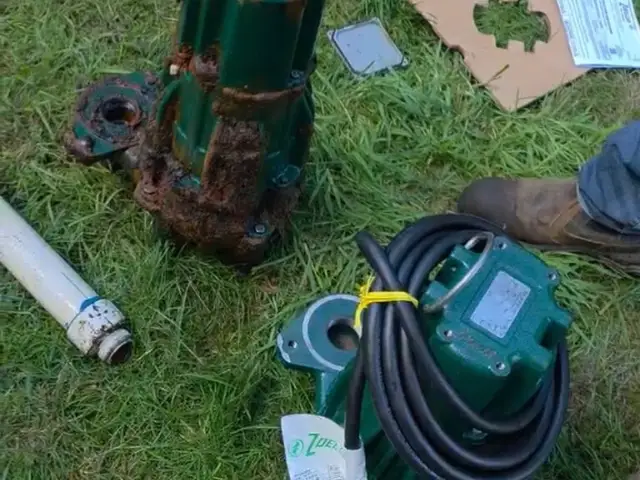
“The alarm goes off every time it rains.”
This is the most common Monroe call we get, and it almost always comes from a hillside home with a pressure or mound system. The alarm means the water in the pump chamber is higher than it should be. After heavy rain that usually has one of two causes: groundwater is leaking into the tank or pump chamber through a lid, riser or joint, or the pump or a float is no longer keeping up.
What to do right now: stop the laundry, dishwasher and long showers, silence the buzzer, and leave the pump’s power on. If your system runs on a timer, a few hours of light use often lets it catch up and the alarm clears by itself. If it doesn’t clear, keeps coming back with normal use, or your pump runs on floats, call us. On the visit we test the pump and floats, check the control panel and look for where the extra water is getting in. Most of the time we can replace a bad pump or float on the first trip, and sealing a leaking riser is what stops the 2 a.m. repeat. Our effluent pump replacement page explains the parts and what fails.
“The river came up. Is our system ruined?”
Not necessarily. When the Skykomish or Snoqualmie floods the Tualco Valley and the river bottoms, the drainfield fills with water and can’t take any more, and saturated ground pushes on the tank and lids. A drainfield often recovers once the ground drains, as long as the tank wasn’t damaged and solids didn’t wash out into the field. What you do in the first days matters:
- Use as little water as you can until the water is gone and the ground has drained.
- Don’t have the tank pumped while the ground around it is still saturated without talking to us first.
- Keep kids and pets away from anywhere sewage may have surfaced.
- Once it’s dry, have the tank, lids, risers, pump chamber and wiring checked before you go back to normal use.
Our guide to septic water in the yard walks through what to look for afterward.
“We bought acreage and have no idea where the tank is.”
We hear this from new owners off Old Owen Road, Ben Howard Road and Florence Acres all the time. Long driveways, buried lids and a previous owner who never mentioned the septic system. Start with the as-built drawing in the county’s OnlineRME records; our as-built lookup guide shows how. If there isn’t one, we probe from where the sewer line leaves the house, and when that doesn’t find it we use an electronic locator with a flushable transmitter. We carry enough hose to leave the truck on your driveway instead of rutting the lawn or pasture.
If nobody knows when the tank was last pumped, assume it’s due. On that first visit we measure the sludge and scum so you know your real pumping schedule, check the baffles and filter, and file the report with the county. While the lid is dug up, add a riser: every future visit gets faster and cheaper, and risers are one of the items the county’s Savvy Septic Program rebates.
“Our Lake Roesiger cabin is a full-time home now.”
Plenty of lake places north of town started as weekend cabins and are now lived in year-round, sometimes with bedrooms added. The septic system was sized for occasional use. Washington sizes tanks by bedrooms, at least 1,000 gallons for up to four and 250 gallons more for each bedroom after that (WAC 246-272A-0232), and owners are required to keep flows within what the system was approved for. If your cabin has grown, the warning signs are slow drains, odors and soggy ground over the field. Get it inspected, pump more often, spread laundry across the week, and talk to us before you add a bedroom or a guest unit.
“Can the horses graze over the drainfield?”
Not if you want the drainfield to last. Monroe’s farms and hobby acreage bring a risk town lots don’t have: weight. State rules require owners to protect the drainfield and reserve area from compaction, naming vehicles and livestock specifically (WAC 246-272A-0270). Packed soil loses the air spaces that treat the effluent, and the damage often doesn’t show until the field fails.
- Fence the drainfield and reserve area out of pastures and paddocks.
- Keep tractors, trailers, hay deliveries and log trucks off the field, especially in wet weather.
- Route barn, arena and manure-area runoff away from it.
- Find the field on your as-built before you build a barn, shop or covered arena.
“We’re selling. What does the county need from us?”
Since November 1, 2026, Snohomish County requires a full inspection from the last 12 months, pumping if the inspector recommends it, an as-built or site plan, and a Report of Property Transfer before closing. Rural Monroe homes are the ones most likely to be missing a usable as-built, so book the inspection when you list, not when you’re in escrow. We do the inspection, pump if needed, and file the paperwork. Our time-of-sale guide covers the details and edge cases.
“The drains gurgle and the toilets are slow.”
Before anyone blames the drainfield, check the simple things. Gurgling and slow drains on a Monroe system usually come from one of three places: a tank that’s overdue and close to full, an effluent filter at the outlet that’s clogged with fibers and grease, or a partial blockage in the line between the house and the tank. Each one has a different fix, and none of them is a new drainfield. On the visit we open the tank, look at the liquid level against the outlet, pull and clean the filter, and run a camera down the line if the tank checks out. If the level is high even right after pumping, that points further downstream, and we tell you plainly what that means. More on what gurgling drains are telling you.
“How often do we really need to pump?”
There’s no single right number. A couple in a three-bedroom house on the valley floor might go five years; a family of six with a garbage disposal on a hillside pressure system may need it every two or three, and pressure systems are less forgiving because solids that get past the tank end up in the pump chamber and the laterals. That’s why we measure the sludge and scum layers on every visit instead of guessing, write the numbers on your report, and tell you when to call us next. If you’re on our maintenance plan we remind you, so it doesn’t slip by the way it did for the last owner. Our guide to how often to pump a septic tank goes deeper.
What it costs, and how we work
Routine pumping starts at $590, including the tank and baffle inspection and effluent filter cleaning when the filter is reachable, plus the county report fee and tax. Monroe is on our regular routes, so in-town and valley addresses carry no extra drive time; homes far up toward the lakes or Sultan, oversized tanks, or lids that need digging can add to it, and you hear the number before we come. Repairs carry the Septic Response Promise: a one-year warranty on most repairs, and if you call about our work, we’re there the next day if not the same day.
Two ways to spend less: take the county’s free online Septic Care Workshop to qualify for Savvy Septic rebates on inspections, pumping, risers and select repairs, and consider our $10/month maintenance plan (no emergency fees, next-day emergency service, a free annual filter cleaning and system check, and 10% off septic services).
/ Snohomish County
Monroe is in Snohomish County.
Snohomish County requires owners to keep septic systems maintained and inspected on a schedule that depends on the system type. We file pumping reports with the Snohomish County Health Department and inspection reports within 24 hours, so your records stay current.
/ Nearby communities
Do you serve all of Monroe?
Yes. We serve all of Monroe (98272), including the Tualco Valley, Florence Acres, Woods Creek, High Rock, Lake Roesiger Road and the roads toward Sultan. Call (206) 790-9392 any hour.
Why does my septic alarm go off when it rains in Monroe?
On Monroe hillside pressure and mound systems, a rain-time alarm usually means groundwater is leaking into the tank or pump chamber through a lid, riser or joint, or the pump or a float isn’t keeping up. Cut water use, leave the pump’s power on, and call if the alarm doesn’t clear. We test the pump and floats and find where the water is getting in.
What should I do if floodwater reaches my septic system?
Use as little water as possible, keep people and pets away from any surfaced sewage, and don’t have the tank pumped while the ground is still saturated without talking to us. Once the water is gone, have the tank, lids, pump chamber and wiring checked before normal use.
How do I find my septic tank on a rural Monroe property?
Check the as-built drawing in Snohomish County’s OnlineRME records first. If there isn’t one, we probe from where the sewer line leaves the house or use an electronic locator with a flushable transmitter, and we can add a riser so the lid is easy to reach next time.
How often should a Monroe septic tank be pumped?
Most households need pumping every 3 to 5 years, depending on tank size, household size and garbage-disposal use. We measure sludge and scum on every visit and tell you when the next pumping is due.
What does Snohomish County require when I sell a Monroe home on septic?
Since November 1, 2026: a full inspection from the last 12 months, pumping if recommended, an as-built or site plan, and a Report of Property Transfer before closing. Start early on rural lots, where as-builts are often missing.
How much does septic pumping cost in Monroe?
Routine pumping starts at $590, including a tank and baffle inspection and effluent filter cleaning (when the filter is reachable), plus the county pumping report fee and tax. Distance, tank size and access can change the price, and we confirm it before we come.
Can I get a rebate for septic work in Monroe?
Yes. Snohomish County’s Savvy Septic Program offers rebates for inspections, pumping, riser installation and select minor repairs once you complete its free online Septic Care Workshop.