
/ Issaquah, King County
Septic service in Issaquah, WA.
Septic pumping, inspections and repairs for homes and businesses in Issaquah, from our Kirkland office. We file every pumping report with Public Health – Seattle & King County for you, and our phones are answered 24/7.
Your nearest office
Kirkland
672 7th Ave
Kirkland, WA 98033
(206) 962-2600
Phones answered 24/7
Issaquah ZIP codes we serve: 98027, 98029
/ Services in Issaquah
What we do in Issaquah.
Septic Tank Pumping
About an hour on site, with the pumping report filed with the county every time.
Learn more →Septic Inspections
Routine and real-estate inspections, with reports filed within 24 hours.
Learn more →Septic Repair
Effluent pumps, alarms, floats, risers, lids, baffles and filters.
Learn more →Drainfield Repair
Distribution boxes, laterals, drainfield treatment and replacement.
Learn more →Maintenance & Monitoring
Routine O&M checks for pump, pressure and advanced systems.
Learn more →Jetting & Sewer Lines
Camera scoping and replacement of the line from your house to the tank.
Learn more →ATU, Oscar & Bio-Microbics
Aerobic treatment units, including Oscar and Bio-Microbics systems.
Learn more →Septic emergency in Issaquah? 24/7 emergency septic service →
/ Septic in Issaquah
Alps, creeks and hillsides: Issaquah septic, handled.
Issaquah is ringed by the Issaquah Alps (Cougar, Squak and Tiger mountains), with Issaquah Creek running through the valley to Lake Sammamish. The city core, Issaquah Highlands and Talus are on sewer. The septic homes are on the edges: the slopes of Squak and Cougar, the May Valley and Tiger Mountain roads, the rural lots along Issaquah-Hobart Road and the older neighborhoods that sit just outside the city’s sewer service.
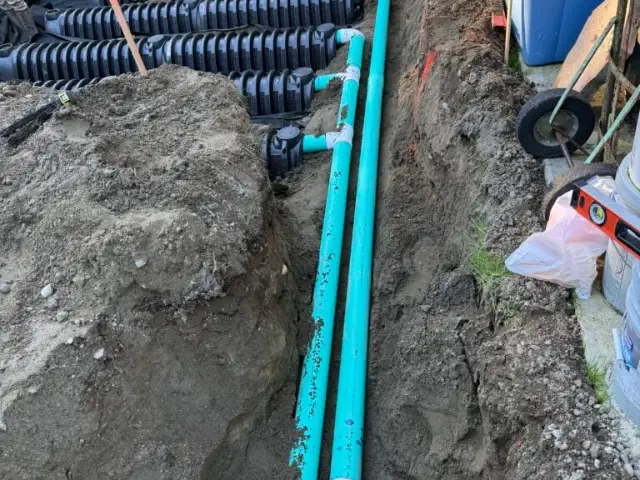
Hillside septic is its own thing
Many Issaquah septic homes are on slopes. That changes how a system is built and how it fails. On a hillside, wastewater often has to be pumped uphill to the drainfield, or spread evenly by a pressure distribution system so it does not run straight downhill. The soil on these slopes is frequently thin glacial till over rock, which limits how much water it can take.
The result is that an Issaquah septic system usually has more moving parts than a flat-lot gravity system: effluent pumps, floats, control panels and alarms. When one fails, the system stops moving water, and the alarm is your warning. Treat it seriously and call us.
Creeks, salmon and why maintenance matters here
Issaquah Creek and its tributaries carry one of the region’s best-known salmon runs. Septic systems near creeks and on steep ground have to work as designed, because there is less soil between the drainfield and the water. Keeping tanks pumped on schedule, fixing pump problems quickly, and keeping roof and yard drainage away from the drainfield all protect the creek as much as your yard.
What we do in Issaquah
- Pumping with sludge and scum measurements.
- Inspections on King County’s schedule, including the more frequent ones pressure and mound systems need.
- Effluent pump, float and alarm repair on hillside pressure systems.
- Real-estate inspections, required by King County before a septic home changes hands.
- Drainfield evaluation and repair when a slope system starts surfacing or backing up.
King County rules in Issaquah
Issaquah homes follow Public Health – Seattle & King County rules. Gravity systems are inspected every three years; pressure, mound, sand filter and ATU systems more often under the county schedule. Sellers need an inspection by a certified maintainer before the title transfers. Most Issaquah as-builts are in King County’s online records; our as-built guide shows you where to find yours.
Issaquah neighborhoods at a glance
- Squak Mountain: hillside homes where wastewater is often pumped uphill to the drainfield.
- Cougar Mountain and May Valley: wooded lots on slopes and in the valley, with a mix of pressure and gravity systems.
- Mirrormont and Tiger Mountain Road: unincorporated neighborhoods south of town on septic, many on slopes over till.
- Issaquah-Hobart Road: rural acreage along the valley toward Hobart, near Issaquah Creek.
- Preston: homes east of town toward Fall City, on slopes and benches above the valley.
Signs your Issaquah system needs attention
On hillside systems, the pump alarm is the most important warning: it means the pump chamber is filling and the system has stopped moving water. Wet spots or seepage downhill of the drainfield, odors and slow drains are also signs to call. Fixing a pump problem quickly protects both your drainfield and the creek below.
Buying or selling in Issaquah
King County requires an inspection by a certified on-site system maintainer before the title transfers, unless a waiver applies, and we file the report for you. On hillside properties, buyers should ask how old the effluent pump and control panel are and whether the alarm has been tested. Sellers in Mirrormont, May Valley and on the slopes of Squak and Cougar should book early, since steep or narrow access can take extra planning.
Pumping uphill: demand or timer?
On Squak and Cougar Mountain, the drainfield is often above the house, so an effluent pump has to lift every gallon up the slope. That pump runs one of two ways. On a demand-dosed system, floats turn it on when the pump chamber fills and off when it drains. On a time-dosed system, a timer runs it for short, set periods around the clock, and the chamber stores the extra so the slope gets small, even doses instead of surges. Even dosing matters on a hillside, where a big slug of effluent can run along the top of thin soil instead of soaking in.
If your alarm sounds, start by cutting water use, silencing the buzzer (not the pump’s power) and checking the breaker. On a time-dosed system, a few hours of light use often lets the timer catch up and the alarm clears by itself. On a demand-dosed system, an alarm usually means the pump is not running at all, which on a hillside means nothing is reaching the drainfield. That is a call to make right away. Our septic repair page explains the difference and what a pump replacement involves.
Steep driveways, narrow roads and long hoses
Plenty of Issaquah septic homes sit at the end of steep, narrow or gravel driveways, especially in Mirrormont, along Tiger Mountain Road and on the upper slopes of Squak. We carry enough hose for every job, so the truck can stay on solid ground while the hose runs down to the tank. When you book, tell us about the grade, any tight switchbacks, gates or low branches, and whether the road ices in winter.
Older homes in Mirrormont and May Valley
Some of the septic systems on Issaquah’s edges went in decades ago, built to older standards with smaller tanks, concrete baffles and no effluent filter. Concrete baffles slowly corrode in the gases inside a septic tank until they crumble, and a missing outlet baffle lets solids flow straight to the drainfield. We check the baffles every time we pump or inspect, and replacing a missing one with a PVC sanitary tee is one of the cheapest ways to protect an older system.
Older homes are also the ones most likely to be missing records. King County keeps most as-builts on its online records map, but some drawings for homes built before the early 1970s are not online. In that case, email the county’s as-built help address with your parcel number and address; the county says it can take up to five business days. If no drawing exists, we probe for the tank, and use an electronic locator with a flushable transmitter when the tank is unknown or hard to find.
Protecting a drainfield on a slope
Hillside drainfields are easy to damage without realizing it. Washington’s septic rules require owners to protect the drainfield and reserve area from structures, paving, compaction, grade changes and roof or footing drains (WAC 246-272A-0270). On a slope, that means:
- No terracing, retaining walls or new fill over the field. King County advises against reshaping the ground over a drainfield; adding up to about 2 inches of topsoil is generally fine.
- Downspouts and footing drains piped away from the field, never onto the slope above it.
- No parking, sport courts, sheds or hot tubs on the field or the reserve area.
- Grass or native groundcover as the cover, with trees and water-loving shrubs kept well away.
Watch the ground just downhill of the drainfield. A wet seep or unusually green stripe there, especially in dry weather, is often the first sign a hillside field is struggling. Our guide to how long a drainfield lasts explains what wears one out.
Storms and power outages in the Alps
Wind and snow bring down trees and power lines on the roads into the Issaquah Alps most winters. Without power, a pump system stops sending effluent uphill, and the tank and pump chamber slowly fill. Keep water use to a minimum until the power is back, then give the pump time to work the level down; if the alarm has not cleared within a few hours, call us. Our power outage guide and snow and septic guide have more.
Help with repair costs
If a hillside repair turns into a drainfield replacement, King County’s financial assistance page lists a septic maintenance and side sewer repair rebate program, Craft3 Clean Water Loans for the full cost of eligible repairs, and help for lower-income homeowners. Larger repairs need county approval under state rules, so plan a little lead time. Our $10/month maintenance plan keeps smaller problems from growing, with a free annual filter cleaning and system check, no emergency fees, next-day emergency service and 10% off septic services.
Along Issaquah Creek and the valley floor
Not every Issaquah septic home is on a hill. Along Issaquah-Hobart Road and the lower May Valley, homes sit on creek and valley soils where the water table rises close to the surface every winter, and low spots can flood after long storms. A drainfield needs dry, unsaturated soil under it to treat effluent, so these systems have the least room to spare from December to March. If floodwater or standing water has reached your tank or drainfield, use as little water as possible until the ground drains, call us before having the tank pumped, and have the system checked once the water is gone. Our guide to septic water in the yard walks through it.
On these lower lots, small things make a big difference: keeping roof and driveway runoff away from the field, sealing cracked lids and risers so groundwater cannot leak into the tank, and pumping on schedule so the tank has room to hold back solids when the field is wet.
When is your Issaquah tank due?
King County says tanks usually need pumping every 3 to 5 years, sooner for bigger households, and that measuring the sludge and scum at an inspection is the right way to decide. Hillside pump systems are also on the county’s shorter inspection schedule, every 6 months for pressure, mound, sand filter, ATU and drip systems unless the manufacturer requires more often. If you cannot remember the last visit, check the county records map or call us and we will look up any past visits we have on file. Our pumping schedule guide has a simple sizing chart.
Recent Issaquah job: a crawl space backup and a root-filled line
An Issaquah homeowner called because sewage was backing up into their crawl space. We ran a camera through the sewer line and found a massive tree root growing inside the pipe. We replaced the line, restored the system and cleaned up the crawl space.
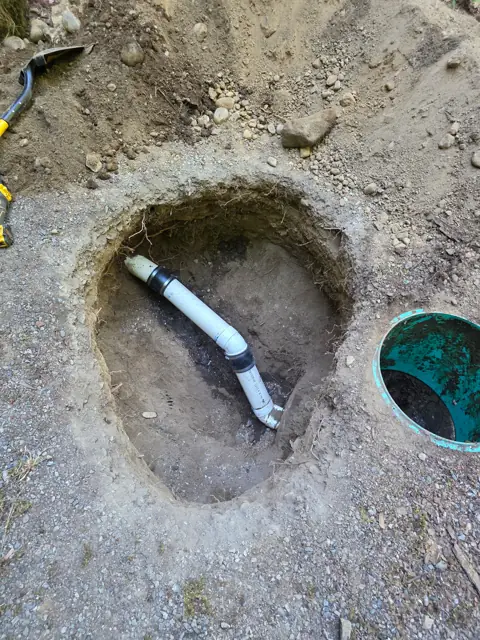
Roots are drawn to the moisture in sewer lines, and on wooded Issaquah lots they are one of the most common causes of backups. Our sewer line camera, jetting and replacement page explains when roots can be cleared and when the line needs replacing.
What septic service costs in Issaquah
Routine pumping starts at $590, including a tank and baffle inspection and effluent filter cleaning (when the filter is reachable through a lid or riser), plus the county pumping report fee and tax. Issaquah is on our Kirkland crews’ Eastside routes. Steep or narrow driveways, large tanks and buried lids can change the price, and we tell you before we come. See our pumping cost page for what goes into a quote.
Service from our Kirkland office
Our Kirkland crews cover Issaquah and the roads into the Alps. Routine pumping starts at $590, including a tank and baffle inspection and effluent filter cleaning (when the filter is reachable through a lid or riser), plus the county pumping report fee and tax. Tell us about steep or narrow driveways when you book. Phones are answered 24/7. Every repair carries the Septic Response Promise: a one-year warranty on most repairs, and if you call about work we have done, we are there the next day if not the same day.
/ King County
Issaquah is in King County.
King County requires owners to keep septic systems maintained and inspected on a schedule that depends on the system type. We file pumping reports with Public Health – Seattle & King County and inspection reports within 24 hours, so your records stay current.
/ Nearby communities
Do you serve all of Issaquah?
Yes. We serve homes and businesses throughout Issaquah (98027, 98029) and the surrounding area. Not sure? Call (206) 962-2600.
How often should a Issaquah septic tank be pumped?
Most households need pumping every 3 to 5 years, depending on tank size, household size and garbage-disposal use. We measure sludge and scum on every visit and tell you when the next pumping is due.
Do you file the pumping report?
Yes. We file it with Public Health – Seattle & King County after every pumping.
Which Issaquah homes are on septic?
The city core, Issaquah Highlands and Talus are on sewer. Many homes on the slopes of Squak and Cougar mountains, along Tiger Mountain and May Valley roads and on rural lots toward Hobart are on septic. King County’s online as-built map shows what is on record for your parcel.
Why does my Issaquah septic system have a pump?
Hillside lots often need wastewater pumped uphill to the drainfield or spread evenly by a pressure distribution system. That pump, its floats and its alarm need regular checks; King County inspects pressure systems more often than gravity systems.
My septic alarm is sounding. Is it an emergency?
Treat it as urgent. Cut water use right away and call (206) 962-2600. The alarm usually means the pump chamber is filling because the effluent pump or a float has stopped working. We answer 24/7.
Do you serve Mirrormont and Squak Mountain?
Yes. We serve Issaquah (98027 and 98029) and the surrounding area, including Squak and Cougar mountains, May Valley, Mirrormont, Tiger Mountain Road, Issaquah-Hobart Road and Preston. Call (206) 962-2600.
How much does septic pumping cost in Issaquah?
Routine pumping starts at $590, including a tank and baffle inspection and effluent filter cleaning (when the filter is reachable through a lid or riser), plus the county pumping report fee and tax. Access and tank size can change the price, and we confirm it before we come.
Can your truck reach a steep Issaquah driveway?
Usually, yes. Tell us about steep grades, tight turns, soft ground or low branches when you book, and where you think the tank is. A few details up front let us plan the visit and keep it on schedule.
Why do so many Issaquah homes have septic pumps?
On Squak Mountain, Cougar Mountain and other slopes, the drainfield is often uphill from the house or on thin soil, so an effluent pump lifts the wastewater and spreads it evenly. Those systems have pumps, floats, control panels and alarms that need regular checks.
What if my Issaquah home has no septic as-built online?
Some King County drawings, especially for homes built before the early 1970s, are not online. Email the county’s as-built help address with your parcel number and address; the county says it can take up to five business days. If no drawing exists, we can locate the tank on site.
Can you pump a septic tank at the end of a steep Issaquah driveway?
Usually, yes. We carry enough hose for every job so the truck can stay on solid ground. Tell us about steep grades, gates or icy roads when you book.