
/ Sammamish, King County
Septic service in Sammamish, WA.
Septic pumping, inspections and repairs for homes and businesses in Sammamish, from our Kirkland office. We file every pumping report with Public Health – Seattle & King County for you, and our phones are answered 24/7.
Your nearest office
Kirkland
672 7th Ave
Kirkland, WA 98033
(206) 962-2600
Phones answered 24/7
Sammamish ZIP codes we serve: 98074, 98075
/ Services in Sammamish
What we do in Sammamish.
Septic Tank Pumping
About an hour on site, with the pumping report filed with the county every time.
Learn more →Septic Inspections
Routine and real-estate inspections, with reports filed within 24 hours.
Learn more →Septic Repair
Effluent pumps, alarms, floats, risers, lids, baffles and filters.
Learn more →Drainfield Repair
Distribution boxes, laterals, drainfield treatment and replacement.
Learn more →Maintenance & Monitoring
Routine O&M checks for pump, pressure and advanced systems.
Learn more →Jetting & Sewer Lines
Camera scoping and replacement of the line from your house to the tank.
Learn more →ATU, Oscar & Bio-Microbics
Aerobic treatment units, including Oscar and Bio-Microbics systems.
Learn more →Septic emergency in Sammamish? 24/7 emergency septic service →
/ Septic in Sammamish
Plateau homes, lake lots and septic in between.
Sammamish is mostly sewered today, but not all of it. Pockets of the plateau were built before sewer lines arrived, and many large-lot neighborhoods were never connected: parts of the area around Pine Lake and Beaver Lake, the acreage toward Lake Sammamish’s east shore, and homes along the edges of town toward Redmond, Fall City and Issaquah. If you own one of these homes, your septic system is one of the more valuable and least-seen parts of the property.
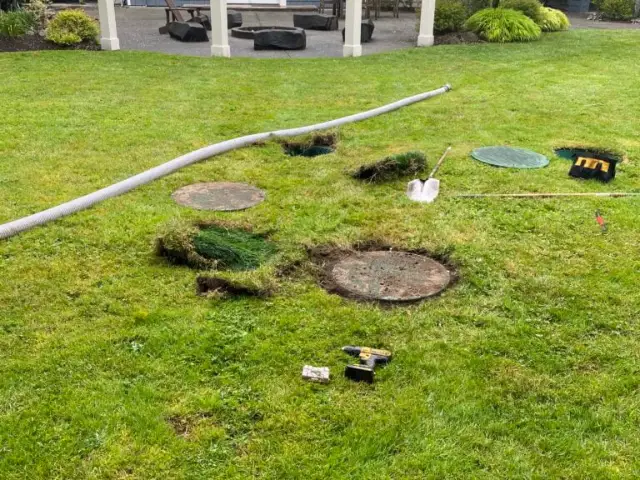
The Sammamish Plateau underfoot
The plateau is built on glacial till, the dense, compacted layer left by the last ice sheet. A foot or two below the topsoil, water slows almost to a stop. In winter it perches on top of the till and moves sideways across lots, which is why a lot of Sammamish yards stay soggy from November to April. Drainfields on till need careful design, and many plateau homes use pressure distribution or mound systems to make it work.
Near the lakes, the concern is water quality. Pine Lake, Beaver Lake and Lake Sammamish are all sensitive to nutrients, and an older system close to the shore has a lot less margin than one on a big lot.
What Sammamish homeowners call us for
- Routine pumping, often on systems that have not been touched since the house last sold.
- Inspections on the King County schedule, especially for pressure and mound systems that need them more often.
- Real-estate inspections for sales and purchases, which King County requires before the title transfers.
- Pump, float and alarm repairs on pressure systems.
- Sewer-line jetting and camera work on the line from the house to the tank, where roots from the plateau’s big firs and cedars cause many backups.
King County rules for Sammamish
Sammamish homes fall under Public Health – Seattle & King County. Gravity systems are inspected every three years; pressure, mound, sand filter, ATU and other systems are inspected more often under the county schedule. Before a home with septic is sold, a certified maintainer has to inspect it, and the report is filed with the county. We file everything for you. If you need your as-built, King County has most of them online, and our as-built guide shows you where to look.
Sammamish neighborhoods at a glance
- Pine Lake area: older lots near the lake, some never connected to sewer, where water quality makes a working system especially important.
- Beaver Lake area: lake-area homes on the eastern plateau, with a mix of gravity and pressure systems.
- East Lake Sammamish shoreline: steep, narrow lots between the parkway and the lake, where space for a drainfield is tight.
- The plateau edges toward Fall City and Issaquah: large lots on dense glacial till, commonly on pressure distribution systems with an effluent pump and alarm.
Signs your Sammamish system needs attention
On the plateau, the first warning is often a pump alarm after heavy rain or a wet, smelly patch over the drainfield that lasts after the rest of the yard dries. Slow drains and gurgling are also worth a call. Near the lakes, do not wait: a struggling system close to the water is a bigger problem for you and your neighbors.
Buying or selling in Sammamish
King County requires an inspection by a certified on-site system maintainer before the title transfers, unless a waiver applies, and we file the report for you. Many Sammamish buyers do not expect a septic system and are surprised to see it in the disclosure. Ask for the as-built, the pumping history and the last inspection, and find out whether the home is a pressure or mound system, since those need more frequent inspections. Sellers near Pine Lake and Beaver Lake should schedule the inspection early so any repair can be handled before closing.
Living with septic in a mostly sewered city
In Sammamish, it is common for a septic home to sit next door to a house on sewer. That surprises a lot of buyers, and it raises a fair question: should you connect? Washington’s rules only force the issue in specific cases. If a septic system fails inside a sewer utility’s service area and an adequate sewer is available within 200 feet, the health officer can require a connection unless a conforming septic repair can be designed (WAC 246-272A-0025). Otherwise, a working septic system can keep serving the home as long as it is maintained.
If you do connect, the old tank must be abandoned properly: pumped by an approved pumper, then removed or filled with soil or gravel, with the lid removed or destroyed and the ground regraded (WAC 246-272A-0300). We decommission old tanks and file the county report. Ask your sewer utility what a connection would cost before you need one; connection charges and side sewer work vary a lot. Our septic vs. sewer guide lays out the trade-offs. If the house sits below the nearest main, the connection may need a grinder pump.
Pump systems on the plateau: timer or demand?
Because so much of the plateau is dense till, many Sammamish septic homes have pressure distribution or mound systems with an effluent pump. Some are demand-dosed: floats start the pump whenever the chamber fills. Others are time-dosed: a timer runs the pump in short, regular doses all day and night, storing extra water in the chamber so the drainfield never gets flooded at once.
When an alarm sounds, the first steps are the same either way: cut water use, silence the buzzer without switching off the pump, and check the breaker. On a time-dosed system, the alarm often clears on its own within a few hours of light use as the timer catches up, especially after laundry day or a long wet spell. On a demand-dosed system, an alarm usually means the pump or a float has failed, and waiting will not fix it. Our septic repair page explains how to tell which you have.
Landscaping a Sammamish yard around a drainfield
Sammamish yards are often beautifully landscaped, and that is where drainfields get into trouble. Public Health – Seattle & King County’s landscaping advice is simple: find the tank, drainfield and reserve area on your as-built first, then plan around them (King County landscaping guide).
- Keep decks, patios, sport courts, sheds, swing sets, driveways, parked cars and irrigation lines off the tank, drainfield and reserve area.
- Grass or native vegetation is the best cover. Use shallow-rooted plants and keep water-loving plants and trees away, including new plantings of the firs and cedars the plateau is known for.
- Do not lay plastic, bark or gravel over the field, and do not regrade it. Adding up to about 2 inches of topsoil is generally fine.
- No vegetable gardens on or near the drainfield.
If roots are already in your septic line, our guide to tree roots in septic lines explains the fixes.
Lakeshore lots and water quality
Homes near Pine Lake, Beaver Lake and the east shore of Lake Sammamish have the least room for error, because there is less soil between the drainfield and the water. The habits that matter most are the simple ones. Never use septic additives; Washington law prohibits any additive not specifically approved by the Department of Health, and King County warns they can push solids into the drainfield and pollute water. Never drain a hot tub into the septic system. Keep household chemicals and unused medicines out of the drains. Spread laundry across the week. And keep up with inspections, since a small problem caught early near a lake is far easier to fix than one found after it reaches the water.
What we check on every visit
When we pump a Sammamish tank, we measure the sludge and scum first so you know how quickly your household fills it, inspect the tank and its inlet and outlet baffles, and clean the effluent filter when it can be reached through a lid or riser. Baffles are easy to overlook and important: they hold the scum and sludge in the tank so only clearer effluent heads to the drainfield. On older concrete tanks they are often corroded or missing, and replacing one is a small repair that protects the most expensive part of the system. We then file the pumping report with the county.
Help with larger costs
For bigger repairs, King County’s financial assistance page lists a septic maintenance and side sewer repair rebate program, Craft3 Clean Water Loans that can finance the full cost of eligible repairs, and programs for lower-income homeowners. Our $10/month maintenance plan includes a free annual filter cleaning and system check, no emergency fees, next-day emergency service and 10% off septic services, with reminders when your next pumping or county inspection is due.
Winter on the plateau
From November through March, rain on the Sammamish Plateau soaks the top layer of soil and then stops at the till. That perched water spreads sideways across lots, and it is why so many plateau septic problems show up in the wettest weeks of the year. A drainfield needs unsaturated soil beneath it to treat effluent; King County notes that a field is compromised when the effluent no longer has 2 to 3 feet of soil to trickle through. A few winter checks help a lot:
- Make sure every downspout, footing drain and sump discharge empties well away from the drainfield and the tank.
- Look at the tank lids and risers. Cracked or loose lids let groundwater pour into the tank, and on a pump system that water gets pumped to an already wet drainfield.
- Walk the field after a dry spell. If one area stays soggy, smells, or stays greener than the rest of the yard, have it looked at.
- If your pump alarm only goes off during storms, tell us. That pattern usually points to groundwater getting in or a field near its limit, not just a worn pump.
Late summer and early fall, before the rain sets in, is the easiest time for pumping, risers and repairs on the plateau.
Recent Sammamish job: slow drains and a clogged effluent filter
A Sammamish homeowner called us about slow drains. We inspected the system and found the effluent filter was clogged. We cleaned the filter, and the system was flowing normally again.
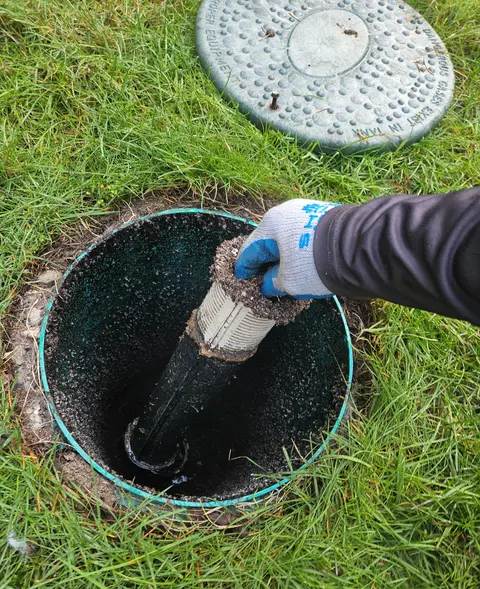
A clogged filter is one of the most common causes of slow drains we see, and it’s a quick fix compared with a backup. Filter cleaning is included in our septic tank pumping, and our $10/month maintenance plan includes a free annual filter cleaning and system check.
What septic service costs in Sammamish
Routine pumping starts at $590, including a tank and baffle inspection and effluent filter cleaning (when the filter is reachable through a lid or riser), plus the county pumping report fee and tax. Sammamish is a short drive from our Kirkland office. Tank size, steep access and buried lids can change the price, and we tell you before we start. See our pumping cost page for what goes into a quote.
Service from our Kirkland office
Sammamish is a short drive from our Kirkland office, so we are on the plateau regularly. Routine pumping starts at $590, including a tank and baffle inspection and effluent filter cleaning (when the filter is reachable through a lid or riser), plus the county pumping report fee and tax. Phones are answered 24/7. Every repair carries the Septic Response Promise: a one-year warranty on most repairs, and if you call about work we have done, we are there the next day if not the same day.
/ King County
Sammamish is in King County.
King County requires owners to keep septic systems maintained and inspected on a schedule that depends on the system type. We file pumping reports with Public Health – Seattle & King County and inspection reports within 24 hours, so your records stay current.
/ Nearby communities
Do you serve all of Sammamish?
Yes. We serve homes and businesses throughout Sammamish (98074, 98075) and the surrounding area. Not sure? Call (206) 962-2600.
How often should a Sammamish septic tank be pumped?
Most households need pumping every 3 to 5 years, depending on tank size, household size and garbage-disposal use. We measure sludge and scum on every visit and tell you when the next pumping is due.
Do you file the pumping report?
Yes. We file it with Public Health – Seattle & King County after every pumping.
Are there still septic systems in Sammamish?
Yes. Most of Sammamish is on sewer, but many older and large-lot homes are not, including some near Pine Lake and Beaver Lake, along the east side of Lake Sammamish and on the edges of the city. King County’s as-built map will show whether your home has a septic system on record.
Why does my Sammamish yard stay wet all winter?
The Sammamish Plateau sits on glacial till, which water barely moves through, so rain perches on top of it all winter. That is normal for the plateau. A wet spot directly over the drainfield or tank, especially one that smells, is not normal, and we should take a look.
Do I need a septic inspection to sell my Sammamish home?
Yes. King County requires an inspection by a certified on-site system maintainer before the title transfers, unless a waiver applies. We do the inspection and file the report with the county.
Do you serve Pine Lake and Beaver Lake?
Yes. We serve all of Sammamish (98074 and 98075), including the Pine Lake and Beaver Lake areas and the East Lake Sammamish shoreline. Call (206) 962-2600.
How much does septic pumping cost in Sammamish?
Routine pumping starts at $590, including a tank and baffle inspection and effluent filter cleaning (when the filter is reachable through a lid or riser), plus the county pumping report fee and tax. Tank size and access can change the price, and we confirm it before we come.
How often should a Sammamish septic tank be pumped?
Most households need pumping every three to five years, depending on tank size, how many people live in the home and garbage disposal use. We measure sludge and scum on every visit and tell you when the next pumping is actually due, so you are not guessing.
Do I have to connect my Sammamish home to sewer?
Not automatically. Under Washington rules, if your septic system fails inside a sewer utility’s service area and sewer is available within 200 feet, the health officer can require you to connect unless a conforming septic repair can be designed. A working, maintained system can keep serving the home.
What can I build or plant over my Sammamish drainfield?
King County recommends grass or native vegetation and shallow-rooted plants only. Keep decks, patios, sport courts, sheds, driveways, parked cars, irrigation lines, trees and vegetable gardens off the drainfield and reserve area.
Are septic additives allowed in Sammamish?
Washington law prohibits using any septic additive unless it is specifically approved by the Department of Health, and King County advises against additives because they can add solids that clog the drainfield.