
/ Everett, Snohomish County
Septic service in Everett, WA.
Septic pumping, inspections and repairs for homes and businesses in Everett, from our Woodinville office. We file every pumping report with the Snohomish County Health Department for you, and our phones are answered 24/7.
Your nearest office
Woodinville
23321 57th Ave SE
Woodinville, WA 98072
(206) 790-9392
Phones answered 24/7
Everett ZIP codes we serve: 98201, 98203, 98204, 98208
/ Services in Everett
What we do in Everett.
Septic Tank Pumping
About an hour on site, with the pumping report filed with the county every time.
Learn more →Septic Inspections
Routine and real-estate inspections, with reports filed within 24 hours.
Learn more →Septic Repair
Effluent pumps, alarms, floats, risers, lids, baffles and filters.
Learn more →Drainfield Repair
Distribution boxes, laterals, drainfield treatment and replacement.
Learn more →Maintenance & Monitoring
Routine O&M checks for pump, pressure and advanced systems.
Learn more →Jetting & Sewer Lines
Camera scoping and replacement of the line from your house to the tank.
Learn more →ATU, Oscar & Bio-Microbics
Aerobic treatment units, including Oscar and Bio-Microbics systems.
Learn more →Septic emergency in Everett? 24/7 emergency septic service →
/ Septic in Everett
City sewer and septic pockets, we know Everett septic.
Everett is Snohomish County’s largest city, and most of it is on public sewer. But the Everett area is much bigger than the city limits, and many homes in unincorporated pockets around it, on larger older lots, along the Snohomish River and up toward Lowell, Fobes Hill and the edges of Mill Creek and Lake Stevens, still use septic systems. We serve Everett-area homeowners from our Woodinville office with pumping, inspections, repairs side sewer work, and decommissioning old tanks when homes connect to sewer.
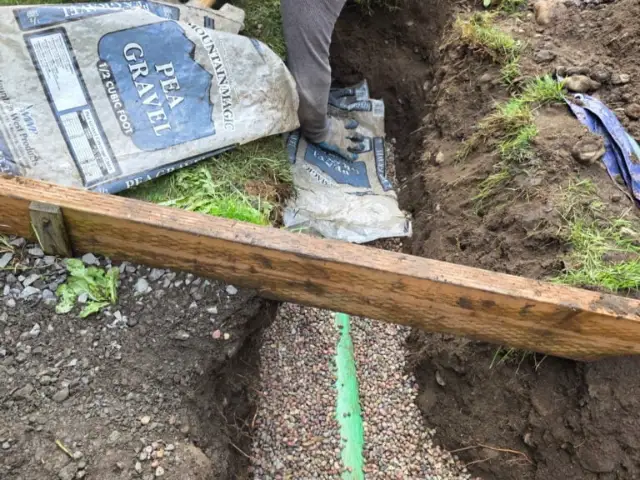
Everett-area septic
Septic systems around Everett are often older, installed when these areas were rural, and some are now surrounded by newer sewered neighborhoods. If yours is in that situation, you may be able to connect to sewer when the line reaches your street, and when you do, we decommission it to county standards and file the report with the county.
Soils range from dense glacial till on the plateaus to river sediments near the Snohomish, where high groundwater in winter stresses drainfields. Older systems on small lots have little room for a replacement drainfield, so good maintenance is the best way to protect them.
What we fix most in Everett
Our Everett-area jobs include pumping and inspections on older systems, real estate inspections and site plans under the new county home-sale rule, cracked lids and failed baffles, and side sewer repairs where roots or settling have damaged the line. For homes on sewer, we also help with jetting and camera scoping of the line to the street.
Snohomish County requirements in Everett
Everett is in Snohomish County, so the Snohomish County Health Department rules apply. Gravity systems need an inspection every three years; pressure, mound and ATU systems need one every year unless the manufacturer requires more often. We file every pumping and inspection report with the county for you. The county’s Savvy Septic program also offers rebates on some inspections, pumping and riser installs.
If you are selling, the county’s property-transfer rule took effect November 1, 2026: a full inspection within the past 12 months, pumping if recommended, an as-built or site plan on file, and a Report of Property Transfer before closing. See our home-sale guide and as-built lookup guide.
Everett areas we serve
- Unincorporated south Everett: older lots between Everett and Mill Creek, some still on septic.
- Lowell and the Snohomish River: riverside homes with high winter groundwater.
- Fobes Hill and toward Snohomish: hillside and rural properties on private systems.
- North Everett and the city core: on sewer; we help with side sewer and line work.
Side sewers: the pipe most Everett owners forget
If your Everett home is on public sewer, you still own a piece of the system: the side sewer, the pipe that runs from your house to the city main. In older parts of Everett many side sewers are clay or concrete, laid decades ago in short sections. Over time the joints shift, the pipe settles or cracks, and tree roots find their way in. The signs are familiar: a slow main drain, gurgling toilets, a backup in the lowest fixture, or a clog that keeps coming back a few months after it was cleared.
The fix starts with knowing what is actually in the pipe. A sewer camera inspection shows roots, cracks, sags and offsets, and the distance to each one, so you know whether jetting will clear it or a section needs replacing. Jetting cuts out roots and buildup and restores flow; replacing a cracked or root-packed section closes the entry point so the problem does not come back. Our jetting and sewer line page and our guide to tree roots in sewer and septic lines explain both.
Connecting to sewer and closing the old tank
As sewer reaches more of the unincorporated pockets around Everett, many older septic homes get the chance, or the requirement, to connect. Washington’s rules say that if a septic system fails inside a sewer utility’s service area and an adequate sewer is available within 200 feet, the health officer can require a connection unless a conforming septic repair can be designed (WAC 246-272A-0025). If you are weighing it up, ask your sewer district what the connection would involve before your septic system forces the decision.
When a home connects, the old tank cannot just be left. State rules require it to be pumped by an approved pumper, then either removed or left in place with the lid removed or destroyed and the tank filled with soil or gravel, and the site graded to match the ground around it (WAC 246-272A-0300). The Snohomish County Health Department follows those state rules for abandonment and has no extra local requirements. We pump and decommission old tanks and file the county report for you.
Old tanks hiding under yards and driveways
Some Everett-area homes connected to sewer years ago without the old tank ever being properly closed. An empty or half-full tank with a deteriorating lid is a real hazard: it can collapse under a car, a mower or a person, and children and pets can fall in. If you have an unexplained concrete lid, a sunken patch in the yard, or an old as-built showing a tank that nobody has seen, have it checked. We locate tanks by probing, and use an electronic locator with a flushable transmitter when the tank is unknown or hard to find, then decommission it properly.
Riverside homes along the Snohomish
Homes around Lowell and along the Snohomish River sit on river sediments with a water table that rises close to the surface every winter, and low ground can flood. A drainfield needs unsaturated soil to treat effluent, so these systems have little to spare in the wet months. If floodwater reaches your tank or drainfield, use as little water as possible until the ground drains, call us before having the tank pumped, and have the system checked once the water recedes. Sealed lids and risers keep groundwater out of the tank, and roof drains should always discharge away from the drainfield. Our guide to septic water in the yard has more.
Pump systems around Everett: timer or demand?
On the plateaus and hillsides around Everett, including Fobes Hill and toward Lake Stevens, some septic homes use pressure or mound systems with an effluent pump. A demand-dosed pump runs whenever floats sense the chamber is full. A time-dosed pump runs on a timer in short doses around the clock, storing extra water in the chamber. If the alarm sounds, cut water use, silence the buzzer without turning off the pump, and check the breaker. On a timer system, the level often comes down within a few hours of light use. On a demand system, an alarm usually means the pump or a float has failed. Our septic repair page explains both.
What we check on every visit
Older Everett-area systems are exactly where small problems hide. Every routine pumping includes sludge and scum measurements, an inspection of the tank and its inlet and outlet baffles, and effluent filter cleaning when the filter can be reached through a lid or riser. Baffles keep scum and solids in the tank; on older concrete tanks they often crumble away, and a missing outlet baffle sends solids straight to the drainfield. We also look for cracked lids, roots at the inlet, and signs of water running back from the field, and we file the pumping report with the county. We carry enough hose for every job, which helps on narrow older lots where the truck cannot get close.
Buying an older Everett-area home
If the home you are buying is on septic, ask for the as-built, the pumping and inspection history, and the Report of Property Transfer that Snohomish County now requires sellers to file before closing. The county reviews it and the seller gives it to the buyer, along with the maintenance records and the seller disclosure statement; the report is valid for 12 months from acceptance (Snohomish County property transfer). If the home is on sewer, a camera inspection of the side sewer is a small cost that can save a big surprise. Our septic vs. sewer guide covers the rest.
Savvy Septic rebates and help with costs
Snohomish County’s Savvy Septic Program offers rebates for inspections, pumping, riser installation and select minor repairs, plus financial help for major repairs and replacements. You become eligible by taking the county’s free online Septic Care Workshop. The county reports nearly 2,000 maintenance rebates claimed between 2023 and 2025, so it is worth the half hour if you are due for service. Our $10/month maintenance plan adds a free annual filter cleaning and system check, no emergency fees, next-day emergency service and 10% off septic services.
Signs your Everett-area system needs attention
The Snohomish County Health Department lists these as signs a septic system may be failing: fixtures draining slowly, soggy ground with unusually lush vegetation over the drainfield, sewage backing up into the house, sewage surfacing over the drainfield or tank, and a strong sewage odor. On a pump system, add a high-water alarm that will not clear. On a sewer-connected home, a slow main drain or recurring backups usually point to the side sewer. In every case, catching it early is cheaper: a clogged filter, a failed float or a broken baffle is a short repair, while a drainfield that has been taking solids for months is not.
A simple maintenance schedule
For most Everett-area septic homes, the county schedule is straightforward. Gravity systems need an inspection every three years, and alternative systems such as pressure, mound and ATU systems need one every year unless the manufacturer requires more often. Pumping is based on measurements rather than the calendar; the county notes that some households need it every two years and others can go five or more. If you have no idea when your tank was last pumped, search your address in the county’s OnlineRME records, or call us. Our pumping schedule guide explains how the interval is worked out.
Remodels, added bedrooms and small lots
Many septic systems around Everett were sized for the house as it was first built. Washington sizes septic tanks by bedroom count, with at least 1,000 gallons for up to four bedrooms and 250 gallons more for each additional bedroom (WAC 246-272A-0232). A home that has gained bedrooms or an accessory unit without a system upgrade may be sending more water than the drainfield was designed for, and state rules require owners to keep flow at or below the approved capacity. On small older lots there is often little room for a replacement field, so protecting the existing one is worth the effort. If you are planning a remodel, check what your system was designed for first.
Recent Everett job: a failing system and a collapsed distribution box
An Everett homeowner called us because their septic system was failing, with wastewater seeping up out of the ground in the yard. When we dug in, we found the distribution box had collapsed. We replaced the distribution box and restored the system.
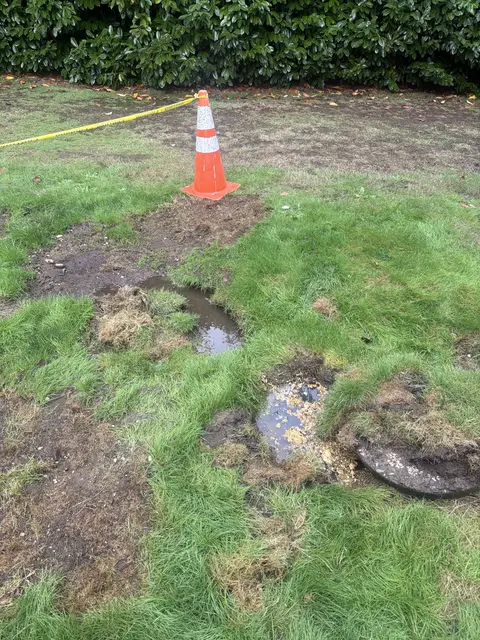
The distribution box sits between the tank and the drainfield and splits the flow between the drainfield lines, so when it fails, the whole system can back up or surface. Our drainfield repair page explains what we check before anyone talks about replacing a field.
What septic service costs in Everett
Routine pumping starts at $590, including a tank and baffle inspection and effluent filter cleaning (when the filter is reachable through a lid or riser), plus the county pumping report fee and tax. Everett is a regular stop on our routes from Woodinville, so most addresses carry no extra drive charge. Large tanks, extra compartments, or buried lids that need digging add to the price, and we tell you before we come. See our pumping cost page for what goes into a quote.
Our crew in Everett
Everett is served from our Woodinville office, (206) 790-9392. Our phones are answered 24/7, and if we cannot get to you the same night we will walk you through what to do until we can be there first thing in the morning. Everett homeowners on our $10/month maintenance plan get emergency fees waived, next-day emergency service, a yearly filter cleaning and system check, 10% off septic work, and reminders when pumping is due.
Repairs come with the Septic Response Promise: a one-year warranty on most repairs, and if you call about work we have done, we are there the next day if not the same day.
/ Snohomish County
Everett is in Snohomish County.
Snohomish County requires owners to keep septic systems maintained and inspected on a schedule that depends on the system type. We file pumping reports with the Snohomish County Health Department and inspection reports within 24 hours, so your records stay current.
/ Nearby communities
Do you serve all of Everett?
Yes. We serve homes and businesses throughout Everett (98201, 98203, 98204, 98208) and the surrounding area. Not sure? Call (206) 790-9392.
How often should a Everett septic tank be pumped?
Most households need pumping every 3 to 5 years, depending on tank size, household size and garbage-disposal use. We measure sludge and scum on every visit and tell you when the next pumping is due.
Do you file the pumping report?
Yes. We file it with the Snohomish County Health Department after every pumping.
Is Everett on sewer?
Most of the city of Everett is on public sewer. Septic is common in unincorporated areas around the city and on some older, larger lots.
My Everett home is on septic but sewer is nearby. Can I connect?
Often yes, depending on your sewer district. When you connect, we decommission the old tank to county standards and file the report.
Do you do side sewer repairs in Everett?
Yes. We camera scope, jet and repair or replace side sewer lines for homes on both septic and sewer.
Who is responsible for the sewer line from my Everett house to the street?
In most cases the property owner owns the side sewer, the pipe from the house to the public main. Repairs to it are the owner’s cost, which is why a camera inspection is worth doing on older homes.
What happens to my septic tank when my Everett-area home connects to sewer?
State rules require the tank to be pumped by an approved pumper, then removed or filled with soil or gravel with the lid removed or destroyed, and the site graded. Snohomish County has no extra local rules for abandonment. We decommission tanks and file the county report.
Is an old unused septic tank dangerous?
It can be. A tank that was never properly closed can collapse under weight, and a deteriorating lid can give way under a child, pet or adult. Have unexplained lids or sunken spots checked and the tank properly decommissioned.